

How to Weatherproof a Patio in Louisiana With Smart Upgrades
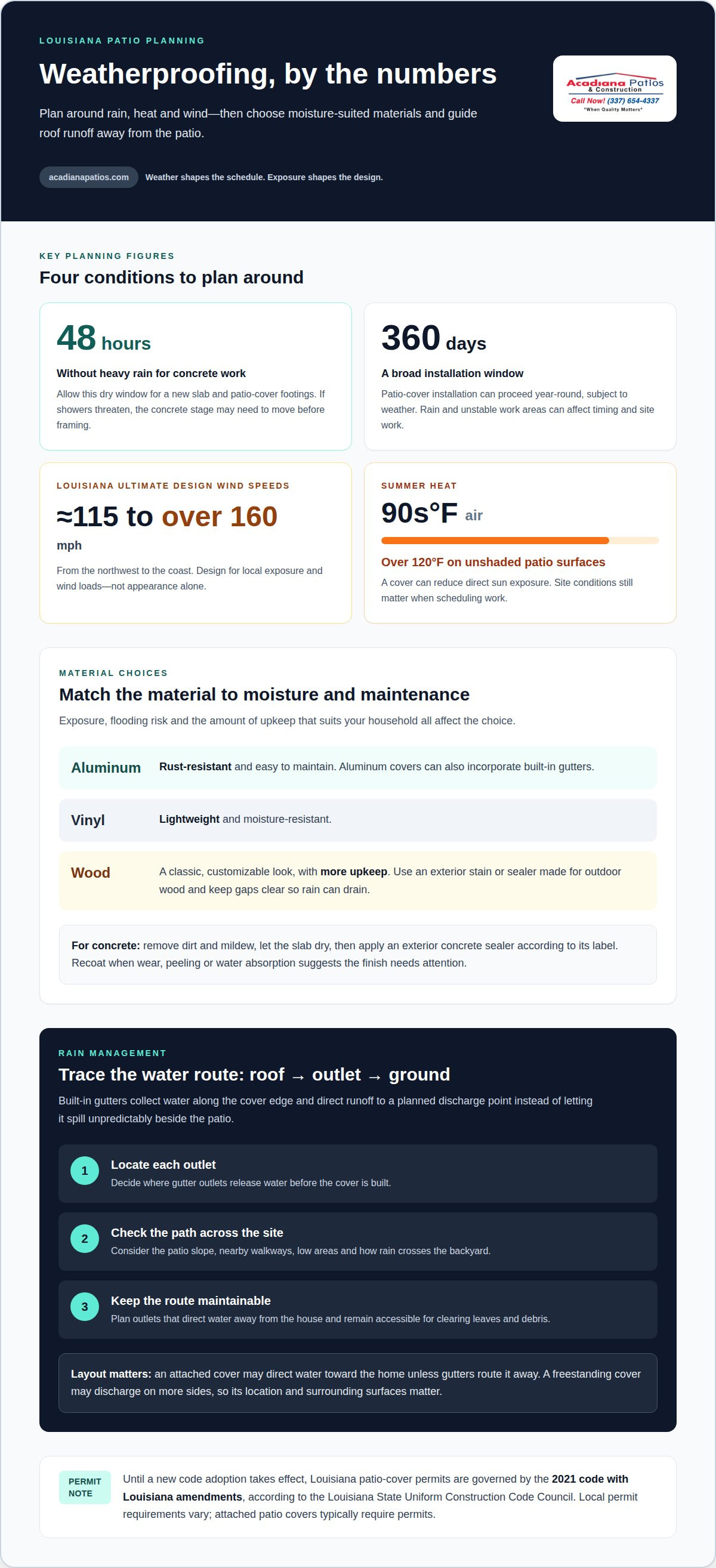
Louisiana weather makes timing part of a patio upgrade, not an afterthought. Knowing how to weatherproof a patio in Louisiana means choosing moisture-suited materials, adding a cover when sun and rain routinely interrupt outdoor use, and directing runoff through built-in gutters instead of letting it spill at the edge. Aluminum is rust-resistant and easy to maintain, while vinyl is lightweight and moisture-resistant; wood offers a classic, customizable look but needs more upkeep. Concrete work for a patio cover needs 48 hours without heavy rain.
It’s frustrating when humidity, heavy rain, or harsh sun makes a patio difficult to enjoy. A well-planned cover and drainage setup can help protect the space and make outdoor seating more practical. Installation timing still depends on weather, especially for work that involves concrete.
This guide explains how to weatherproof a patio in Louisiana: which materials suit damp conditions, when a cover makes sense, and how gutters and runoff fit into the plan. It also covers why installation timing matters, particularly when a project includes concrete work.
Key Takeaways
- Choose patio-cover materials by weighing moisture resistance, maintenance needs, and the look you want for your home.
- Until a new code adoption takes effect, Louisiana patio-cover permits are governed by the 2021 code with Louisiana amendments, according to the Louisiana State Uniform Construction Code Council.
- Plan installation around weather conditions, especially when the project includes concrete work.
- Map where roof runoff will go and consider built-in gutters to direct water away from the patio instead of letting it spill at the edge.
Materials suited to humidity and rainfall
Louisiana patios need moisture-tolerant materials and details that help water drain away and surfaces dry. The right combination depends on sun and rain exposure, flooding risk, and how much upkeep suits your household.
Flood Resistance and Patio Elevation
Flood resistance means choosing patio materials and layouts that limit damage from standing water. Elevation matters because a raised surface can reduce contact with shallow pooling, while drainage helps move water away. Until a new code adoption takes effect, Louisiana patio-cover permits are governed by the 2021 code with Louisiana amendments, according to the Louisiana State Uniform Construction Code Council. Local permit requirements vary, and attached patio covers typically require permits.
Sealing Concrete and Waterproofing Wood
For concrete, remove dirt and mildew, let the slab dry, then apply an exterior concrete sealer according to its label. On a wood patio or deck, clean the boards and apply an exterior stain or sealer made for outdoor wood. These coatings help limit moisture absorption, but standing water and trapped debris can still encourage decay. Keep gaps clear so rain drains and boards can dry.
Reapply protective coatings when wear, peeling, or water absorption suggests the finish is no longer protecting the surface; one calendar interval won’t suit every patio. To discourage mold and mildew, clear leaves and allow airflow after rain. Keep wood away from persistent dampness, and use rust-resistant hardware to reduce corrosion.
Hurricane-Resistant Covers, Screens, and Furniture
Wind-resistant patio planning accounts for the cover, its supports, screens, and movable furniture as one outdoor space. Louisiana’s ultimate design wind speeds range from approximately 115 mph in the northwest to over 160 mph along the coast. A patio-cover design should reflect local exposure and wind loads rather than rely on appearance alone. Screen selection and attachment also matter in exposed locations.
For furniture, aluminum and steel resist weather, while wicker is another recommended outdoor option. Teak offers a hardwood seating choice but needs more maintenance. Choose weather-resistant cushions, and bring loose items inside when severe weather approaches. During planning, tell the contractor how the covered patio will be used; that helps shape a custom layout and an estimate around the site and selected materials.
Installation timing and weather conditions
Louisiana patio-cover installation can proceed 360 days a year, subject to weather conditions. That broad window doesn’t mean every day suits every task. Rain can delay concrete work, while a wet or unstable work area can complicate setting posts and assembling a structure. Planning around the forecast helps homeowners coordinate materials, site access, and the sequence for an attached cover or backyard project.
Concrete work needs 48 hours without heavy rain. That dry window matters for a new slab and for footings supporting a patio cover. If showers threaten the schedule, the concrete stage may need to move before framing begins. An existing patio also needs review for layout and support conditions, since its size and construction affect where the new structure can connect.
Summer heat is another planning factor. Louisiana temperatures reach the 90s °F, and unshaded patio surfaces can exceed 120°F. A cover can reduce direct sun exposure, but crews still need to plan work around conditions on site. For example, an afternoon installation over a sun-exposed existing patio may feel very different from work in a shaded backyard.
Decide how you’ll use the covered space before installation starts. If you want electrical service for fans or lights, include those needs in the early design. Fan beams and electrical planning can be incorporated into the structure; leaving them until after installation may limit placement options. A compact seating area and a larger dining space also call for different layouts.
Weather affects scheduling, but the design should account for long-term exposure too. Wind, rain direction, shade, and the connection to the house all shape the plan. Homeowners considering insulated patio covers can bring their intended use and electrical needs into the design discussion before construction begins.
Built-in gutters and runoff planning
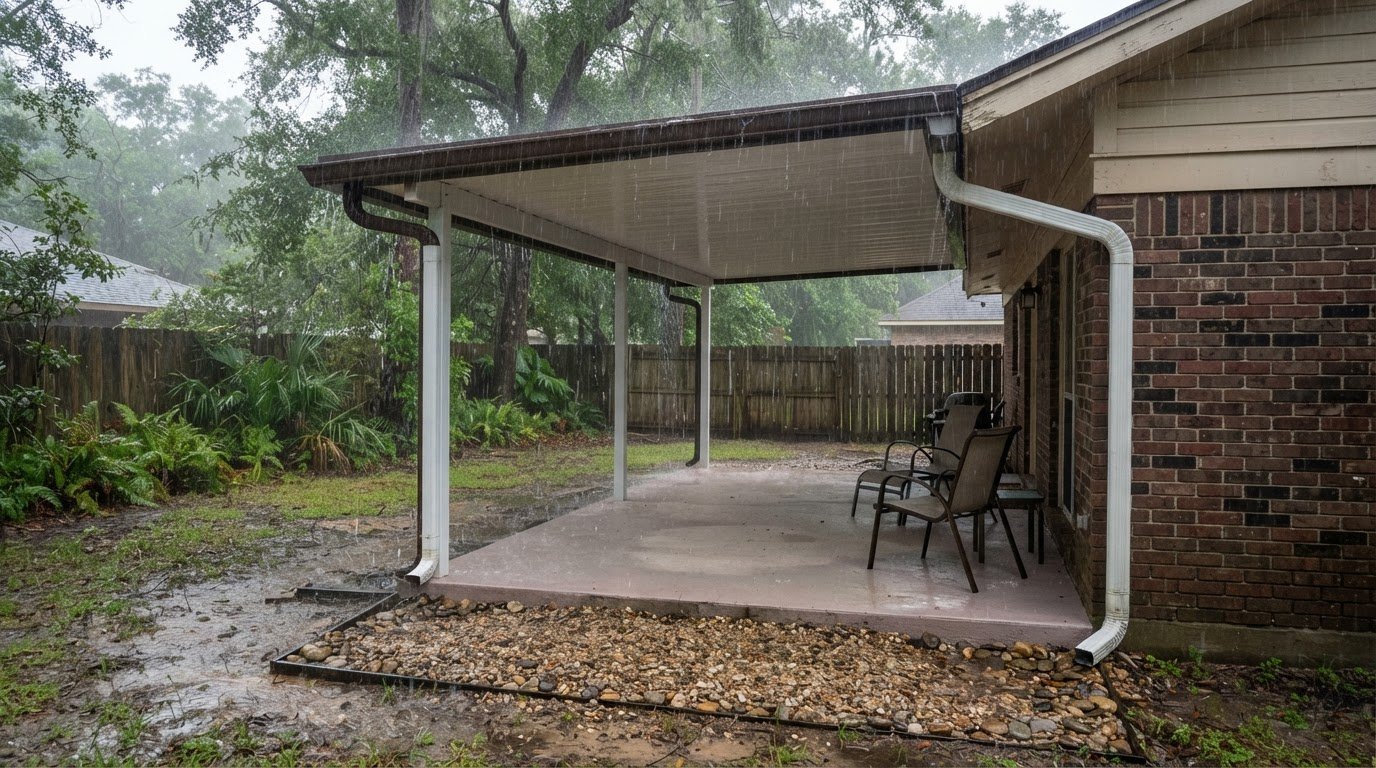
Built-in gutters collect water along a patio-cover edge and direct runoff toward a planned discharge point. In Louisiana’s rainy climate, this helps keep roof water from spilling unpredictably beside seating, doors, or a concrete slab. Gutters work best as part of the cover design, rather than as an afterthought once water has already carved a path across the patio. Planning ahead also helps position outlets to suit the layout.
Trace water’s route from roof to ground. Identify where each gutter outlet will release water, then consider whether that spot directs flow toward the house, a walkway, or a low area. For example, an outlet beside a patio step can leave the route wet during a storm. For a Lafayette patio, consider where water travels after leaving the cover and how nearby surfaces guide it.
An attached cover and a freestanding structure create different drainage layouts. An attached roofline may direct water toward the home unless gutters capture it and route it away. A freestanding cover may discharge on more sides, so its location and nearby surfaces matter. Check the patio’s slope and how rain crosses the backyard before deciding where outlets should direct water.
Match gutter planning to the cover’s features and how you’ll use the outdoor space. Aluminum covers can incorporate built-in gutters, and outlet routes should remain accessible for clearing leaves and debris. Keep discharge points away from areas where runoff could collect beside furniture or flow across a main walkway. A screened seating area, outdoor kitchen, and open patio each need a route that keeps roof water away from the main activity space.
Hurricane preparation includes managing water. Before a storm, clear leaves from gutter channels and make sure outlets aren’t blocked. Afterward, look for debris or water marks that reveal overflow. These observations can show whether the system directs runoff as intended and whether the patio’s drainage plan needs adjustment.
How do you seal a concrete patio against rain, humidity, and mildew?
Sealing concrete means applying a compatible protective product to a clean, dry slab. It can reduce water absorption, but it won’t fix poor drainage, standing water, or damaged concrete. In Louisiana’s humid climate, preparation matters as much as the sealer. Start by moving furniture and planters, then remove leaves, dirt, and visible mildew so the coating can bond to the surface.
Clean the slab with a product labeled for exterior concrete, following its directions. Rinse away residue and let the surface dry fully before applying sealer. Check the forecast and the label’s weather requirements; rain or damp concrete can interfere with application. Don’t coat over mildew, peeling residue, or loose material. If the slab has cracks, address them with a compatible repair product before sealing.
Choose a sealer based on the patio’s condition and the finish you want. A penetrating product absorbs into porous concrete, while a film-forming product leaves a surface layer. Product labels explain suitable uses and application methods, so follow the coverage and recoating instructions rather than guessing. Apply an even coat with the recommended tool, and avoid puddles or thick edges that may dry unevenly.
After application, keep foot traffic, furniture, and rain off the slab for the period stated on the product label. Once the coating is ready for use, leave space around furniture in damp corners and remove wet leaves promptly. These habits improve airflow and reduce conditions that encourage mildew. Inspect the surface when it looks worn or water no longer beads as expected, then clean and recoat according to the sealer instructions.
For a patio that needs a new or refreshed slab, discuss concrete slab and coloring options as part of the weatherproofing plan.
Acadiana Patios & Construction
Acadiana Patios & Construction helps Lafayette homeowners plan patio improvements, from overhead protection to concrete surfaces and adjustable shade. Its offerings include Cypress Patio Covers, Concrete Slabs & Concrete Coloring, Motorized Shades & Screens, and Carports & Garages. Choose the elements that fit your space and how you use it.
Consider reaching out when you’re ready to discuss how your patio is used, where rain collects, and which improvements fit your home. Sharing those details helps frame the conversation around your goals and the work involved. Contact Acadiana Patios & Construction to discuss your patio project.
Shape your patio around the seasons ahead
Start your patio plan with how you want to spend time outdoors, then consider how your needs may change. Think about whether the space should support quiet mornings, family meals, or gatherings with friends. Those priorities help clarify which improvements matter most now and which can wait. Consider how the patio connects with the home, too, so the finished space feels purposeful rather than added on.
When deciding how to weatherproof a patio in Louisiana, focus on a design that suits your home and everyday routines, not just the next storm. A well-considered project gives you a clear direction for discussing layout, materials, and the shelter you want.
Bring your ideas and questions to Acadiana Patios & Construction. Contact Acadiana Patios & Construction to discuss your patio plans and take the next step with confidence.
Frequently Asked Questions
Why Do Louisiana Homes Need Patio Covers?
Patio covers give Louisiana homeowners overhead shelter from rain and direct sun, making outdoor seating and dining more practical. To understand how to weatherproof a patio in Louisiana, match the shelter to everyday use. A household that eats outdoors, for example, may prefer a different layout from one that mainly wants a shaded place to read or relax.
Can a patio cover be added to an existing patio or deck?
A cover can be planned for an existing patio or deck when its layout and support conditions suit the proposed structure. The house connection, available headroom, and roofline shape the design. For a deck, framing and post locations matter; for a concrete patio, the slab’s position and support inform the layout. Plan for fans or lights early.
What weatherproofing materials work best for patios in Louisiana’s hot, humid, rainy climate?
Choose materials based on the surface, cover, or furniture you want to protect. Aluminum and vinyl are moisture-resistant cover options, while wood offers a traditional appearance with more upkeep. For seating, look for weather-resistant cushions and outdoor furniture suited to its exposure. Teak is another hardwood option, though it requires more maintenance. Match the materials to how your household spends time outdoors.
What patio roofing and shade options protect against heavy rain and intense sun?
Solid patio covers provide overhead shade and rain protection, while insulated roof panels can create a more finished covered area. Lattice or hybrid designs allow filtered light and a more open feel. Motorized shades and screens offer another way to manage sun and privacy. Consider whether you want broad overhead shelter, filtered daylight, or adjustable shade over a particular seating area.
How do you improve patio drainage and prevent flooding or standing water in Louisiana?
To decide how to weatherproof a patio in Louisiana, consider roof runoff and ground drainage separately. Gutters handle water flowing from the cover, while the patio’s slope and nearby surfaces affect pooling. After rain, note where water collects and whether it crosses a doorway or walkway. This pattern can help identify whether the issue involves roof discharge, surface drainage, or both.