Stamped Concrete vs. Colored Concrete in Lafayette: 2026 Homeowner’s Comparison Guide
What if the most durable way to achieve the look of premium flagstone or slate on your Acadiana patio isn’t actually stone at all? Most homeowners in Lafayette recognize that our shifting clay soil and intense humidity make choosing an outdoor surface a high-stakes investment. When weighing the benefits of stamped concrete vs colored concrete Lafayette homeowners often find that the right choice depends on more than just aesthetics. You want an elegant space for entertaining, yet you likely worry about unsightly cracks or a surface that becomes too hot for bare feet during a July afternoon. It’s a common dilemma for anyone looking to upgrade their backyard into a functional retreat.
We understand these concerns because we’ve been building in this community since 1985. In this 2026 homeowner’s guide, you’ll discover the critical differences in cost, durability, and style between these two popular finishes. You’ll learn how these surfaces handle the local climate, the maintenance required to keep them beautiful, and which option provides the best return on your investment. We’ll compare the structural character of stamped patterns against the subtle uniformity of colored slabs to help you choose the perfect foundation for your outdoor living space.
Key Takeaways
- Identify whether the structural character of stamped patterns or the subtle elegance of colored slabs better complements your home’s specific architectural style.
- Gain insight into how Acadiana’s unique expansive clay soil and high humidity levels impact the long-term durability and curing process of your new patio.
- Compare the practical maintenance requirements and initial investment of stamped concrete vs colored concrete Lafayette to ensure your outdoor space remains beautiful for decades.
- Discover the specific sealing schedules and repair strategies needed to protect your decorative surface from the intense South Louisiana elements.
- Explore how to coordinate your concrete finish with premium additions like cypress pavilions or outdoor kitchens to create a cohesive, high-value outdoor retreat.
What is the Difference Between Stamped and Colored Concrete?
The standard grey patio is no longer the benchmark for Lafayette homes. Homeowners now expect outdoor spaces that function as sophisticated extensions of their interior design. When comparing stamped concrete vs colored concrete Lafayette residents often find that the choice comes down to whether they want to replicate the physical texture of natural materials or simply add a rich hue to a smooth surface. Stamped concrete is a multi-dimensional process that physically alters the surface, while colored concrete focuses on the visual depth of the slab itself. For a broader look at these techniques, this Decorative concrete overview details the foundational chemistry used in modern construction today.
Stamped Concrete: Texture and Dimension
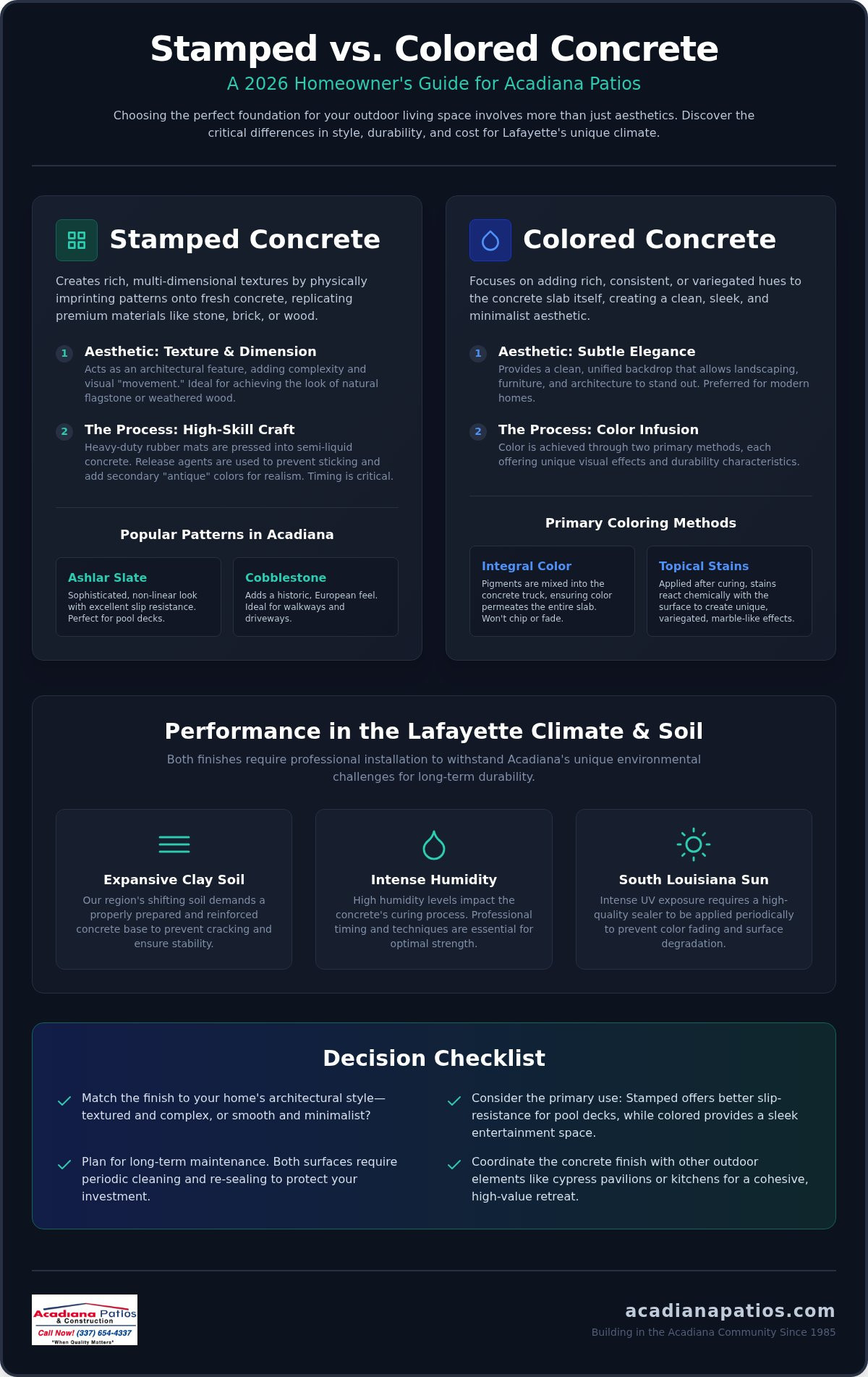
Stamping involves pressing heavy-duty rubber mats into the concrete while it remains in its “plastic” or semi-liquid state. This creates incredibly realistic textures like slate, weathered wood, or antique brick. To achieve a realistic look, we utilize release agents. These powders or liquids prevent the mats from sticking and provide a secondary “antique” color that settles into the faux grout lines. It’s a high-stakes process that requires precise timing. If a crew starts too early, the pattern becomes messy; too late, and the concrete won’t take the impression. This level of complexity is why stamping demands a higher degree of professional mastery than a standard pour.
Colored Concrete: The Subtle Aesthetic
If you prefer a clean, minimalist look, colored concrete offers a subtle aesthetic that doesn’t rely on deep textures. This approach is often the preferred choice for modern Acadiana homes where homeowners want a sleek, low-profile finish that highlights the surrounding architecture. We typically achieve this through two primary methods:
- Integral Color: Pigments are mixed directly into the concrete truck before the pour. This ensures the color goes all the way through the slab, so it won’t peel or fade if the surface is chipped.
- Topical Stains: These are applied after the concrete has cured. Stains react chemically with the surface to create variegated, marble-like effects that are unique to every project.
While these methods are common for residential patios, the professional standard for high-performance staining is often showcased in commercial settings, such as the projects handled by Polished Concrete Atlanta.
Choosing between stamped concrete vs colored concrete Lafayette ultimately means deciding between architectural texture and tonal depth. Both options move your property away from the “grey slab” era, but they serve very different design goals for your backyard retreat.
Aesthetic Comparison: Choosing Your Design Style
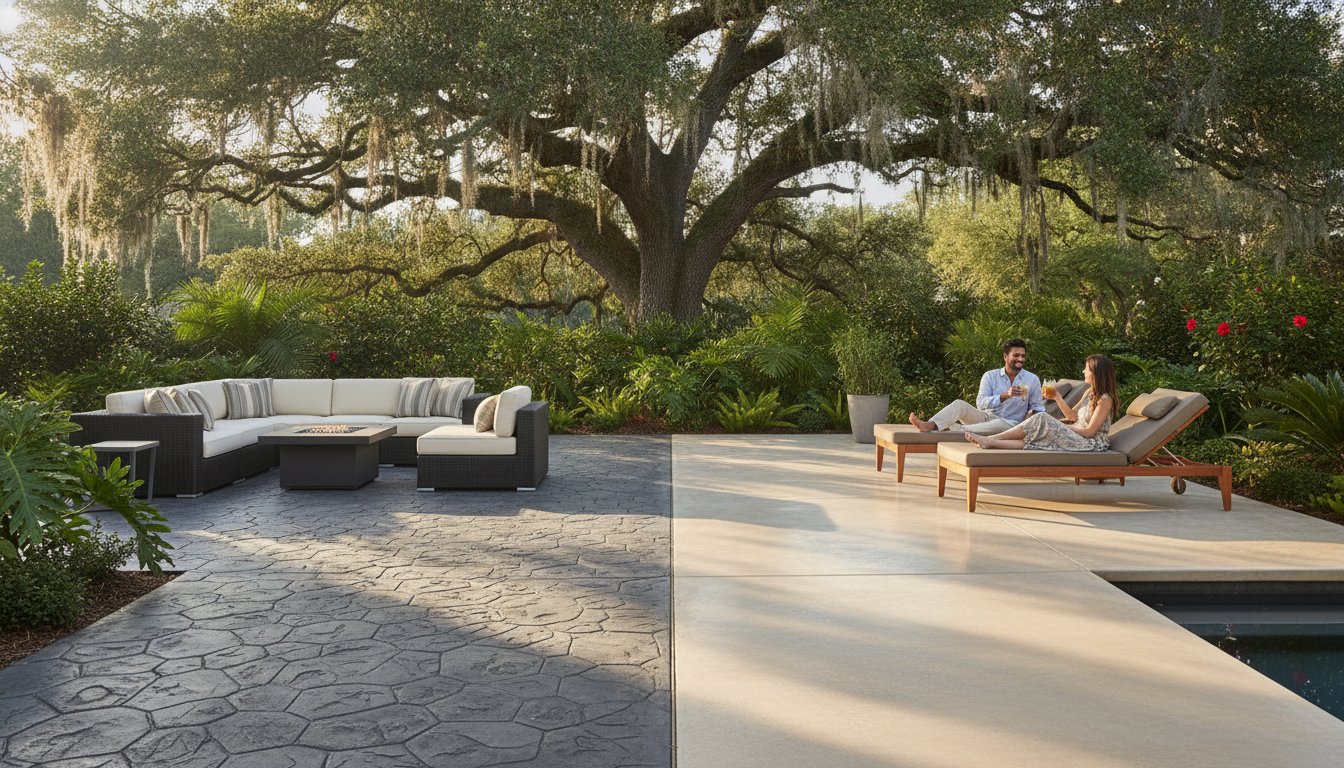
The visual weight of your outdoor space is defined by the balance between texture and tone. When evaluating stamped concrete vs colored concrete Lafayette homeowners should consider how the surface interacts with existing materials like traditional red brick or local cypress siding. Stamped concrete acts as an architectural feature, adding complexity and “movement” to a patio. In contrast, colored concrete provides a clean, unified backdrop that allows your landscaping or furniture to take center stage. Choosing the right style ensures your new installation feels like an intentional part of your home’s original design rather than an afterthought.
Professional craftsmanship is the only way to avoid the “fake stone” trap. Many low-quality installations look synthetic because they use repetitive patterns and flat, single-note colors. We prevent this by utilizing high-quality mats and multi-toned release agents that mimic the natural mineral variations found in real rock. This attention to detail is essential for matching the historic charm of Acadian cottages or the refined elegance of French Country estates. If you’re planning a full backyard renovation, we can help you coordinate these finishes with custom outdoor living structures that enhance your property’s overall character.
Popular Stamping Patterns in Acadiana
Lafayette residents often lean toward patterns that reflect the region’s heritage and natural environment. These three styles are currently leading the trends for 2026:
- Ashlar Slate: This is the most versatile choice for pool decks. It offers a sophisticated, non-linear look that provides excellent slip resistance while mimicking premium cut stone.
- Cobblestone: Ideal for driveways or walkways, this pattern adds a historic, European feel that pairs beautifully with traditional Lafayette architecture.
- Wood Plank Stamping: This provides the warm, inviting look of a cypress deck but with the structural durability of a concrete slab. It’s a perfect solution for high-humidity areas where real wood might rot.
Color Palettes that Beat the Louisiana Heat
In South Louisiana, color choice is a matter of both style and physics. Dark charcoals and deep browns absorb an immense amount of thermal energy, making them painful for bare feet or paws during a July afternoon. Lighter tans, soft greys, and “sand” tones are superior for barefoot comfort because they reflect more sunlight. We prioritize UV-resistant pigments in our mixes. These specialized additives ensure your patio maintains its rich hue despite the relentless exposure to the Acadiana sun, preventing the “chalky” or faded look that often plagues standard dyed concrete over time.
Performance in the Lafayette Climate and Soil
Lafayette’s environment presents a unique set of challenges that standard building practices often overlook. While northern contractors focus on freeze-thaw cycles, our primary concern is the “expansive clay” soil that defines the Acadiana landscape. This soil acts like a sponge; it swells significantly during our heavy rain seasons and shrinks during dry spells. When deciding between stamped concrete vs colored concrete Lafayette homeowners must prioritize the structural foundation over the visual finish. Without proper preparation, even the most beautiful decorative surface will succumb to the immense pressure of shifting earth.
Managing Soil Movement and Cracking
The secret to a long-lasting patio in South Louisiana lies beneath the surface. We emphasize meticulous sub-grade preparation, which involves compacting the soil and using a stable base material to minimize movement. Rebar reinforcement is a non-negotiable standard for our projects; it provides the tensile strength necessary to hold the slab together when the clay shifts. One advantage of stamped concrete is the ability to hide control joints within the pattern’s grout lines. These joints are intentional “weak spots” where the concrete can crack safely without ruining the aesthetic. In a smooth, colored slab, these joints are more visible, though they remain equally essential for longevity.
Heat absorption is another critical performance factor during our 90-degree summers. Stamped concrete often features deeper textures that can create small pockets of shade on the surface, potentially staying slightly cooler than a flat, dark-colored slab. However, slip resistance is where these two differ most. Stamped patterns provide natural traction, making them ideal for pool enclosures. Colored concrete, if left with a smooth finish, can become slippery when wet. We typically apply a broom finish or add slip-resistant aggregates to colored slabs to ensure safety during our frequent afternoon downpours. Regardless of the finish, drainage planning remains the most important part of the project to prevent water from pooling near your home’s foundation.
Humidity and Sealant Performance
Our high humidity levels directly impact how decorative finishes cure and age. If a sealant is applied when the moisture content is too high, it can lead to “blushing,” which appears as unsightly white clouds trapped beneath the surface. We use professional-grade, breathable sealants designed specifically for the Gulf Coast climate. These products allow moisture vapor to escape while still protecting the pigments from UV damage. A consistent maintenance schedule, typically every two to three years, is required to keep your colors vibrant and your surface protected from the acidic nature of heavy rainfall. This proactive approach ensures your investment survives the intense South Louisiana elements without losing its luster.
Practical Factors: Maintenance, Longevity, and ROI
Investing in a decorative surface is about more than just the immediate “wow” factor. It’s about how that surface holds up against the test of time and the specific environmental pressures of Acadiana. When evaluating stamped concrete vs colored concrete Lafayette homeowners often find that the long-term value is tied directly to maintenance habits. A well-maintained stamped patio can significantly boost home resale value by providing the “curb appeal” of natural stone at a more accessible price point. However, this value only remains if the surface is kept in peak condition through regular care.
Cleaning requirements differ between the two options. Textured surfaces, while beautiful, naturally trap more dirt, pollen, and debris within their faux grout lines and crevices. A smooth, colored slab is generally easier to sweep or pressure wash, making it a lower-effort choice for busy families. If repairs are ever needed due to extreme soil movement, color-matching is usually more straightforward with integral colored concrete. Stamped surfaces involve multiple layers of pigment and release agents, which makes it a specialized task to blend a new patch seamlessly with the weathered original.
The Reality of Stamped Concrete Maintenance
To keep the architectural detail of a stamped pattern sharp, a consistent resealing cycle is essential. In our local climate, we recommend resealing every two to three years. This protective layer prevents UV rays from fading the pigments and keeps moisture from penetrating the porous surface. Without this care, high-traffic areas near doors or patio furniture can develop “wear patterns” where the color appears duller than the surrounding edges. Regular sealing ensures the entire slab ages uniformly, preserving the high-end look you initially paid for.
Cost-Benefit Analysis
Stamping carries a labor premium because it requires a larger crew and a tighter window of execution during the pour. While the initial investment is higher than a standard colored slab, the aesthetic payoff often translates to a higher return on investment when it’s time to sell. After ten years, a stamped patio that has been properly sealed will often look “newer” than a colored slab. The texture hides minor surface imperfections and hairline cracks that might be more obvious on a flat surface. For a deeper look at the process, review our Lafayette, LA Stamped Concrete Patio Installation Guide to understand what goes into a professional build.
Choosing the right finish is the first step toward a lifetime of outdoor enjoyment. If you’re ready to upgrade your backyard with a durable, professionally finished slab, contact Acadiana Patios & Construction to discuss your project goals and get an expert assessment of your site.
Designing Your Total Outdoor Living Space
In Lafayette, a patio isn’t just a slab; it’s the anchor for your entire backyard ecosystem. Whether you choose stamped concrete vs colored concrete Lafayette homeowners should view their flooring as the first layer of a multi-phase project. If you’re planning for a cypress pavilion or a detailed outdoor kitchen, the texture and tone of your concrete must complement these vertical elements. Stamped concrete provides a rugged, naturalistic base that pairs perfectly with the organic grain of local cypress, while colored concrete offers a sleek, modern foundation for high-end screened enclosures.
We often use concrete coloring to define specific functional zones within a larger space. For example, a slightly darker integral color can mark the perimeter of an outdoor kitchen, while a lighter stamped pattern defines the primary seating area. This visual shorthand organizes your backyard without the need for physical barriers. To see how these elements fit into a larger timeline, review our Backyard Renovation Lafayette LA Planning Checklist.
The Foundation of the Acadiana Lifestyle
Your choice of finish dictates your future furniture and layout. Deeply textured stamped patterns might require more stable, heavy furniture to prevent wobbling, whereas colored concrete allows for more flexible placement. It’s also the time to think about the “invisible” details. We integrate drainage systems and utility lines for gas, water, and electricity before the pour. This foresight prevents the need for costly demolition later when you decide to add that fire pit or sink. Matching your concrete textures to the natural Louisiana landscape creates a seamless transition that makes your home feel larger and more inviting.
Why a Full-Service Contractor Matters
There’s a significant risk in hiring separate crews for your concrete and your overhead construction. A standard concrete finisher might not account for the specific load-bearing requirements of future sunrooms or home additions. As a full-service master builder with over 30 years of local experience, we ensure your slab is engineered from day one to support the weight of heavy cypress timbers or insulated patio covers. This unified approach provides peace of mind, knowing your foundation is as meticulous as the structures that sit upon it. Our team handles the precision of the pour and the craftsmanship of the build, ensuring a cohesive result that stands the test of time.
Build Your Perfect Acadiana Outdoor Retreat
Deciding on the right finish for your patio is more than a design choice; it’s an investment in your home’s future value and your family’s comfort. Stamped options offer the sophisticated texture of natural stone, while colored slabs provide a clean, modern aesthetic that complements any architectural style. Both choices require expert sub-grade preparation and specialized rebar reinforcement to survive the unique pressures of South Louisiana’s shifting clay soil. When weighing stamped concrete vs colored concrete Lafayette homeowners should consider both the visual impact and the long-term maintenance required to protect their investment against our intense humidity.
Since 1985, Acadiana Patios & Construction has served as a trusted local authority on building durable, beautiful outdoor spaces. Our expertise in both decorative concrete and custom cypress construction ensures that your new foundation is engineered to support your lifestyle for decades. We take pride in our meticulous craftsmanship and deep understanding of local climate challenges. Your dream backyard is within reach, and we’re here to ensure it’s built with the precision it deserves. Request Your Custom Concrete Quote from Acadiana Patios today to take the first step toward your ideal outdoor living space.
Frequently Asked Questions About Decorative Concrete in Acadiana
Does stamped concrete crack more easily than regular colored concrete?
Cracking depends on the foundation rather than the surface finish. In Lafayette, the primary cause’s shifting expansive clay soil. Stamped concrete doesn’t crack more easily; in fact, the patterns often cleverly disguise necessary control joints. We use best-practice rebar spacing and meticulous sub-grade preparation to ensure your slab remains stable despite the local environmental pressures. Proper engineering is the only way to prevent structural issues.
Is stamped concrete slippery when wet, especially near a pool?
Stamped textures actually offer more natural traction than a smooth, broom-finished slab. However, any sealed surface can become slick during a typical Acadiana downpour. We mitigate this by incorporating slip-resistant additives into the final sealant layer. This is especially important for pool enclosures where bare feet and water are common, a priority shared by experts like Marlin Exteriors, Inc. in their own guides to high-quality pool installations. It’s a standard safety step we take for every local installation to ensure peace of mind.
You should plan to reseal your decorative concrete every two to three years. Our intense South Louisiana humidity and high UV index can degrade protective coatings faster than in drier regions. Regular maintenance prevents the color from looking “chalky” and keeps moisture from penetrating the pores of the slab. This simple cycle preserves the high-caliber finish and protects your long-term investment from the elements.
Can you add color to an existing grey concrete patio?
Yes, you’re able to refresh an existing grey slab using topical stains or dyes. While this won’t provide the depth of integral color, it effectively transforms a dull surface into a decorative feature. When comparing stamped concrete vs colored concrete Lafayette homeowners should realize that stamping’s a process that must be done during the initial pour. For existing patios, professional staining’s the most reliable option for beauty.
Which is hotter to walk on in the summer: stamped or colored concrete?
The pigment you choose impacts surface temperature far more than the texture does. Dark charcoals or deep browns absorb significant thermal energy from the sun. Lighter shades like sand, tan, or light grey stay noticeably cooler for bare feet. Stamped patterns can provide a slight advantage because the textured “peaks and valleys” create micro-shadows that reduce the total surface area exposed to direct sunlight.
How long does the installation process take for a stamped patio?
Most projects take approximately three to five days of active labor. This includes site preparation, the actual pour, and the detailed stamping or coloring process. We’ll then allow the concrete to cure before returning to apply the final sealant. In Lafayette, we’ll carefully monitor the weather forecast; heavy afternoon rain can delay the plastic state required for perfect stamping results. We never rush the curing phase.
Will the color of my concrete fade from the Louisiana sun?
The relentless Louisiana sun’ll eventually affect any outdoor pigment. We use UV-resistant integral colors mixed directly into the concrete to ensure the hue remains consistent even if the surface chips. Topical stains are more susceptible to fading over time. Maintaining a high-quality, breathable sealer is your best defense against the bleaching effects of the sun and the acidic nature of our heavy rainfall.
What is the best way to clean my decorative concrete surface?
It’s best to use a garden hose and a mild, pH-neutral detergent. Avoid using high-pressure washers at close range because they’ll strip away the protective sealer. For stamped surfaces, regular sweeping’s necessary to prevent wet leaves or dirt from settling into the textured crevices. This proactive care keeps your patio looking like a master-crafted feature rather than a neglected slab. Simple cleaning preserves the high standards of our work.