Best Way to Screen a Porch in Lafayette: 2026 Guide
Why does a standard screen door feel like an open invitation for Acadiana mosquitoes the moment the humidity hits 90 percent? Most Lafayette homeowners know the struggle of trying to enjoy a quiet evening on the patio, only to be driven inside by “no-see-ums” or the oppressive, trapped heat of a poorly ventilated space. You want an outdoor area that breathes while keeping the pests out, but the local climate is notoriously tough on traditional materials. High moisture often leads to sagging mesh and rotting wood frames before the first season is even over.
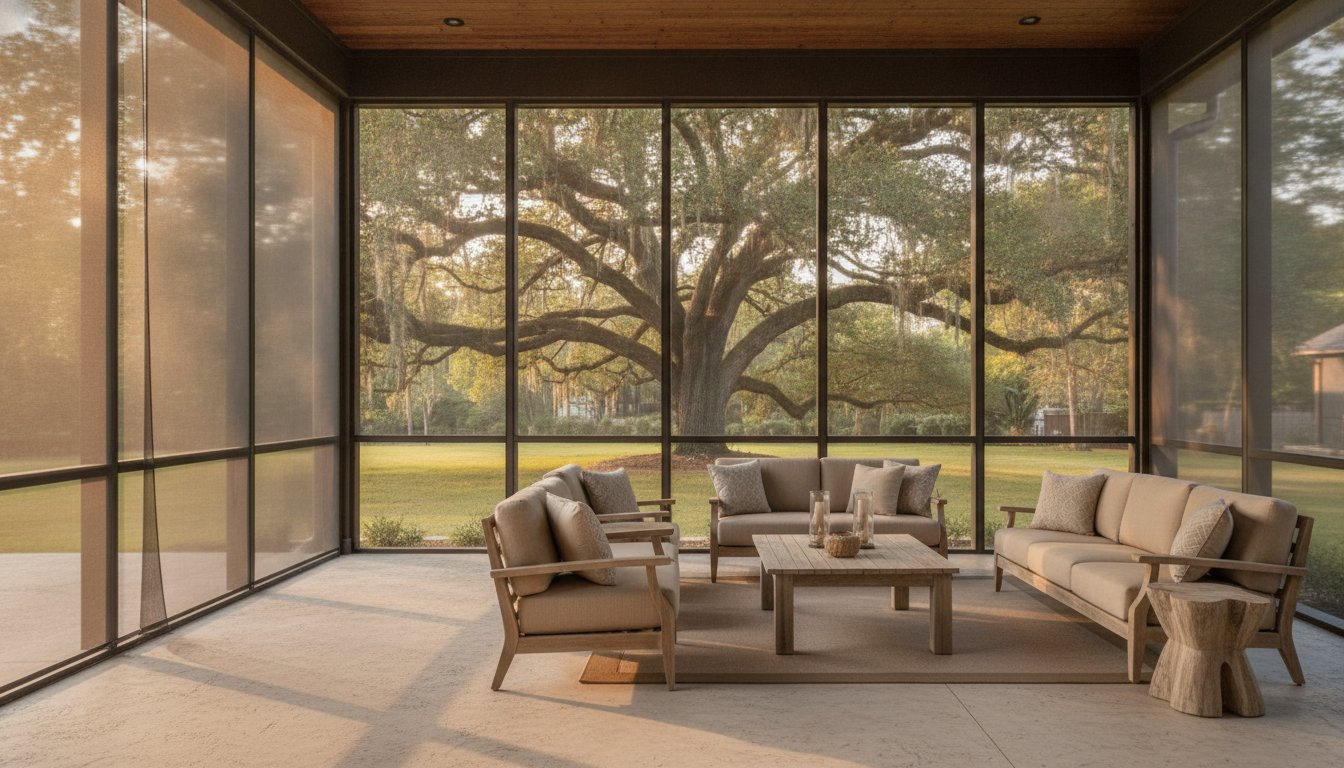
Finding the best way to screen a porch Lafayette families can actually use year-round requires a shift toward professional-grade solutions. This 2026 guide shares the secrets to building a bug-free, cool, and durable retreat using the latest industry standards. You’ll learn about high-density insect mesh, the benefits of rot-resistant framing, and how integrating motorized screens can provide the ultimate flexibility for your home. We’re diving into the specific methods and materials that stand up to the unique demands of the Acadiana environment, ensuring your investment remains a source of pride for decades.
Key Takeaways
- Identify the specific mesh densities required to block South Louisiana “no-see-ums” without sacrificing the cross-breezes necessary for summer comfort.
- Evaluate the pros and cons of extruded aluminum versus handcrafted cypress to ensure your porch frame resists the rot and warping common in high-humidity environments.
- Learn how to integrate insulated patio covers and proper drainage to keep your outdoor living space usable even during the peak of heat and heavy rain.
- Explore why combining fixed enclosures with motorized retractable screens is often the best way to screen a porch Lafayette residents choose for year-round versatility.
- Discover the essential planning steps for concrete slabs and roof structures that provide a stable, long-lasting foundation for your new screened room.
Understanding the Lafayette Climate Challenge for Porch Screening
Building a screened area in South Louisiana isn’t the same as building one in the Midwest or even North Louisiana. Our environment presents a relentless combination of extreme humidity, heavy rainfall, and a diverse population of aggressive insects. The best way to screen a porch Lafayette residents can enjoy for years is to treat the project as an engineered system rather than a simple DIY weekend task. If you don’t account for the local atmospheric pressure and biological factors, your new retreat will quickly become a maintenance burden or an unusable “hot box.”
Lafayette’s Unique Pest Pressure
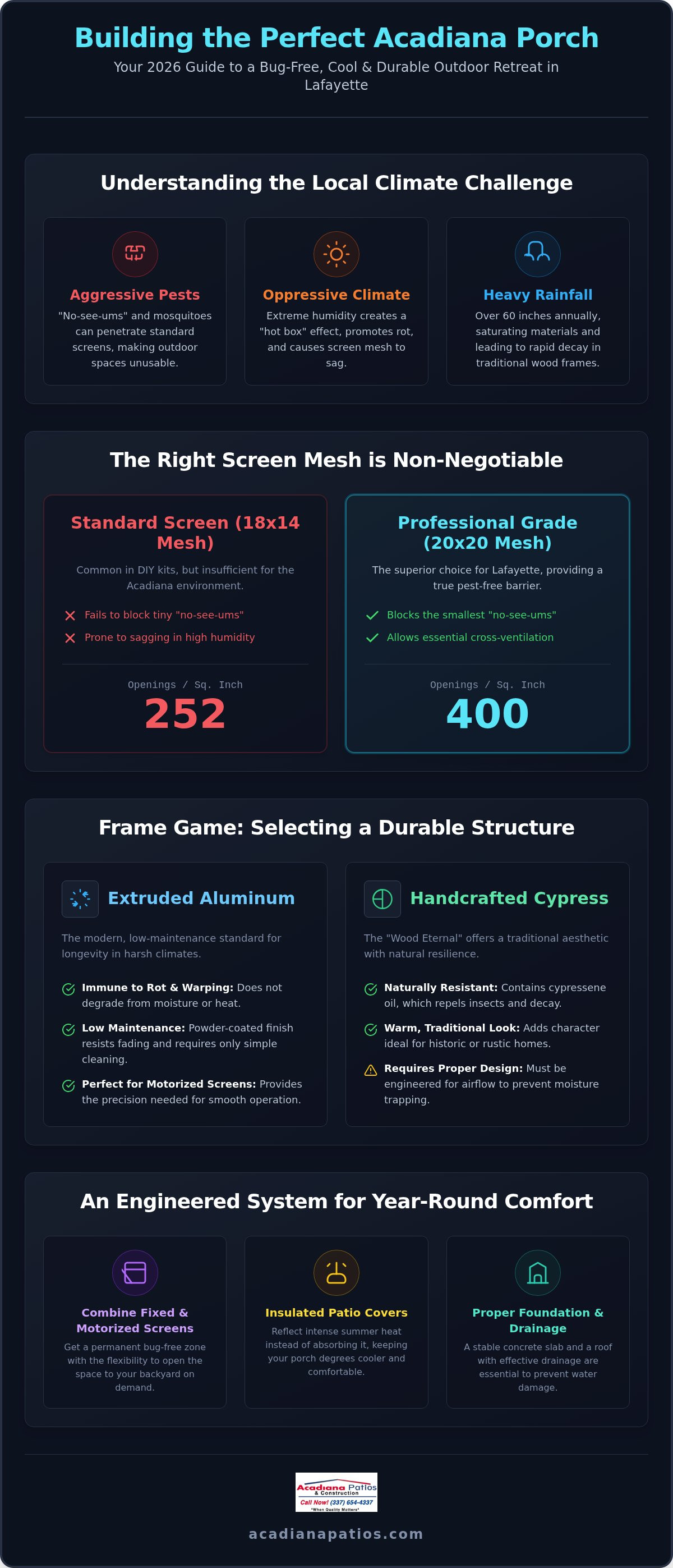
Mosquitoes are the obvious enemy, but they aren’t the only ones. Acadiana is home to tiny biting midges, frequently called “no-see-ums,” which are small enough to fly right through standard window screening. Most off-the-shelf screen kits use an 18×14 mesh, which refers to the number of openings per square inch. While this stops large flies, it fails against our local gnats. A professional 20×20 mesh is often the superior choice for our region. This tighter weave provides a much-needed barrier against the smallest pests while still allowing for essential cross-ventilation. Proper screen tension is also a factor. If the mesh isn’t installed with professional-grade spline and high-tension tools, it will sag over time, creating tiny apertures near the frame where insects can easily crawl through.
Combating the “Green Mold” and Rot Cycle
Lafayette receives more than 60 inches of rain in a typical year. This constant saturation, combined with our heat, creates a perfect environment for “green mold” and wood rot. Traditional wood framing often fails in our climate because it traps moisture between the screen’s edge and the timber. This leads to soft spots and structural instability within just a few seasons. To build a durable enclosure, you must prioritize materials and designs that promote rapid drying and resist organic growth. Airflow is your best friend here. A well-designed porch ensures that air doesn’t become stagnant. Stagnant, humid air doesn’t just feel uncomfortable; it actively accelerates the degradation of your building materials.
The best way to screen a porch Lafayette homeowners choose for long-term value involves balancing three critical elements: insect exclusion, moisture management, and heat reflection. When these factors are addressed together, the result is a comfortable, low-maintenance space that stands up to the rigors of the Acadiana climate. Focusing on just one aspect, like bugs, while ignoring airflow or rot resistance will inevitably lead to a space that feels like an oven in July or requires a full rebuild in five years. To ensure your entire home remains protected from the elements, Powersol Solutions provides expert roofing and siding services that help prevent moisture damage and maintain structural integrity.
Selecting the right skeleton for your enclosure is just as vital as the mesh itself. In Acadiana, the combination of high humidity and intense UV exposure makes material selection a critical long-term financial decision. The best way to screen a porch Lafayette homeowners find is to match the framing material to both their daily lifestyle and the specific architectural style of their home. While several options exist, they perform very differently under the stress of South Louisiana’s weather cycles.
The Case for Extruded Aluminum Systems
Extruded aluminum is often considered the industry standard for modern, low-maintenance enclosures. Unlike steel, it doesn’t rust; unlike wood, it won’t rot or warp when exposed to 60 inches of annual rainfall. These systems feature professional powder-coated finishes that resist the punishing Louisiana sun without fading or peeling. One of the greatest benefits of aluminum is its precision. It allows for seamless integration with motorized patio screens, providing the stable, straight tracks necessary for smooth operation. It’s a “set it and forget it” solution that requires nothing more than an occasional rinse with a garden hose to look brand new for decades.
Cypress: The “Wood Eternal” for Acadiana Porches
For homeowners who value a traditional aesthetic, handcrafted cypress remains a premier choice. Locally known as the “Wood Eternal,” cypress contains a natural oil called cypressene that makes the heartwood naturally resistant to insects and decay. It offers a warmth and character that metal cannot replicate, making it ideal for historic Lafayette homes or rustic outdoor living spaces. We often combine these robust cypress frames with modern screen tracking systems. This approach gives you the best of both worlds: the timeless beauty of Louisiana craftsmanship with the high-performance bug protection of modern technology.
While vinyl and PVC options are available for the budget-conscious, they often struggle with the extreme thermal expansion seen in our region. High temperatures can lead to sagging or brittleness over time. Furthermore, structural integrity is a major concern during hurricane season. Lafayette building codes require specific wind load ratings to ensure your porch doesn’t become a liability during a storm. A professional frame, whether aluminum or cypress, must be anchored correctly to the foundation to withstand these high-wind events. If you’re ready to explore which material fits your vision, talking to a local specialist can help you navigate these technical requirements with confidence.
Choosing the Best Screen Mesh for Your Specific Needs
The frame provides the structure, but the mesh is what actually does the work of keeping your environment comfortable. The best way to screen a porch Lafayette homeowners can rely on is to select a mesh that matches their specific household priorities. Not all screens are created equal; some focus on visibility, while others prioritize durability or climate control. Choosing the wrong material can lead to frequent repairs or a space that feels too dark and stuffy.
Standard fiberglass mesh serves as the baseline option, offering good visibility and basic protection against large insects. However, families with active dogs or cats often find that standard mesh punctures easily. In these cases, pet-resistant mesh is the superior choice. This heavy-duty, vinyl-coated polyester is significantly stronger than standard fiberglass, resisting claws and paws without losing its shape or tearing away from the frame.
The “No-See-Um” Mesh Advantage
We previously discussed the importance of mesh density in the Acadiana climate. To understand the technical difference, standard screening typically has 18 vertical and 14 horizontal threads per square inch. A “no-see-um” screen increases this to a 20×20 weave. This tighter pattern is essential if your home is near the Vermilion River or dense foliage where tiny biting midges thrive. You should be aware that a denser mesh does slightly reduce airflow. We recommend this high-density option for porches where total pest exclusion is the absolute priority over a maximum breeze.
Solar Screens and Energy Efficiency
Lafayette’s summer sun can be brutal on outdoor furniture and skin. Solar screening is engineered to block up to 90 percent of UV rays before they ever reach your patio. By absorbing and dissipating heat, these screens can lower the temperature of your porch by as much as 15 degrees. This thermal barrier makes the space usable even during the peak of a July afternoon. Beyond temperature control, solar mesh provides several key benefits:
- Furniture Protection: Prevents expensive outdoor rugs and cushions from fading due to sun bleaching.
- Daytime Privacy: The thick weave allows you to see out clearly while making it difficult for neighbors to see inside the enclosure.
- Glare Reduction: Makes it much easier to use laptops or watch television in your outdoor living area.
The best way to screen a porch Lafayette residents choose for maximum comfort often involves a hybrid approach. You might use fixed “no-see-um” mesh on the sides of the enclosure and a motorized solar shade for the western-facing opening. This allows you to customize your protection based on the time of day and the severity of the heat, ensuring you aren’t trapped inside when the weather is beautiful.
Step-by-Step: How to Plan Your Screened Porch Project
Planning a successful addition requires more than just picking a mesh type. It involves a meticulous look at your home’s existing structure and how a new enclosure will interact with the local elements. The best way to screen a porch Lafayette families find successful is to start from the ground up, ensuring every structural detail is handled with precision before the first screen panel is installed. Skipping the planning phase often leads to drainage issues or structural failures during the next major storm.
Foundation and Base Prep
A durable enclosure depends entirely on the surface beneath it. If you’re starting from scratch, a professional concrete slab installation is the most critical first step. The slab must be perfectly level and properly cured to prevent shifting. Even a slight settle in the foundation can cause screen frames to twist, leading to unsightly mesh sagging and gaps where pests can enter.
Drainage is another vital consideration in our rainy climate. Your contractor must ensure the slab is pitched slightly away from the home and that the screen tracks include “weep holes.” These small outlets allow rainwater to escape rather than pooling against the framing material. For those wanting to elevate the aesthetic, decorative or colored concrete can turn a standard floor into a high-end feature that complements your home’s architecture while providing a stable, rot-proof base for your enclosure.
Roofing and Enclosure Integration
Integrating your screens with a proper roof structure is the only way to combat the South Louisiana heat effectively. Many homeowners choose to pair their enclosure with an insulated patio cover. These systems use high-density foam cores to provide a thermal break, keeping the area significantly cooler than a traditional shingled roof or open rafters. This integration ensures your porch doesn’t become a heat trap during the humid summer months.
When planning the integration, consider these technical details:
- Structural Tie-ins: Ensure the enclosure is securely attached to the home’s fascia or wall studs to meet local wind load requirements.
- Electrical Planning: Plan for ceiling fans and outdoor lighting early. Running conduit before the enclosure is finished keeps wires hidden and professional.
- Permits and HOAs: Lafayette Parish has specific building codes for wind resistance. Most local neighborhoods also require HOA approval for any structure that alters the home’s exterior profile.
The best way to screen a porch Lafayette residents can trust involves managing these logistical hurdles early in the process. Don’t leave the paperwork or technical structural details to chance. If you’re ready to start your project with a team that understands local codes and high-standard craftsmanship, contact Acadiana Patios & Construction to discuss your custom project plan.
Fixed Enclosures vs. Motorized Screens: Which is Best for You?
Deciding on the best way to screen a porch Lafayette homeowners will appreciate long-term often comes down to a choice between permanent structural protection and adaptable technology. Both paths offer significant benefits, but your daily habits and how you intend to use the space should guide the final design. While one family might prioritize a constant bug-free zone, another might prefer the ability to open the space entirely when the weather is perfect.
The Lifestyle Comparison
A permanent screened enclosure is typically the preferred choice for those who want a dedicated outdoor room that remains bug-free 24/7. These fixed walls provide the highest level of consistent protection and are generally the most cost-effective option for covering large perimeters. They create a stable environment where outdoor furniture and kitchens remain shielded from the elements year-round.
Motorized retractable screens offer a different kind of luxury: flexibility. They allow you to enjoy an open-air patio on those rare, beautiful Acadiana spring mornings while providing an instant barrier against evening mosquitoes at the touch of a button. During Louisiana storm seasons, motorized units can be retracted into protective housings to prevent wind damage. Fixed enclosures, conversely, are engineered as permanent structural additions designed to withstand local wind load requirements without being moved.
The Acadiana Patios Professional Advantage
Since 1985, our family-operated business has focused on providing more than just a basic screen installation. We believe the best way to screen a porch Lafayette families can rely on for decades is through a “Master Builder” approach. This philosophy ensures that every joint is tight, every screen spline is perfectly tensioned, and every structural tie-in matches your home’s existing architecture seamlessly. Precision in these finer details is what prevents the common issues of sagging mesh or frame separation seen in lower-quality builds.
A hybrid solution is frequently the most effective “best way” for modern homes. By combining fixed screen walls for the majority of the enclosure with a motorized screen for the main transition to the yard or pool, you gain both economy and convenience. This thoughtful design increases the usable square footage of your home and provides a high ROI by boosting property value. A well-constructed screened porch transforms an underutilized patio into a durable, high-caliber living space that stands up to the rigors of the South Louisiana environment. Once your structure is complete, you can focus on the aesthetics; for those looking to elevate their seasonal curb appeal, Porch & Poise provides professional fall decorating services to make your new space truly shine.
Creating a comfortable outdoor space in South Louisiana requires more than just a basic mesh barrier; it demands a system engineered for our specific humidity and pest pressure. You’ve seen that the best way to screen a porch Lafayette families can enjoy year-round involves a careful balance of high-density “no-see-um” mesh, rot-resistant framing like cypress or aluminum, and proper structural integration. Whether you choose the constant protection of a fixed enclosure or the modern flexibility of motorized screens, the key is prioritizing durability and airflow.
Since 1985, our family-operated team has specialized in custom cypress and aluminum construction across Acadiana. We take pride in our A+ rated craftsmanship and meticulous attention to detail, ensuring every project meets the highest standards of local reliability. If you’re ready to reclaim your patio from the heat and insects, request a free custom design consultation from Acadiana Patios. We look forward to helping you create a durable, beautiful retreat that you’ll love for years to come.
Frequently Asked Questions
What is the best screen mesh for keeping out “no-see-ums” in Lafayette?
A 20×20 high-density mesh is the superior choice for blocking “no-see-ums” and tiny biting midges. While standard 18×14 mesh stops mosquitoes, it is too porous for the smaller pests common in Acadiana. Choosing a tighter weave is often cited as the best way to screen a porch Lafayette homeowners use for evening relaxation. It provides a comprehensive barrier while still allowing for necessary ventilation during our humid summers.
How much does it cost to screen an existing porch in Louisiana?
Pricing for a screened enclosure depends on several custom variables rather than a flat rate. Factors that influence the final investment include the choice between handcrafted cypress or extruded aluminum, the total square footage, and the type of mesh selected. Additionally, the complexity of the roof tie-in and the need for new concrete work will impact the project scope. Requesting a custom design consultation is the most accurate way to determine specific project costs.
Do I need a building permit to screen my porch in Lafayette Parish?
Most porch screening projects in Lafayette Parish require a building permit, especially if the project involves structural framing or electrical work. These regulations ensure that the enclosure meets specific wind load requirements necessary for South Louisiana’s storm seasons. It’s always best to verify current codes with the Lafayette Consolidated Government or your local HOA before beginning construction to ensure your project is fully compliant and safely anchored to your home.
How long do aluminum screen enclosures last in the Louisiana humidity?
High-quality extruded aluminum enclosures are designed to last for several decades with minimal maintenance. Unlike traditional wood, powder-coated aluminum is impervious to the rot, warping, and “green mold” that thrive in our high annual rainfall. This durability makes it a reliable choice for the local climate. Beyond an occasional rinse with a garden hose to remove pollen or dust, these structures require very little upkeep to remain structurally sound and visually appealing.
Can I install a ceiling fan in a screened-in porch?
You can absolutely install a ceiling fan, provided you select a model specifically rated for outdoor or “wet” locations. These fans feature sealed motors and weather-resistant blades that won’t droop in high humidity. For a professional finish, it’s essential to plan the electrical routing during the framing stage. This allows the builder to hide the conduit within the frame, ensuring a clean look while providing the essential airflow needed for summer comfort.
What is the difference between a screened porch and a sunroom?
The primary difference lies in the barrier material and climate control. A screened porch uses mesh to provide a bug-free environment while allowing for natural breezes and ambient temperatures. A sunroom uses glass windows to create a fully enclosed, weather-tight space that is often connected to the home’s heating and cooling system. While both enhance your living area, a screened porch offers a more direct connection to the outdoors and the local Acadiana environment.
How do I clean and maintain my porch screens to prevent mold?
Maintaining your screens is straightforward and helps prevent the buildup of organic growth. Use a soft-bristled brush with a mixture of mild dish soap and lukewarm water to gently scrub the mesh and framing. It’s important to avoid high-pressure washers, as they can stretch the screen or damage the spline. Regularly clearing the “weep holes” in the bottom track ensures that rainwater drains properly, which is the best way to screen a porch Lafayette residents keep mold-free.
Will a screened porch increase my home value in Lafayette?
Adding a professionally constructed screened porch typically increases a home’s marketability and overall value in the Lafayette real estate market. Potential buyers in Acadiana highly prize functional outdoor living spaces that offer protection from the heat and insects. By increasing the usable square footage of the home and enhancing its architectural appeal, a well-designed enclosure serves as a high-ROI improvement that pays dividends in both daily lifestyle quality and future resale potential.