

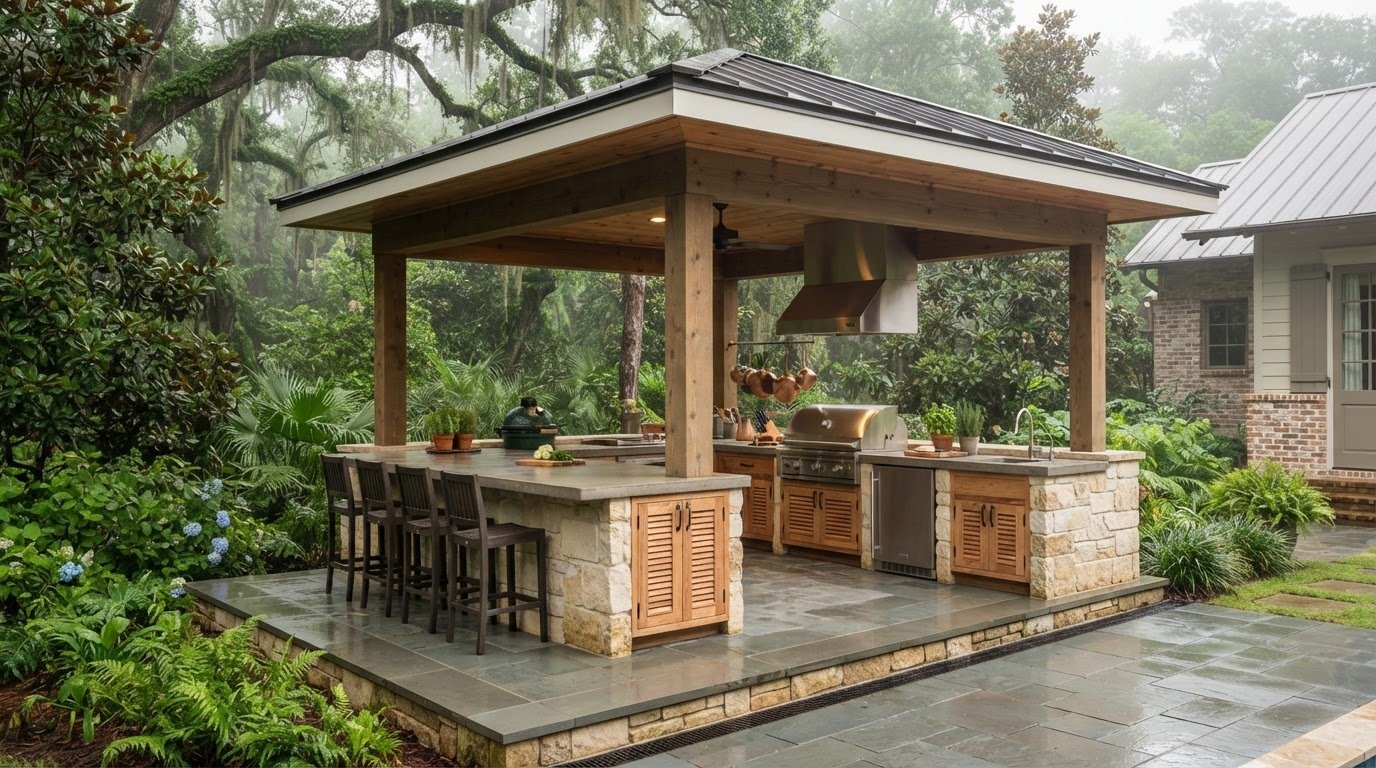
Humid Climate Outdoor Kitchens: A Louisiana Guide
In Louisiana, the best outdoor kitchen appliances for humid climates aren’t necessarily the ones with the longest feature list. They’re the ones selected for the heat, humidity, rain, and exposure they’ll face. If you’re concerned that damp air and storms could affect your appliances, start by planning for the site as well as the equipment.
This guide explains how to choose appliances that suit your cooking habits and outdoor kitchen location. You’ll learn which pieces may be useful for everyday meals, which are optional, and what to compare when reviewing materials, finishes, and manufacturer instructions. We’ll also cover placement, weather protection, and upkeep to help you plan a functional kitchen for Lafayette conditions.
A well-designed outdoor kitchen brings appliances, work surfaces, and shelter together in a practical layout. Acadiana Patios & Construction serves Lafayette and Acadiana with outdoor kitchen design and construction. Planning the structure and appliance locations as one project helps shape a space around local conditions and the way you want to cook and gather.
Key Takeaways
- Choose the best outdoor kitchen appliances for humid climates by matching each appliance to your cooking habits and the exposure at its planned location.
- Prioritize the cooking and serving essentials you’ll use regularly. Add a sink, griddle, or specialty appliance when it supports how you prepare food or entertain.
- Compare manufacturer documentation, location guidance, and upkeep needs rather than relying on material names alone to judge outdoor suitability.
- Map roof coverage, rain exposure, drainage, utility connections, and walking routes before finalizing appliance placement.
- Coordinate appliances, layout, and the surrounding outdoor space as one plan for a more cohesive Louisiana outdoor kitchen.
Best Outdoor Kitchen Appliances for Humid Climates: Start with Local Exposure
The best outdoor kitchen appliances for humid climates aren’t chosen by counting features. Start with the site: how much sun and moisture it gets, how much shelter it offers, and how your household cooks. In Lafayette, heat, humidity, and frequent rain make placement and routine care part of the plan, not details to leave until after you select equipment.
Weather-conscious appliance planning means matching each appliance’s intended use and manufacturer guidance to its actual exposure, shelter, and upkeep needs. A covered area, a screened space, and an open patio each create different conditions. A roof can reduce direct rain and sun, but it doesn’t make appliances weatherproof. Screens may limit some exposure while still allowing humid air and wind-driven rain through. An uncovered location faces the elements more directly.
How Louisiana weather changes the planning checklist
Humidity and direct rain are separate considerations. Moist air can linger under a roof, while wind can carry rain into a sheltered cooking area from the sides. Sun direction matters too. Track where afternoon light falls, mark the roof’s coverage, and note which edges are most exposed. Those site details help determine where appliances belong and what care their manufacturers recommend.
Plan for water to drain away from cooking and work areas, and consider where splashes may come from during cooking or cleanup. Leave access for routine cleaning and service when laying out cabinets and equipment. A coordinated outdoor kitchen accounts for exposure, drainage, and practical access from the start.
Match the appliance package to how the household cooks
Begin with regular meals, not a wish list of upgrades. Think about what you cook most often, how frequently you’ll use the kitchen, and how many people typically cook and gather at once. A grill may be the main appliance for one household, while another may value extra cooking space or a convenient way to serve drinks. The right setup depends on your routines and the space available.
- Everyday essentials: Prioritize appliances that support meals you prepare regularly.
- Occasional conveniences: Consider a side burner or sink if it improves your usual cooking or cleanup routine.
- Entertaining upgrades: A griddle or specialty cooker may suit gatherings or particular cooking interests.
Outdoor cooking includes a range of equipment and methods, as outlined in Outdoor Cooking: An Overview. Use those possibilities as inspiration, then narrow the choices to what fits your site and habits. Acadiana Patios & Construction designs and builds outdoor kitchens in Lafayette and Acadiana, bringing appliance placement and the surrounding structure together in one plan.
Which Outdoor Kitchen Appliances Make Sense in Humid Weather?
A useful appliance plan starts with what you cook and serve, then makes room for each task. A grill may be the main cooking station, but refrigeration, extra burners, and specialty equipment earn their place only when they fit your routines. In a Louisiana kitchen, each addition also affects the layout, connections, airflow, and preparation space.
Core cooking and preparation appliances
The grill often anchors the cooking area. Leave counter space nearby for ingredients, utensils, and cooked food, so you’re not carrying items across the kitchen. A side burner can help if you regularly prepare sauces, side dishes, or other foods alongside grilled meals. If you rarely do those tasks outdoors, it may take up space without adding much value.
A sink can make rinsing and cleanup more convenient, but its usefulness depends on water access and how you expect to use the kitchen. Think through the work sequence: where food is prepared, where it cooks, and where finished dishes land. Ventilation also deserves attention, especially in a covered area. Plan airflow around the cooking setup, and avoid crowding appliances or work surfaces into a layout that feels cramped.
Optional appliances for entertaining and convenience
Outdoor refrigeration is most helpful when you want ingredients or drinks close to the cooking area. If outdoor meals are occasional or you prefer to bring items outside as needed, it may be less important. Add appliances for a clear purpose, not simply to fill the kitchen. The best outdoor kitchen appliances for humid climates are the ones whose use justifies their space and whose placement suits the site.
- Need-dependent core: grill. Make it central if grilling is a regular part of your outdoor meals.
- Need-dependent core: side burner. Include it if you often cook sides or sauces outdoors at the same time.
- Need-dependent core: sink. Consider it if outdoor preparation and cleanup are frequent and water access fits the plan.
- Need-dependent convenience: outdoor refrigerator. Choose it if food or drinks regularly need to stay near the cooking zone.
- Need-dependent upgrade: griddle or pizza oven. Add one when its cooking style suits meals you make often.
- Need-dependent upgrade: ice maker. Consider it if gatherings routinely call for ice in the outdoor serving area.
- Need-dependent serving convenience: warming drawer. It may help coordinate serving, but it isn’t essential for every household.
Before settling on the appliance package, picture a typical meal from preparation through serving. Check that there’s a convenient place to set hot cookware and finished food, and that the cooking area leaves room to move. A well-planned layout coordinates the appliances with counter space and the surrounding structure, rather than treating each item as a separate purchase.
For a custom outdoor kitchen, Acadiana Patios & Construction’s outdoor kitchen planning brings appliance priorities and the overall layout together in one project.
How to Compare Outdoor Appliances for Humidity, Rain, and Durability
Compare each appliance for its intended location, not by its finish or material label alone. A unit under a roof may face less direct rain than one on an open patio, but wind can still carry rain into a covered space. Humid air is a separate consideration. An appliance’s suitability depends on its documented use, exposure, care needs, and access after installation.
Use this framework while reviewing options. Details vary by model, so treat the table as a planning guide, not a substitute for manufacturer instructions.
| Comparison point | Questions to consider |
|---|---|
| Appliance purpose | What regular cooking, preparation, or serving task will it support? |
| Location exposure | Will it be under a roof, behind screens, or more directly exposed to sun and rain? Could wind-driven rain reach it? |
| Documentation | Do the manufacturer’s installation instructions describe the intended location and environmental limits? |
| Upkeep | What cleaning and care does the manufacturer specify for the appliance and its finish? |
| Access | Will there be practical room to clean, inspect, and service the appliance after it’s built into the layout? |
Compare finishes and weather suitability without relying on labels
Material names are useful, but they don’t tell the whole story. Stainless-steel grades and finishes differ, and a label alone doesn’t establish whether an appliance is appropriate for a particular outdoor location. Check the manufacturer’s guidance for exposure, installation location, cleaning, and care. Compare it with the actual site conditions, including whether the appliance could face direct or wind-driven rain.
Stainless steel still requires appropriate care, so follow the manufacturer’s cleaning and maintenance instructions. That guidance matters in a covered kitchen as well as an exposed one. A roof may reduce direct rainfall, but it doesn’t necessarily prevent humid air or moisture from reaching equipment.
Check service access, ventilation, and utility coordination
Plan access before the appliance is enclosed by counters or cabinetry. Make sure the final arrangement leaves a practical way to reach areas that require routine cleaning or service. Coordinate appliance locations with the gas, electrical, or plumbing connections they need. Planning these elements together helps avoid a layout that looks complete but is difficult to maintain or use.
Ventilation and clearances vary by model. Use each appliance’s installation instructions to understand the required placement and airflow, especially within a covered structure. Don’t assume one appliance’s spacing guidance applies to another. To choose the best outdoor kitchen appliances for humid climates, match documented requirements to the planned site before finalizing the layout.
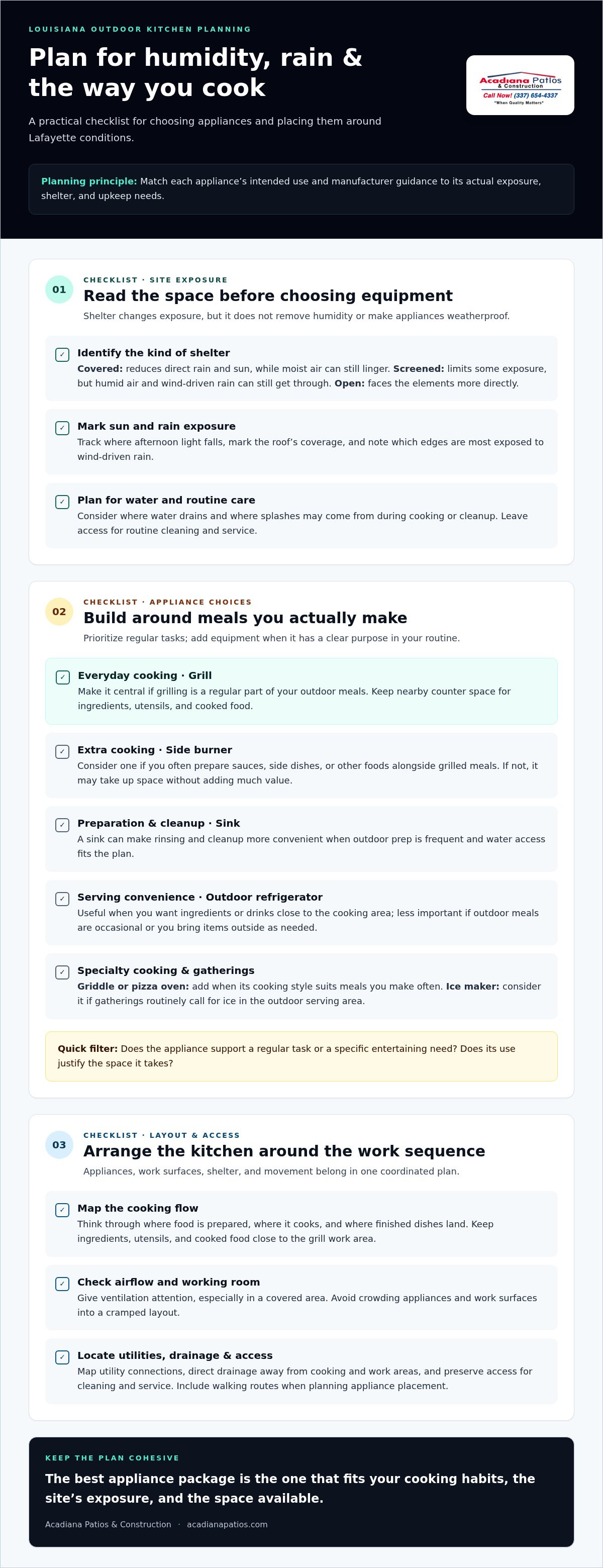
Plan Appliance Placement and Upkeep for a Lafayette Outdoor Kitchen
A dependable layout takes shape before appliances are installed. Choosing the best outdoor kitchen appliances for humid climates means connecting everyday cooking with the conditions of your Lafayette site, the kitchen’s movement paths, and each appliance’s care requirements. A simple site sketch can reveal conflicts early, before counters and connections make changes more difficult.
A practical sequence for choosing and placing appliances
Work through these decisions in order so appliance choices and construction details support one another:
- List recurring cooking tasks. Note the meals you prepare outdoors, how often you cook, and which appliances would support those routines. Keep occasional entertaining needs separate from everyday priorities.
- Map the site’s exposure. On a sketch, mark roof coverage, screened areas, and open zones. Note where the sun falls, which directions bring wind-driven rain, and where water may collect or splash.
- Trace the walking routes. Map how cooks and guests move between the house, kitchen, and gathering area. Leave room to carry food and cookware without crossing the busiest work zone.
- Fit appliances to the layout. Use appliance dimensions and installation guidance to plan positions alongside counters and landing space. Leave access to areas that may need cleaning or service.
- Coordinate connections and construction. Plan appliance locations with the gas, electrical, or plumbing routes they require. Resolving these relationships as part of the overall design helps the kitchen function as a coordinated space.
Use the sketch to test more than one arrangement. An appliance may fit on paper but interrupt a walking route or sit where rain commonly reaches the area. The layout should account for those conditions as well as cooking sequence and access. Custom outdoor kitchen design ideas for Acadiana homes can help you consider how the kitchen’s placement and surrounding outdoor space work together.
Build a realistic care routine for humid conditions
Care needs depend on the appliance, its location, and the manufacturer’s instructions. Follow model-specific guidance for cleaning, inspection, and seasonal preparation rather than applying one schedule to every piece of equipment. After use or rain, check for standing water or food residue and address it according to the appliance’s care instructions. Avoid cleaners or methods the manufacturer doesn’t recommend.
Keep care instructions with your household’s routine maintenance notes. That makes it easier to follow the right steps for each appliance, especially when the kitchen includes several types of equipment. Acadiana Patios & Construction brings outdoor kitchen design and construction together, helping homeowners plan appliance placement as part of a complete Lafayette outdoor living project. Plan your outdoor kitchen layout with Acadiana Patios & Construction.
Bring Appliance Choices Together in an Acadiana Outdoor Kitchen
An outdoor kitchen works best when its appliances, layout, and setting are planned as one project. Start with what you cook and how you use the space, then consider the site’s exposure and how each appliance fits within the overall design. This keeps the plan focused on practical use instead of a collection of features that may not suit your household.
What a coordinated outdoor kitchen plan brings together
Appliance locations influence more than the cooking zone. A grill needs a sensible relationship to nearby counter space, while circulation paths should let cooks and guests move comfortably around the kitchen. Shade and roof coverage shape the setting, and the placement of seating or adjacent outdoor living areas affects how people gather and serve meals. Each decision contributes to how the finished space feels and functions.
Include appliance dimensions and utility needs during the design stage. This gives the layout room to account for equipment, work surfaces, and connection routes before construction details are settled. It also helps coordinate the kitchen with the patio or covered area around it. Custom design and construction can bring these elements together, so the kitchen feels connected to the wider outdoor space rather than added as an afterthought.
Budget planning is another part of coordination. Appliance choices, surrounding construction, and the overall project scope all inform planning. For additional context as you shape your plans, explore the Louisiana outdoor kitchen cost guide. Use it as a reference alongside your household’s priorities and the layout you have in mind.
A clear next step for Lafayette-area homeowners
Before discussing a project, consider how you cook outdoors, how many people typically gather, and which parts of the space you want to bring together. You might prioritize straightforward weeknight meals, a comfortable place to serve guests, or a layout that connects cooking and dining. These details give the design process a clear starting point.
Acadiana Patios & Construction is a family-operated local contractor providing outdoor kitchen design and construction in Lafayette and Acadiana. The best outdoor kitchen appliances for humid climates are only one part of a successful plan. Their placement should work with the site, the structure, and the way you’ll use the space. If you’re ready to explore the possibilities, plan your outdoor kitchen with Acadiana Patios & Construction.
Turn Your Outdoor Kitchen Ideas Into a Thoughtful Plan
Your next step can be simple: write down what you want your outdoor kitchen to make easier. Maybe it’s preparing meals outside more often, serving guests without repeated trips indoors, or creating a comfortable place to gather. Use those priorities to guide appliance choices and shape a project plan around your home and the way you live.
The best outdoor kitchen appliances for humid climates are part of a larger design decision. Their placement, shelter, and relationship to work surfaces and gathering areas all contribute to a purposeful kitchen. A custom plan can bring those details together while making room for the outdoor experience you want to create.
Acadiana Patios & Construction is a family-operated local home improvement contractor serving Lafayette and Acadiana, with custom outdoor kitchen and fireplace projects. Share how you cook, gather, and hope to use your outdoor space, then plan your outdoor kitchen with Acadiana Patios & Construction.
Frequently Asked Questions
Are stainless-steel outdoor kitchen appliances rustproof in humid climates?
No. Stainless steel can resist corrosion, but it isn’t automatically rustproof. Performance depends on the appliance’s grade, finish, exposure, and care. Humid air, rain, residue, and neglected cleaning can all matter. Read the manufacturer’s guidance for the specific model and clean it as directed. A stainless exterior doesn’t mean an appliance can be left exposed or maintained without attention.
Can outdoor kitchen appliances stay uncovered in Louisiana rain?
Only if the manufacturer’s instructions allow the appliance to be installed in that exposure. “Outdoor” doesn’t necessarily mean suitable for every uncovered location or for wind-driven rain. Before placing equipment on an open patio in Lafayette, consider where rain reaches the cooking area and whether the appliance documentation addresses that setting. A cover or roof may reduce exposure, but it doesn’t establish that the appliance is weatherproof.
Which outdoor kitchen appliances are essential for everyday cooking?
There’s no universal essential package. For a household that regularly grills dinner, a grill and enough nearby counter space for ingredients and serving dishes may be a practical starting point. A side burner, sink, or refrigerator is useful if it supports tasks you routinely do outdoors. The best outdoor kitchen appliances for humid climates are need-dependent: choose equipment you’ll use, then plan its position and care requirements.
How should I protect an outdoor refrigerator in hot, humid weather?
Choose a refrigerator intended for outdoor installation, and follow its instructions for placement, ventilation, cleaning, and operation. If the layout allows, avoid a spot with prolonged direct sun, and don’t block the unit’s ventilation openings with cabinetry or stored items. Keep its surroundings accessible for cleaning, and follow the manual’s guidance for care after wet or especially hot conditions. A cover should never obstruct airflow or conflict with manufacturer instructions.
What happens if an outdoor kitchen appliance is installed without enough ventilation?
Insufficient ventilation can allow heat, smoke, or fumes to collect around cooking equipment, and trapped heat may affect nearby components. The risks and airflow needs depend on the appliance and its location, particularly under a roof or within an enclosure. Follow the model’s installation instructions for ventilation and clearances, and plan the surrounding structure accordingly. Don’t assume one appliance’s requirements apply to another.
How often should outdoor kitchen appliances be cleaned in a humid climate?
There isn’t one cleaning interval that suits every appliance or Lafayette site. Follow the manufacturer’s schedule and instructions for each model. As a practical habit, remove food spills and cooking residue after use with the recommended method. Check appliances and surrounding surfaces after heavy rain or extended damp conditions, and address moisture or debris in line with the manual.
Can an outdoor kitchen be designed around existing gas, electrical, and plumbing connections?
Yes. Existing connections can inform the kitchen layout, but appliance locations and utility routes need to be coordinated during design. Start by noting where connections are and which appliances you plan to use, then account for access, counter space, and circulation. The final arrangement depends on the equipment and site conditions. Planning these elements together helps the kitchen function as a cohesive space rather than forcing appliances into awkward positions.