Louisiana Deck Building: High Humidity Guide 2026
Most homeowners think the secret to a long-lasting deck is the expensive boards on top, but in South Louisiana, the real battle is won or lost in the dark, damp space beneath your feet. Building a deck in high humidity requires more than just standard pressure-treated lumber; it demands a strategy built on 2026 standards and local expertise.
You’ve likely seen it before: a beautiful deck that starts rotting within five to seven years, or boards that warp and pop screws as soon as the July humidity hits 90 percent. It’s frustrating to invest in an outdoor space only to watch mold and mildew take over every summer. You want a retreat that remains stable and safe, not a slippery surface that requires constant repair.
You’ll learn the essential materials like rot-resistant cypress, the structural secrets of moisture management, and the professional installation techniques required to keep your backyard retreat durable for decades. We will also cover how the latest 2026 building codes and Act 881 regulations impact your project to ensure your investment is as legally sound as it is structurally durable.
Key Takeaways
- Understand how Equilibrium Moisture Content (EMC) impacts structural integrity and how to prevent cellular collapse in standard lumber.
- Discover why handcrafted Louisiana Cypress and high-performance capped composites are the premier choices for resisting rot in 90% humidity.
- Master the engineering secrets of building a deck in high humidity, including the 12-inch joist rule and ground preparation techniques that maximize airflow.
- Learn the “Lafayette Baseline” for material acclimation and the precise board spacing required to manage extreme seasonal expansion and contraction.
- Access the updated 2026 maintenance schedule and professional guidance on selecting penetrative sealers that withstand the unique Acadiana climate.
The Science of High Humidity: Why Louisiana Decks Fail
In South Louisiana, wood isn’t just a building material; it’s a living organism that constantly reacts to the heavy, saturated air. Building a deck in high humidity requires a deep understanding of Equilibrium Moisture Content (EMC). This term describes the point where wood neither gains nor loses moisture from the surrounding environment. In Lafayette, the average relative humidity often stays high, meaning your deck boards will naturally maintain a much higher internal moisture level than they would in drier regions. This constant state of near-saturation is the primary driver of premature structural failure.
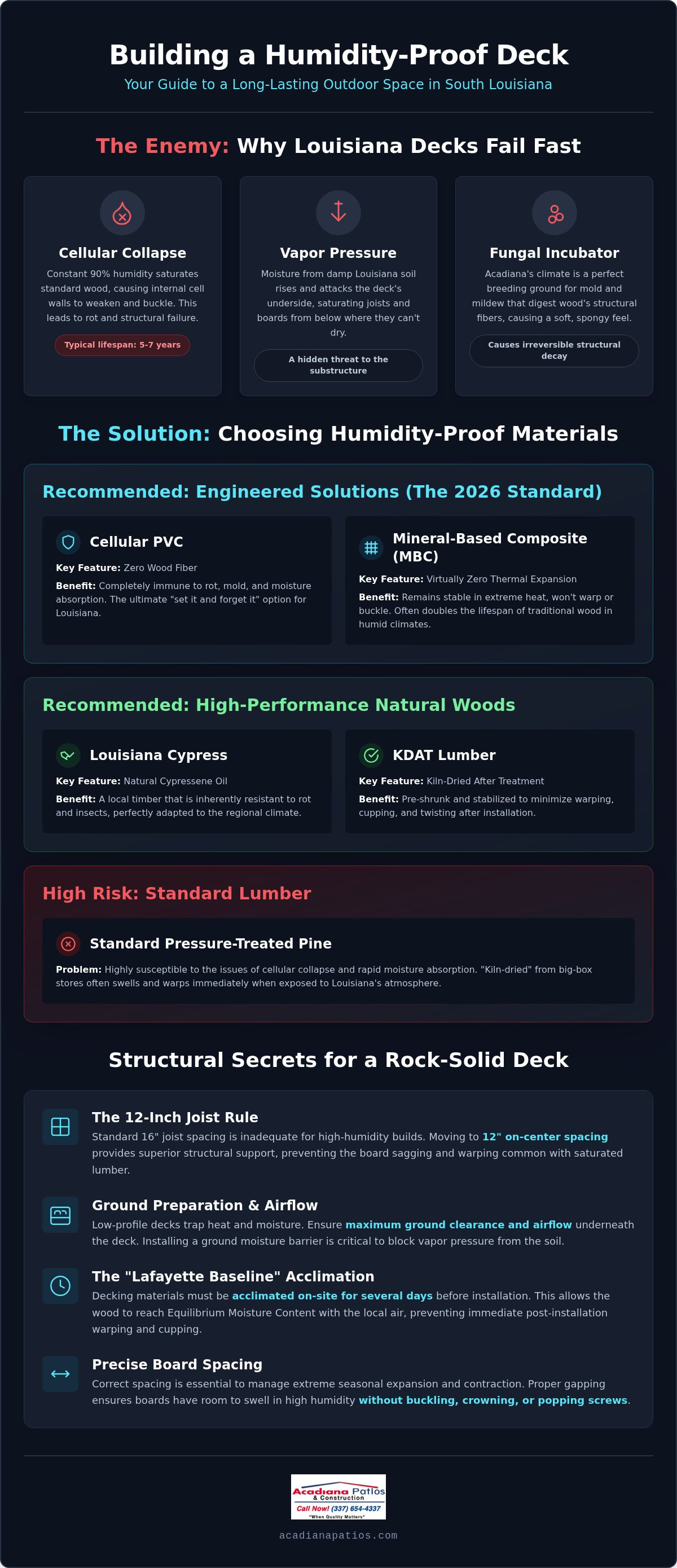
This environment leads to a phenomenon known as cellular collapse. When standard pressure-treated lumber is forced to hold excessive water for long periods, the internal cell walls eventually weaken and buckle. Intense UV rays from the Louisiana sun accelerate this process by drying out the surface too quickly, which opens the wood pores. These open pores then act like straws, sucking in even more moisture during the next afternoon rain. Building a deck in high humidity means planning for this cycle of expansion and contraction that literally tears the wood fibers apart from the inside out.
Many homeowners assume that purchasing “kiln-dried” lumber from a big-box store ensures a stable build. However, wood dried in a controlled factory setting often arrives with a moisture content far lower than the local “Lafayette Baseline.” As soon as it’s exposed to our local atmosphere, it begins to swell rapidly. This rapid absorption leads to the warping, cupping, and popped screws that plague many DIY projects within their first year of service.
Vapor Pressure and Moisture Movement
Moisture movement is a two-front war. While rain hits the top, vapor pressure pushes moisture from the damp Louisiana soil directly into the underside of your deck. Low-profile decks are particularly vulnerable because they create a greenhouse effect. Without proper clearance, heat and moisture become trapped in the crawlspace, saturating the joists and the bottom of the deck boards even on sunny days. Top-side sealers don’t protect against this rising damp, which is why structural design is just as important as material choice.
The Mildew and Mold Cycle in Acadiana
Our heat and humidity create a perfect incubator for fungal growth. In Acadiana, we frequently see specific mold spores that thrive in stagnant, moist environments. These aren’t just aesthetic issues. Long-term fungal colonization digests the lignin that gives wood its strength. This structural decay is what causes decks to feel spongy or soft long before they reach their expected lifespan. We have seen how professional material selection and airflow management prevent this cycle from taking hold.
Selecting the Best Decking Materials for 90% Humidity
Choosing the right material is the most critical decision you’ll make when building a deck in high humidity. In 2026, the industry has shifted away from basic pressure-treated pine, which often fails in our swampy environment. Whether you prefer the precision of engineered boards or the timeless appeal of local timber, your choice must account for moisture saturation and thermal movement. Selecting a decking material for your climate is about matching the material’s cellular structure to the relentless Lafayette air.
Engineered Solutions: PVC and MBC
For homeowners seeking a “set it and forget it” solution, cellular PVC and Mineral-Based Composite (MBC) have become the gold standards. Traditional composites contain wood flour that can still absorb moisture over time. In contrast, modern PVC boards contain zero wood fiber. This makes them completely immune to the rot and mold cycles that typically destroy lower-quality decks. Synthetic materials don’t just resist water; they eliminate the food source for the fungi common in Acadiana.
MBC technology represents the 2026 standard for high-performance decking. These boards use mineral fillers instead of wood or plastic, resulting in a deck that experiences virtually zero thermal expansion. Even in the peak of a Louisiana summer, these boards stay stable. Modern heat dissipation technology ensures the surface remains comfortable for bare feet, while the synthetic core provides a lifespan that often doubles that of traditional wood in humid climates.
Natural Wood: KDAT and Cypress
If you are looking for high-end materials that bridge the gap between aesthetics and durability, WoodMart provides premium wood fiber composite materials designed for long-lasting garden and terrace applications.
When building a deck in high humidity, the “Cypress Advantage” is a phrase we use to describe the superior performance of local timber. Handcrafted cypress is naturally saturated with cypressene, an oil that acts as a built-in preservative. This oil repels moisture and provides a natural defense against Louisiana’s aggressive termite population. It’s a premium, rot-resistant choice that celebrates our local geography while offering high-standard durability.
If you choose to use treated pine, KDAT (Kiln Dried After Treatment) is the only reliable choice. Unlike standard boards that are sold while still wet with chemicals, KDAT lumber is dried in a controlled environment after the pressure-treatment process. This prevents the boards from shrinking and warping as they acclimate to our 90 percent humidity. While exotic hardwoods like Ipe are incredibly dense, they require expert installation to prevent “cupping” in our humid air. If you’re ready to explore these options, our team can help you design custom decks and porches that stand the test of time.
Structural Design: Engineering for Maximum Airflow
A beautiful deck surface is only as stable as the structure supporting it. In the deep South, building a deck in high humidity necessitates an engineering approach that treats airflow as a primary structural component. Without a path for moisture to escape, even the highest quality materials will eventually succumb to the stagnant, saturated air trapped beneath the boards. Precision in the framing stage is what separates a 30-year legacy build from a project that sags within a decade. This commitment to quality is shared by expert outdoor specialists like Bestcare Builders, who focus on durable construction standards for lasting outdoor spaces.
One of the most effective ways to combat humidity-induced sagging is the 12-inch rule. While 16-inch joist spacing is common in drier climates, the moisture levels in Acadiana can soften wood fibers over time. Reducing spacing to 12-inch centers provides superior support and prevents the “bounce” that often leads to water pooling on the surface. We also prioritize the use of high-quality deck joist tape. This simple addition creates a waterproof barrier on the top of the joists, preventing moisture from sitting in the gap between the board and the frame; this is where top-down rot typically begins.
Ground preparation is equally vital for reducing rising damp. We recommend a multi-layered approach to stabilize the sub-deck environment:
- Heavy-duty weed barriers: These prevent organic growth that traps moisture against the frame.
- Clean gravel layers: A layer of gravel helps disperse rainwater and prevents the soil from turning into a humid mud pit.
- Cross-ventilation: Using breathable lattice instead of solid skirting allows the wind to move through the structure, drying out the underside naturally.
Elevated Deck Construction Strategies
For many homes in our region, elevated deck construction in Acadiana is the preferred method for managing both flood risks and humidity. Raising the structure creates a “chimney effect,” where air is naturally pulled through the gaps in the decking as heat rises. This constant movement is the best natural defense against mold. It’s also critical to use proper ledger board flashing. This ensures that the connection between your home and the deck remains watertight, protecting your home’s rim joist from the relentless Louisiana rain.
Sub-Deck Drainage and Grade
Standing water is the enemy of any outdoor structure. We ensure the ground beneath the deck has at least a 2% slope to direct water away from the foundation. In the wet soil of South Louisiana, we prefer concrete piers over direct-bury posts to prevent the wood from sitting in a constant state of saturation. For a truly professional finish, integrating a concrete slab installation under elevated decks provides a clean, dry surface that eliminates rising moisture entirely while adding functional storage or living space.
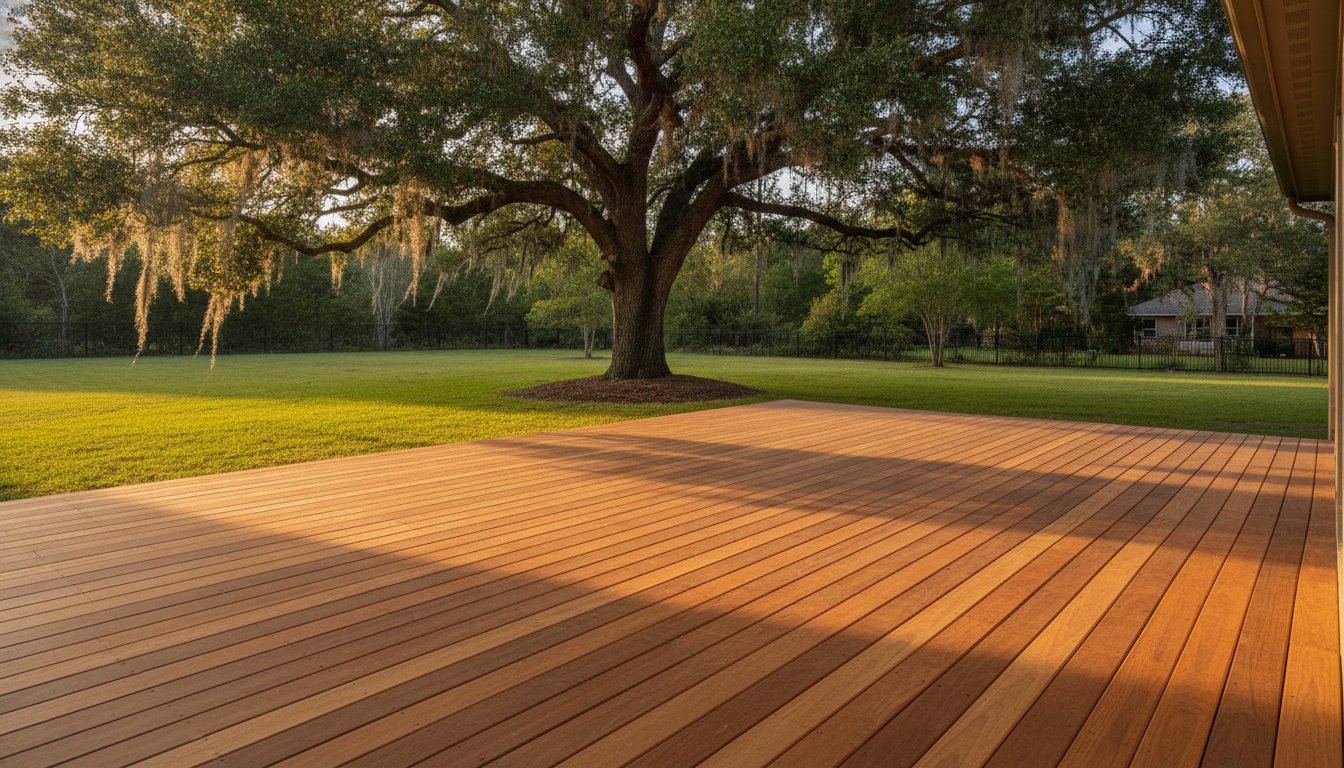
How to Build a Deck in Humidity: Step-by-Step Installation
Success in building a deck in high humidity depends on patience during the preparation phase. While it’s tempting to start driving screws the moment lumber arrives, rushing the process leads to structural failure. Rush the process, and the deck fails. Professional craftsmen understand that every board must reach a state of equilibrium with the local atmosphere before it’s permanently secured. This meticulous approach ensures that the inevitable expansion and contraction of the wood doesn’t tear the frame apart.
Fastener selection is another area where precision is mandatory. In South Louisiana, the combination of high moisture and salt-laden air from the coast creates a highly corrosive environment. We exclusively use 316-grade stainless steel fasteners for our projects. Unlike standard galvanized screws, these won’t rust or “bleed” black streaks down your beautiful cypress or composite boards. Every cut made during the build also requires immediate attention. We seal every end-cut with a wax-based preservative to prevent moisture from wicking into the grain; this effectively shuts down the “straw effect” that leads to internal rot.
Pre-Installation Acclimation Process
Acclimation is the process of allowing your materials to reach the “Lafayette Baseline.” We recommend stacking your lumber on-site for at least 7 to 10 days before installation. Proper stacking involves using “stickers,” which are small wood strips placed between layers of boards, to ensure even airflow across all surfaces. Without this step, the boards will only dry or swell on the exposed side, leading to immediate cupping. We use professional moisture meters to verify that the core of the wood matches the ambient humidity of the project site before a single board is fastened.
Fastening and Gapping Techniques
The “Oversized Gap” strategy is a 2026 standard for humid climate builds. In Acadiana, boards can expand significantly during a wet week. We typically leave a 1/4-inch gap between boards to allow for this movement and to facilitate drainage. While hidden fasteners offer a clean, screw-free look, they must be rated for high-movement environments to prevent them from snapping under pressure. For high-density materials like Ipe or certain composites, pre-drilling is a non-negotiable requirement to prevent the wood from splitting under the stress of fasteners. If you want to ensure your project is handled with this level of technical precision, you can trust our team for professional deck and porch installation.
Maintenance and Professional Solutions in Acadiana
Building a deck in high humidity is a significant investment that requires a proactive maintenance schedule tailored to the Acadiana climate. In 2026, we recommend a semi-annual inspection to catch moisture-related issues before they compromise the structure. The heavy rainfall and stagnant air of South Louisiana mean that standard “once a year” advice usually falls short of what’s necessary for long-term durability.
Choosing the right sealer is a technical decision that directly impacts longevity. While water-based sealers are accessible, high-quality oil-based penetrative sealers are often superior for natural wood like cypress. These oils dive deep into the wood fibers, displacing trapped moisture and providing a more durable barrier against the 90 percent humidity we face in Lafayette. It’s a methodical way to ensure the wood remains stable despite the relentless vapor pressure from the ground below.
Cleaning and Protecting Your Investment
Maintaining a clean surface is about more than just aesthetics. Mold and mildew act as a sponge, holding water against the wood and accelerating the rot cycle. We’ve found that a steady cleaning routine prevents these organisms from establishing a foothold in the wood grain.
- Use low-pressure washing: High-pressure settings can tear wood fibers and open pores, making them more susceptible to moisture.
- Apply anti-fungal treatments: Solutions designed for Acadiana’s common spores prevent the deep-seated growth that leads to “spongy” boards.
- Check the hardware: Ensure your 316-grade stainless steel fasteners remain tight and show no signs of movement or corrosion.
The Acadiana Patios & Construction Difference
While some homeowners enjoy the challenge of DIY, the complexity of managing soil expansion, flood zones, and 2026 building codes often requires a professional hand. As custom deck builders in Lafayette, we’ve spent over 30 years perfecting techniques that withstand the relentless moisture of our region. Our expertise in building a deck in high humidity comes from decades of local experience and a commitment to precision. We handle the intricate permitting and engineering required by Act 881, ensuring your project meets the highest standards for wind loads and drainage.
Whether you’re looking for a standalone structure or a comprehensive backyard renovation plan, our team brings a legacy of handcrafted precision to every build. We design with the local environment in mind, prioritizing the long-term ROI that only comes from expert craftsmanship. Peace of mind comes from knowing your deck is built by a neighbor who understands exactly what a Louisiana summer can do to an outdoor space.
Secure Your Outdoor Legacy in Acadiana
Building a deck in high humidity doesn’t have to result in a cycle of rot and expensive repairs. By prioritizing resilient materials like handcrafted Louisiana cypress and engineering for maximum sub-deck airflow, you can create a structure that truly thrives in our unique climate. We have discussed how proper acclimation and moisture management from the ground up are the essential secrets to long-term structural integrity. These technical details ensure your investment remains a stable and beautiful part of your home.
Since 1985, our family-owned and operated business has helped Lafayette homeowners build outdoor spaces that stand the test of time. We bring over 30 years of specialized expertise in cypress and composite construction to every project. This deep local knowledge ensures your deck meets the rigorous 2026 standards for safety and durability while reflecting the high standards of local craftsmanship. You don’t have to navigate these complex environmental challenges alone.
Request a Custom Deck Consultation from Acadiana Patios & Construction to start planning your durable backyard retreat today. You deserve an outdoor space that provides lasting peace of mind and beauty for decades to come.
Frequently Asked Questions
What is the best wood for a deck in Louisiana humidity?
Handcrafted Louisiana Cypress is widely considered the premier choice for our region. Its heartwood contains natural oils that act as a built-in preservative against rot and insects. While other woods might struggle, Cypress has a proven legacy of durability in the humid Lafayette air. It offers a beautiful aesthetic that ages gracefully, provided you maintain it with a high-quality oil-based sealer every few years.
How much gap should I leave between deck boards in a humid climate?
You should typically leave a 1/4-inch gap between your deck boards. This spacing is vital when building a deck in high humidity because it allows the wood to expand without buckling. It also ensures that rainwater and debris can fall through rather than sitting on the surface. Proper gapping facilitates the airflow necessary to dry the boards from both the top and bottom, which is essential for longevity.
Does composite decking get moldy in high humidity?
Traditional wood-plastic composites can still develop mold because they contain organic wood fibers. However, modern 2026 options like cellular PVC or Mineral-Based Composites contain zero wood flour. These synthetic materials eliminate the food source that mold and mildew require to grow. While dirt can still settle on the surface, a simple cleaning routine prevents the deep-seated fungal issues that often plague standard wood decks in our saturated environment.
Is it better to build a deck in the summer or winter in Louisiana?
While we build year-round, the cooler, slightly drier months of fall and winter are often ideal for project starts. This timing allows the lumber to acclimate more gradually to the environment before the extreme heat of July arrives. Building a deck in high humidity during the winter can sometimes reduce the initial stress on the wood fibers. Regardless of the season, our team ensures every board is properly acclimated before installation.
Should I seal the underside of my deck boards?
Sealing the underside is a smart strategy, particularly for decks that sit close to the soil. This practice blocks the vapor pressure that pushes moisture from the damp ground into the bottom of your boards. While top-side sealing is common, protecting the underside prevents the “cupping” effect caused by uneven moisture levels. Using a penetrative sealer on all six sides of a board provides the most comprehensive protection available.
How do I prevent my deck joists from rotting?
Using high-quality joist tape is the most effective way to prevent structural rot. This waterproof membrane sits on top of the frame, shielding the horizontal surfaces where water tends to collect. You should also ensure your structural design allows for maximum cross-ventilation. By combining protective tape with a layout that encourages airflow, you stop moisture from sitting in the gaps where the boards meet the joists.
Can I build a deck directly on the ground in a humid area?
You should never build a deck directly on the ground in South Louisiana. The soil in our region stays saturated, which would lead to immediate rot and structural instability. Instead, we use concrete piers or concrete slab installation to elevate the wood away from the dirt. This elevation creates a necessary air gap that allows moisture to evaporate, protecting your investment from the relentless rising damp.
What are the benefits of KDAT wood for Lafayette homeowners?
KDAT lumber offers superior stability because it has been kiln-dried after the pressure-treatment process. Standard “wet” lumber often shrinks and warps as it dries on your job site, leading to popped screws and uneven surfaces. For Lafayette homeowners, KDAT wood arrives at a moisture level much closer to our local baseline. This means your deck will stay flatter, tighter, and more structurally sound from the day it is finished.