

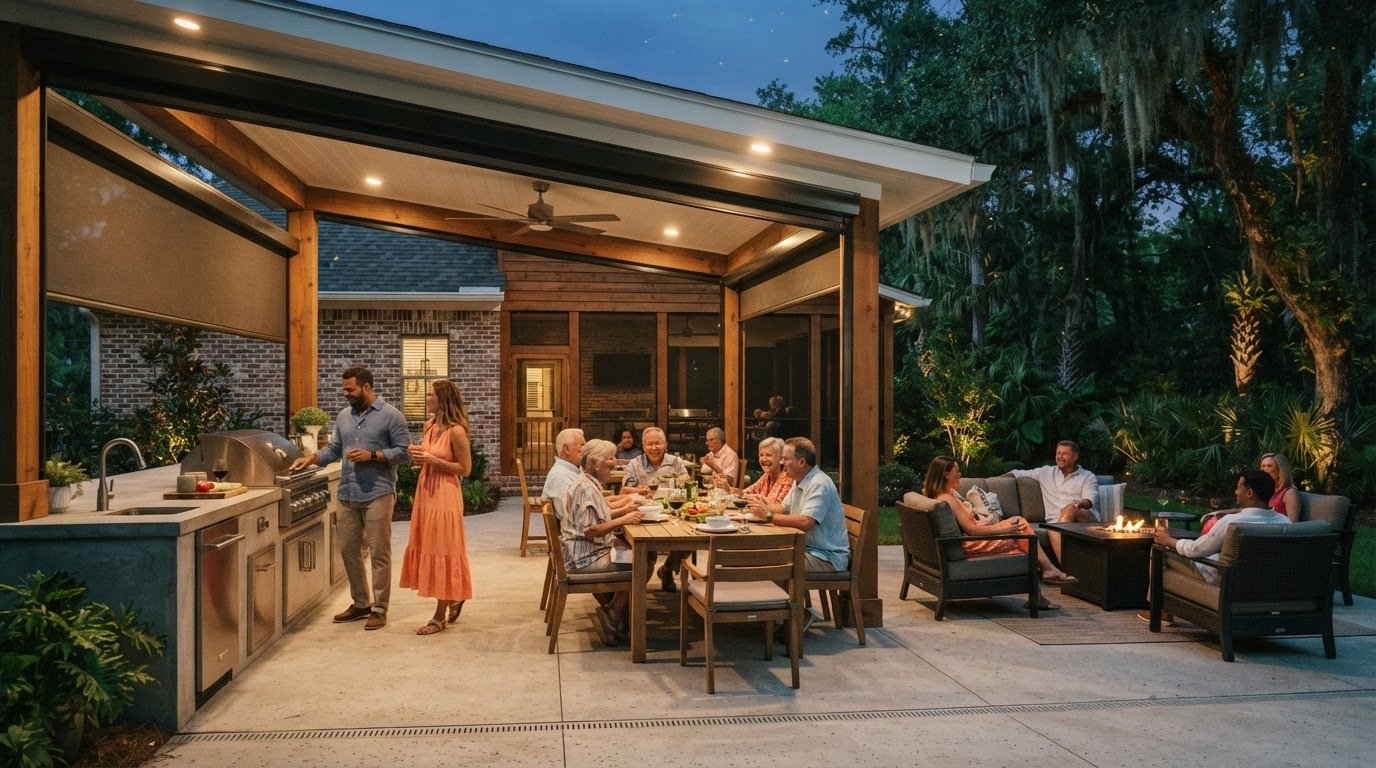
Lafayette Backyard Entertaining: Step-by-Step 2026 Guide
A standard patio set and an open grill will never be enough to survive a true South Louisiana gathering. Anyone who hosts friends and family here knows how quickly sweltering summer humidity, sudden afternoon downpours, and relentless mosquito swarms can ruin plans. When you are designing a backyard for entertaining Lafayette guests, relying on open-air seating often leaves the cook isolated at the grill while everyone else retreats indoors to the air conditioning.
True hospitality in Acadiana demands deliberate, climate-engineered living zones that keep people comfortable regardless of the forecast. In this guide, you’ll discover how to design a weather-resilient, highly functional outdoor space tailored specifically for local gatherings, featuring purposeful cooking, dining, and relaxation areas built to endure our unique climate. We’ll walk you through the structural essentials, shelter solutions, and Lafayette building requirements that turn an ordinary yard into a lasting extension of your home.
Key Takeaways
- Organize your space into three dedicated zones for cooking, dining, and lounging to ensure smooth movement and keep the cook connected with guests.
- Combat intense subtropical heat, sudden downpours, and pests by integrating insulated roof structures and motorized screens into your layout.
- Plan utility rough-ins early to accommodate heavy-duty outdoor cooking equipment, from high-output burners to dedicated prep sinks.
- When designing a backyard for entertaining Lafayette gatherings, use steel-reinforced concrete slabs engineered specifically to withstand shifting local clay soils.
- Navigate local permitting guidelines and wind-load requirements smoothly by partnering with experienced outdoor living builders who know Acadiana codes.
Mapping Your Entertaining Zones for Seamless Guest Flow
Successful outdoor gatherings rely entirely on architectural layout rather than quick cosmetic fixes. When designing a backyard for entertaining Lafayette crowds, dividing your footprint into purposeful operational zones prevents the bottlenecks that happen when open-air seating is placed at random. By engineering wide pathways, typically five to six feet across, you guarantee an easy transition between the back doors of your home and your main outdoor gathering areas. Positioning your cooking appliances downwind keeps smoke from sweeping across conversation areas, while intentional transitional steps bridge the gap between fully shaded structural roofs and sunny turf.
The Prep and Grill Cooking Station
Positioning your outdoor cooking station within easy reach of the indoor kitchen simplifies food prep and ingredient transport. Professional layouts require at least 24 to 36 inches of uninterrupted, heat-resistant counter space on both sides of the primary grill. In Acadiana, you must also reserve reinforced, dedicated staging areas to accommodate the specialized techniques and specialized equipment needed for heavy stockpots, burner rigs, and crawfish boils without blocking foot traffic.
The Dining and Social Gathering Hub
A functional outdoor dining area needs sufficient physical breathing room to keep guests comfortable. To ensure effortless movement around the table, design with these key layout principles in mind:
- Clearance boundaries: Maintain a minimum of four feet of perimeter clearance behind pulled chairs so guests can step away easily.
- Breeze orientation: Align long tables along the axis of prevailing regional breezes to maximize natural airflow and keep sightlines unobstructed.
- Integrated seating: Add low-profile masonry seat walls along the perimeter of your concrete foundation to give extra guests a natural place to sit during large tailgates and family meals.
The Fireside or Covered Media Lounge
Deep-cushioned sofa seating belongs away from high-traffic prep lanes and open burner heat. Center this relaxation zone around an engineered brick fireplace or an exterior-grade television mounted beneath a protective roof. When designing a backyard for entertaining Lafayette families, install multi-circuit LED lighting to shift smoothly from clear dinner illumination to relaxed, warm ambient lighting as the evening winds down.
Defeating Louisiana Weather: Heat, Rain, and Mosquito Defense
Acadiana weather presents challenges that simple umbrella tables cannot handle. Between 95-degree afternoon humidity, sudden subtropical cloudbursts, and evening insect swarms, comfort requires engineered shelter. When designing a backyard for entertaining Lafayette guests, you must plan structural defenses that protect your party from the elements without forcing everyone indoors.
Insulated Covers vs. Handcrafted Cypress Pavilions
Overhead protection is your primary defense against brutal summer sun and heavy downpours. High-performance insulated patio covers feature dense foam cores that block radiant thermal transfer, keeping the patio slab noticeably cooler during midday gatherings. If you prefer traditional Southern architecture, handcrafted native cypress pavilions provide exceptional structural beauty. Cypress contains natural oils that resist rot, decay, and boring insects in our humid climate. You can explore architectural styles and durability details through expert patio cover installation Lafayette LA specialists.
Motorized Screens for Instant Insect Defense
Twilight in South Louisiana brings relentless gnats and mosquitoes that can ruin dinner in minutes. Automated retractable screens solve this problem without permanently closing off your patio:
- Push-button barrier: Lower high-density mesh at dusk to seal entertaining zones against pests while maintaining exterior visibility.
- Recessed housing: Concealed side tracks and compact overhead cassettes preserve clean structural sightlines when raised.
- Wind management: Heavy-duty screen fabric buffers gusty storm winds while still allowing evening breezes to filter through.
To see how automated tracks integrate seamlessly into new structures, review the modern systems featured in this guide to motorized patio screens Louisiana homeowners trust.
Maximizing Air Circulation and Summer Shade
Stagnant air magnifies southern humidity, making structural ventilation vital. Install wet-rated outdoor ceiling fans with deep blade pitches to generate continuous downward air movement across dining tables and lounge seating. Mounting fan blades between eight and nine feet above the finished slab delivers maximum airflow without creating intrusive noise. Vaulted ceiling profiles allow rising ambient heat to escape naturally, keeping your social areas comfortable through the hottest summer afternoons. If you want a tailored plan for your property, consulting with the master builders at Acadiana Patios & Construction ensures your shade structures are engineered to handle local storm loads and temperature extremes.
Designing the Ultimate Acadiana Outdoor Kitchen
Cooking outdoors in South Louisiana is a central social event, not an afterthought. A prefabricated grill cart quickly falls short when preparing meals for large groups of friends and family. Building an outdoor kitchen that lasts demands a structured plan that addresses utility infrastructure, equipment demands, and long-term material resilience:
- Appliance planning: Select high-heat cooktops and heavy-duty cooking gear tailored to regional culinary habits.
- Utility rough-ins: Map underground connections for natural gas, dedicated 20-amp electrical circuits, and dual-line plumbing before pouring any foundation.
- Corrosion resistance: Specify 304-grade or marine-grade 316 stainless steel to stop rust caused by pervasive summer humidity.
- Sanitation zones: Lay out continuous prep surfaces, deep wash sinks, sealed pull-out waste containers, and exterior-rated refrigeration.
- Overhead protection: Place cooking islands beneath permanent shelter so sudden afternoon rainstorms never disrupt meal preparation.
Appliance Selection for Southern Culinary Traditions
Acadiana cooking requires serious heat. When designing a backyard for entertaining Lafayette crowds, standard gas burners are rarely sufficient for large-batch cooking. Incorporating commercial-grade power burners delivering 60,000 BTUs or more lets you boil crawfish, crabs, or large gumbo pots right on the counter. Pairing these high-output stations with a built-in primary gas grill and an insulated ceramic charcoal smoker creates a versatile setup for any gathering. To explore layout configurations and spatial budgeting, consult our detailed analysis on the cost to build outdoor kitchen Louisiana homeowners reference during project planning.
Countertop Materials Built for Lafayette Humidity
Porous materials fail quickly in South Louisiana’s damp, hot climate. Honed granite and dense, sealed concrete withstand grease, acidic marinades, and intense UV exposure without spalling or staining. Soft limestone and manufactured quartz composite resins should be avoided outdoors because they tend to discolor and degrade under direct sunlight. Pairing durable masonry counters with integrated undermount stainless sinks and sealed access doors keeps food prep sanitary and cleanup simple.
Ventilation and Overhead Fire Safety Requirements
Enclosed and covered outdoor cooking stations require careful fire safety engineering. Installing a commercial-grade exhaust hood with a minimum 1,200 CFM rating pulls intense grease vapors and heat away from covered patio ceilings. Non-combustible backsplashes, proper clearance to combustible framing, and dedicated GFCI electrical outlets protect your home structure while you cook for the whole neighborhood.
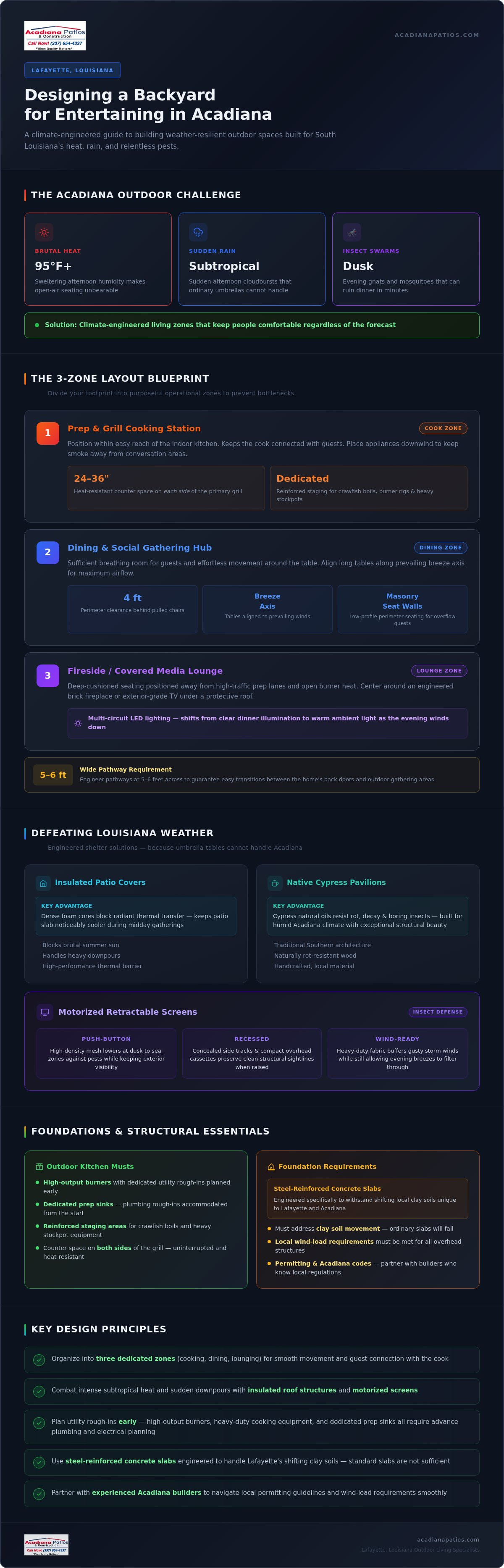
Selecting Long-Lasting Patio Foundations and Deck Surfaces
Every outdoor living project relies on what sits beneath it. Loose gravel, thin pavers, or dry-stacked flagstone might look charming in gardening magazines, but they shift rapidly on soft Acadiana subgrades. When designing a backyard for entertaining Lafayette crowds, your foundation must bear the concentrated weight of masonry cooking islands, outdoor fireplaces, and active guest movement without settling. Lafayette’s expansive clay soils expand dramatically when wet and shrink during dry spells, which causes unreinforced surfaces to heave and crack. A monolithic concrete pour reinforced with steel rebar bridges these underground shifts, keeping your gathering spaces perfectly level year after year.
Decorative and Stamped Concrete Slabs
Poured concrete offers unrivaled structural integrity while delivering custom visual appeal. Textured stamping and integral color hardeners can replicate natural slate, fractured stone, or weathered timber planks without creating shifting mortar joints that trip guests. Proper broom or textured finishes ensure slip resistance around pools and high-traffic dining paths, even during wet weather. You can examine finish patterns and structural slab techniques in our guide to stamped concrete patio Lafayette LA installations.
Custom Cypress and Elevated Decking
Raised foundations require different structural solutions to create easy transitions from your back door to the yard. Elevated cypress decks solve grade disparities while delivering natural resilience against our harsh environment:
- Natural timber durability: Native cypress contains organic preservatives that resist wood-boring termites and fungal rot common in humid parishes.
- Seamless step-downs: Framing custom deck platforms level with interior sill plates eliminates hazardous vertical drops between your living room and patio.
- Deep-penetrating sealers: Applying high-solids exterior stains protects cypress grain patterns against UV breakdown and grey fading caused by intense summer sun.
Surface Drainage and Runoff Management
Torrential South Louisiana downpours can deposit inches of water across flat surfaces in under an hour. When designing a backyard for entertaining Lafayette guests, our engineers slope all slabs one-quarter inch per foot away from your home’s foundation to prevent standing water. Integrating low-profile channel drains along rooflines, pool perimeters, and patio edges ensures heavy runoff directs cleanly toward parish ditch systems instead of washing out your perimeter. To protect your investment with precision subbase preparation and expert craftsmanship, reach out to Acadiana Patios & Construction to build a foundation engineered for decades of worry-free hosting.
Executing Your Project: Codes, Planning, and Choosing a Lafayette Builder
Bringing an ambitious outdoor living vision to life requires balancing high-end entertaining goals with local regulatory standards. While choosing materials and layout styles is exciting, proper structural execution determines whether your build stands strong through decades of Gulf Coast weather. When designing a backyard for entertaining Lafayette gatherings, partnering with a seasoned professional ensures every footing, framing member, and utility rough-in satisfies local parish codes.
Navigating Local Building Codes and Wind Loads
Lafayette Consolidated Government (LCG) enforces the 2021 International Residential Code alongside the 2020 National Electric Code. Attached patio structures, large pavilions, and decks exceeding 200 square feet or 30 inches above grade require official building permits. Engineering plans must incorporate hurricane-rated structural ties, approved post-to-beam connectors, and deep concrete footings designed to resist high coastal wind uplift. A fully licensed contractor handles the initial plan submission, coordinates the typical five-to-ten-business-day residential plan review, and verifies that your footprint respects local setback boundaries and utility easements before digging starts.
Creating a Realistic Project Timeline
Deliberate planning prevents mid-project delays and keeps construction moving forward smoothly. A thorough approach includes several key stages:
- Phase 1: Site evaluation and design: Finalize functional zones, measure property setbacks, and map underground utilities.
- Phase 2: Permitting and materials: Submit structural plans to LCG and order custom materials, including native cypress timbers and motorized screens.
- Phase 3: Subgrade and concrete: Excavate the site, install utility conduits, and pour reinforced concrete slabs during clear weather windows.
- Phase 4: Framing and finishes: Erect overhead patio covers, install outdoor appliances, and wire low-voltage ambient lighting.
Review comprehensive phase checklists and milestone timelines through this guide to outdoor living space contractors Lafayette LA homeowners rely on.
Why Local Craftsmanship Matters for Outdoor Living
General out-of-town builders often misunderstand how severe South Louisiana moisture, soil movement, and heat can be. Working with a company that has focused on the Acadiana region since 1985 gives you peace of mind that every joint, fastener, and post anchor is engineered for local soil and storm conditions. When designing a backyard for entertaining Lafayette guests, lean on four decades of master-builder craftsmanship to turn your concept into reality. You can explore architectural possibilities for your yard by requesting a free consultation with Acadiana Patios & Construction today.
Build an Outdoor Entertaining Space Engineered to Last
Creating an exceptional gathering place in South Louisiana comes down to intentional layout and durable construction. When designing a backyard for entertaining Lafayette crowds, success requires more than open patio furniture. You need steel-reinforced foundations capable of resisting shifting clay soils, dedicated culinary zones built for large boils and slow smoking, and permanent shelter paired with automated screens to defeat sudden cloudbursts and evening pests.
Acadiana Patios & Construction has served Lafayette and the surrounding parishes continuously since 1985. As true master builders, our crew manages every structural detail under one roof, from engineered concrete foundations and handcrafted native cypress timbers to insulated patio covers and custom outdoor kitchens. You don’t have to let intense summer heat or sudden thunderstorms cut your celebrations short. Bring your family and friends together in comfort by choosing structures engineered specifically for our local climate. Schedule your custom backyard entertaining consultation with Acadiana Patios today and start planning a space your guests will never want to leave.
Frequently Asked Questions
Do I need a building permit to build a covered patio in Lafayette?
Yes, Lafayette Consolidated Government requires building permits for attached covered patios and detached structures exceeding specific size thresholds. Under local building codes, attached patio roofs, covers, and large freestanding pavilions must meet wind-load engineering requirements. Plans must be submitted through LCG’s permit office, where initial residential reviews typically take five to ten business days. Licensed contractors handle this permitting process to verify compliance with local setback regulations.
What is the best patio cover material for hot, humid Louisiana summers?
Insulated aluminum composite panels and native cypress lumber are the two top-performing materials for South Louisiana. Insulated roof panels feature dense foam cores that actively prevent thermal radiation from transferring downward, lowering ambient temperatures on your slab. Handcrafted native cypress delivers natural rot resistance, structural rigidity, and timeless regional character. Both options hold up exceptionally well against extreme humidity without warping or rusting.
Can motorized screens withstand strong South Louisiana storm winds?
Yes, exterior motorized screens feature weighted bottom bars and deep side track retention systems engineered to manage substantial wind pressure. The high-tensile fabric acts as an effective windbreak during typical summer thunderstorms while maintaining clear backyard views. However, homeowners should retract screens during named tropical systems or severe hurricane warnings to protect the track housings and preserve motor longevity over decades of use.
How much clearance is required around an outdoor kitchen cooktop?
Building safety codes generally require at least 12 to 24 inches of clearance between outdoor cooktops and combustible vertical surfaces. If you install a gas grill or high-output boiling burner underneath a covered structure, mount a commercial-grade exhaust hood rated for outdoor use overhead. Always use non-combustible cement backer board, natural stone, or masonry finishes directly behind cooking appliances to maintain optimal fire safety during high-heat meal preparation.
Is native cypress wood really better than pressure-treated pine outdoors?
Native cypress significantly outperforms pressure-treated pine in South Louisiana’s damp, humid climate. Cypress produces natural subterranean preservative oils, called cypressene, that make the wood naturally resistant to fungal rot, damp decay, and wood-boring insects. Unlike treated pine, which tends to cup, twist, and split as it dries under direct UV exposure, seasoned cypress maintains its dimensional stability and sharp architectural lines for decades.
How do I stop mosquitoes from ruining outdoor gatherings in Acadiana?
Installing automated motorized screens provides the most reliable physical defense against swarming mosquitoes and gnats. While planning and designing a backyard for entertaining Lafayette guests, relying solely on candles or topical sprays is rarely enough. Motorized screens drop into sealed perimeter channels at dusk with the touch of a button. Pairing screen enclosures with wet-rated ceiling fans maintains downward airflow, creating an environment where weak-flying insects cannot land.
How should I slope my patio concrete slab for proper rainwater drainage?
Patio concrete slabs should maintain a minimum slope of one-quarter inch per linear foot away from your home’s foundation. When designing a backyard for entertaining Lafayette homes, positive drainage prevents water from backing up against exterior doorways during sudden tropical downpours. Pairing this continuous slope with low-profile trench drains and subsurface discharge piping ensures stormwater routes cleanly toward roadside swales or drainage ditches without pooling on the entertaining surface.