

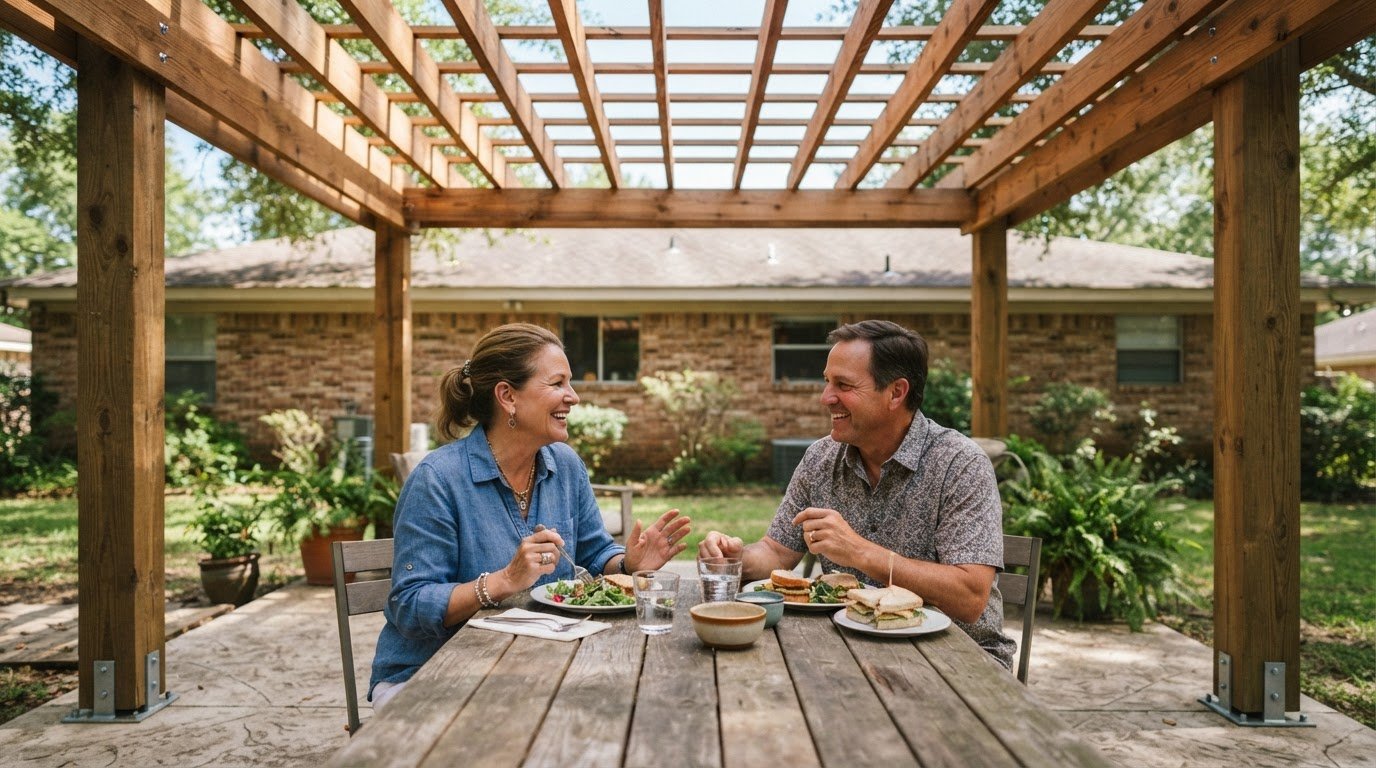
Is a Pergola Worth It in Louisiana for Value and Comfort?
The most protective option isn’t always the best fit. A pergola can be worth it in Louisiana when you want filtered shade and an open-air place to gather, especially over an existing or planned patio. Whether a pergola is worth it in Louisiana comes down to the comfort and coverage you need: it generally provides partial shade, while a solid patio cover offers more protection from sun and rain.
It’s reasonable to ask whether a pergola will feel permanent and add lasting value, rather than simply create an attractive outdoor spot. A professionally installed pergola anchored and integrated with a patio or deck is generally considered a permanent feature, but its practical value depends on how well it suits the home and how you’ll use the space.
This guide explains how pergolas may affect resale appeal, outdoor comfort, and cooling, then compares them with covered patios. You’ll see when an open structure makes sense, when fuller weather protection may matter more, and what to weigh before choosing.
Key Takeaways
- Weigh a pergola’s potential resale appeal against how often you’ll use the outdoor space and how well it fits your home.
- Understand how exterior shade may improve comfort around sunny windows and outdoor gathering areas.
- Choose between an open pergola and a covered patio by deciding how much sun, rain protection, and openness you want.
- Factor HOA rules and property-line setbacks into your planning before settling on a pergola’s location and design.
Do Pergolas Increase Home Value?
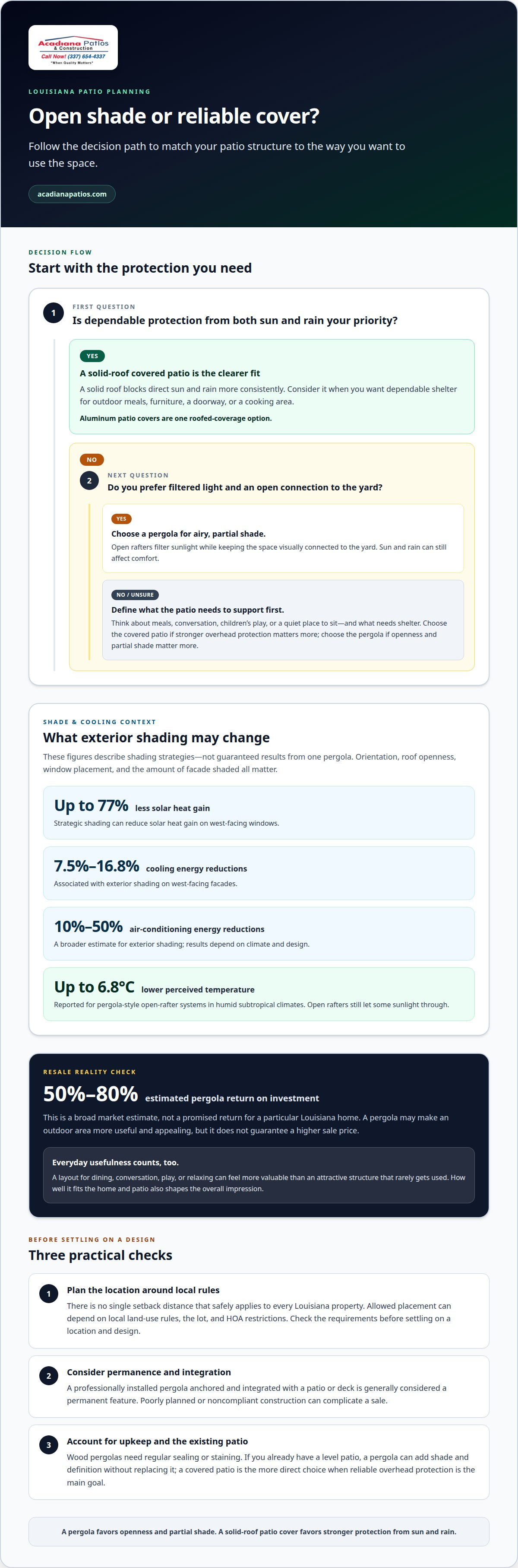
A pergola can make an outdoor area more useful and appealing, but it doesn’t guarantee a higher sale price. Market estimates put pergola returns on investment at 50-80%, while outdoor living features overall may influence perceived value. Treat those figures as broad estimates, not a promised return for a particular Louisiana home.
Buyers may value a space that feels ready for everyday use. For example, a patio with room for a dining table, chairs, and clear walking paths has a defined purpose. A pergola can frame the space while keeping it open to the yard. Its visual fit with the home and patio contributes to the overall impression.
Outdoor entertaining is one practical reason to upgrade. A shaded area can make lunch outside or an evening gathering more comfortable than an exposed slab. Consider the activities the space needs to support: meals, conversation, children’s play, or a quiet place to sit. A layout that works for those uses can feel more valuable than an attractive structure that rarely gets used.
Family routines also shape everyday usability. A table near the house may suit frequent meals, while open floor space leaves room for children to play. Pergolas generally provide partial shade, so direct sun and rain can still affect comfort. Those limits matter in Louisiana, and wood structures also need regular sealing or staining.
Resale value depends on more than appearance. A pergola anchored and integrated with a patio or deck is generally treated as a permanent feature. Poorly planned or noncompliant construction can complicate a sale, so local requirements and sound integration matter. Whether a pergola is worth it in Louisiana depends on how often your household will use it, how it fits the property, and whether you value the outdoor space beyond resale.
Exterior shading and home cooling energy
Exterior shade changes how much direct sun reaches windows and nearby living areas. On west-facing windows, strategic shading can reduce solar heat gain by up to 77%. That matters during afternoon sun, when exposed glass can contribute to indoor heat. For homeowners seeking targeted sun control alongside outdoor structures, exterior treatment specialists such as thewindowvalet.com can help address vulnerable windows directly. A pergola may shade a patio, but its open rafters don’t block sunlight as consistently as a solid roof.
Shading can also affect cooling demand. Exterior shading on west-facing facades has been associated with cooling energy reductions of 7.5%-16.8%. Broader estimates for exterior shading put air-conditioning energy reductions at 10%-50%, depending on climate and design. These figures describe shading strategies, not a guaranteed result from any single pergola. Orientation, roof openness, window placement, and how much facade is shaded all influence performance.
For outdoor comfort, pergola-style open rafter systems may lower perceived temperature by up to 6.8°C in humid subtropical climates. That can make a square patio more comfortable for entertaining, especially when the structure shades the seating area during its busiest hours. The same open design still lets some sunlight through, so it won’t function exactly like a fully covered patio.
Choose the structure based on its main purpose. If you want filtered shade and an open connection to the yard, a pergola may suit the space. If you want more dependable coverage over a patio or windows, a solid-roof cover offers a different balance. Design integration matters too: align the structure with the home’s rooflines, exterior materials, and patio footprint instead of treating it as a separate addition.
For a patio where stronger overhead coverage is the priority, insulated patio covers are another option to consider. A well-planned design connects shade, home appearance, and everyday function without promising a specific reduction in energy use.
Pergolas compared with covered patios
A pergola and a covered patio solve different problems. Pergola rafters filter sunlight but leave the space open to changing weather. A solid-roof patio cover blocks direct sun and rain more consistently. In Louisiana, that distinction matters if you plan to use the patio during passing showers or want dependable cover for outdoor furniture.
Choose a pergola for an airy setting, filtered light, and a visible connection to the yard. For example, it can frame a dining table beside an existing patio without enclosing the view. Homeowners who prefer open skies and a stylish structure may find this balance more appealing than full overhead coverage.
A covered patio suits routines that need more shelter. A solid roof can protect a seating area from sun and rain, making it a better match for outdoor meals planned around the weather. It can cover a patio used for entertaining while open sides preserve airflow and access to the yard.
Material and upkeep also shape the choice. Aluminum patio covers offer roofed coverage, while a pergola’s open design feels lighter but won’t provide the same protection as a roof. Before choosing, consider what needs shelter, such as a table, a doorway, or an outdoor cooking area.
Start with the patio you have, or the one you plan to build. If it already provides a level base, a pergola can add shade and definition without replacing the patio. If your main goal is reliable overhead protection, a covered patio is the clearer fit. The practical takeaway is simple: choose a pergola for openness and partial shade, or a covered patio for stronger weather coverage. The right structure supports how you’ll use the space through Louisiana’s sun and rain.
Are there HOA rules or property-line setback requirements for pergolas in Louisiana?
There isn’t one setback distance that applies safely to every Louisiana property. A pergola’s allowed location can depend on local land-use rules, the lot, and any HOA restrictions. For example, a structure beside a fence may raise different questions from one attached to a home or placed over an existing patio.
Start by identifying the authorities and documents that apply to the property. Review the HOA’s architectural guidelines, recorded property restrictions, and local planning requirements. Look for rules covering accessory structures, placement, height, appearance, and approval before construction. These details can affect both a freestanding pergola and one integrated with a patio or deck.
A practical layout review should account for property lines, the home, and nearby features. A pergola planned close to a fence, easement, or drainage area may need a different position. A site plan can show the proposed footprint and its relationship to those features. Local requirements and HOA documents determine what applies; a general online setback figure can’t replace property-specific rules.
Approval matters beyond construction. A pergola that isn’t permitted or doesn’t meet applicable requirements can create problems during resale. Proper placement and documentation help keep the structure aligned with the property’s restrictions and records. Build those checks into planning before finalizing the footprint, materials, or connection to a patio.
- Identify the local jurisdiction responsible for the property.
- Review HOA and recorded restrictions for exterior structures.
- Map the proposed pergola against property lines and easements.
- Resolve placement and approval requirements before construction begins.
For a pergola plan that accounts for the patio layout, explore pergola planning options before settling on its location.
Acadiana Patios & Construction: Cypress Pavilions, Pergolas & Arbors
Acadiana Patios & Construction helps turn outdoor plans into structures suited to your home and how you’ll use the space. If you’ve weighed partial shade against stronger rain coverage, its Cypress Pavilions, Pergolas & Arbors offer a starting point for an open-air feature. For a patio where more overhead protection matters, Cypress Patio Covers provide another option to consider.
Bring your priorities into the design conversation: where you want shade, how the structure should relate to the home, and whether openness or coverage matters most. Those choices help shape a practical direction for your outdoor space, whether you’re planning a gathering area or a quieter place to relax.
Contact Acadiana Patios & Construction to discuss your pergola or patio-cover plans.
Make the Next Outdoor Project Fit Your Home
Deciding whether a pergola is worth it in Louisiana starts with a practical question: what do you want your outdoor area to make easier? A calm place to sit, room for gatherings, or shade near the house can each call for a different design. Start with the daily routine you want to support, then consider how the structure will connect with the home and patio.
That plan may also involve nearby features. Motorized Shades & Screens can add adjustable shade, while Cypress Patio Covers provide a roofed option. Carports & Garages address a different need but may matter when planning several exterior improvements together. Keeping those priorities clear helps shape a project that feels considered rather than added on.
For help discussing the outdoor structure that suits your plans, contact Acadiana Patios & Construction. A thoughtful first conversation can help you move from ideas to a more clearly defined project.
Frequently Asked Questions
Are pergolas considered permanent structures?
An anchored pergola integrated with a patio or deck is generally considered a permanent feature. How it connects to the home and ground matters more than its open-sided appearance. For a Lafayette property, that distinction can affect how the structure is documented and considered during a future sale. Review applicable local and HOA requirements before construction, since rules depend on the property.
Do pergolas help a home sell faster?
A pergola may make an outdoor area more appealing to buyers, but it can’t ensure a faster sale. Whether a pergola is worth it in Louisiana depends partly on whether it complements the home and supports a useful outdoor routine. For example, a clearly arranged patio dining area can help buyers picture using the space, while a structure that feels disconnected may add less practical appeal.
Patio Cover vs Pergola: Which Is Better for Louisiana Homes?
A patio cover suits homeowners who want a roofed area for outdoor use through sun or rain; a pergola favors openness and filtered light. Consider what will sit below it. A dining set or outdoor seating you want to use during passing showers benefits from stronger overhead coverage. If you prefer a more open view and accept changing weather, a pergola may fit better.
What type of pergola adds the most value?
A pergola that suits the home, patio, and intended use is a stronger value choice than one selected for appearance alone. An anchored structure integrated with an existing deck or patio reads as part of the outdoor design. In Lafayette, consider how its scale and materials relate to the house and whether the layout leaves enough room for outdoor activities.
Which Option Works Better in Louisiana Weather?
A covered patio provides more reliable protection from rain, while a pergola suits homeowners who prioritize openness and partial shade. Think about how often you want to use the space during unsettled weather and what you’ll keep beneath it. A roofed area better shelters furniture and planned gatherings; an open pergola keeps more sky visible but leaves the patio more exposed.
What is the average lifespan of a pergola in Louisiana’s humid climate?
A single lifespan figure won’t describe every Louisiana pergola. Longevity depends on the material, construction, exposure to moisture, and ongoing care. Wood pergolas need regular sealing or staining, so upkeep is part of their long-term performance. A shaded, damp location and neglected finishes can affect a structure differently from a well-maintained one. Factor ongoing care into your choice of design and material.