DIY Outdoor Kitchen vs. Professional Install: Which is Right for Your Louisiana Home?
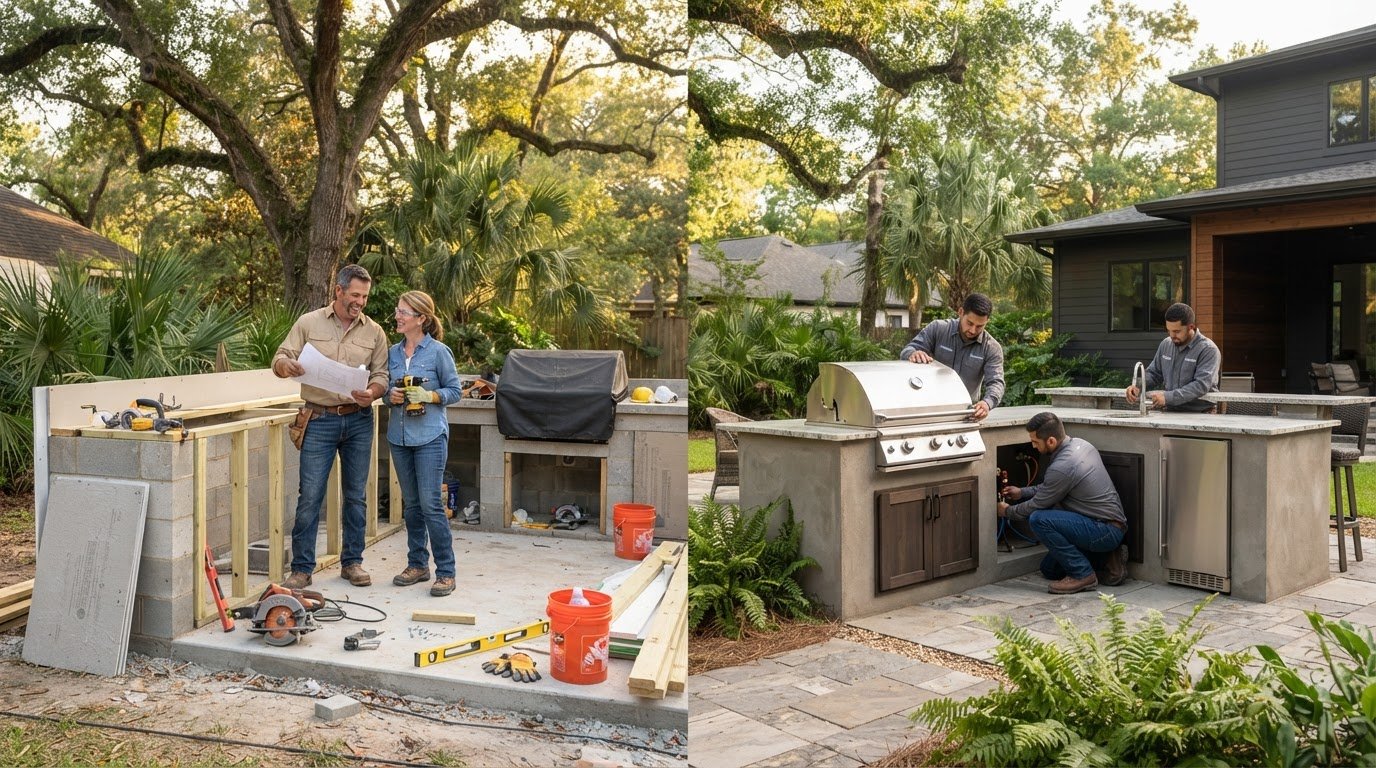
A DIY outdoor kitchen can look like a straightforward weekend project, until Louisiana’s humidity, utility connections, or site preparation turn small oversights into costly repairs. The choice between a DIY outdoor kitchen vs professional install isn’t only about who builds the island. It also involves whether the finished space can handle Acadiana weather and meet applicable safety requirements.
Doing the work yourself may help you control costs and create a space that fits your style. But gas and electrical work, permits, and weather-resistant materials all need careful planning. This guide compares DIY and professional installation by cost, durability, and technical requirements, so you can weigh the trade-offs before committing. It also covers material choices for Louisiana’s humid climate and practical construction decisions. Acadiana Patios & Construction has served Lafayette and Acadiana since 1985, with experience in coordinating outdoor kitchen design, concrete, and construction.
Key Takeaways
- Compare a simple grill island with a complete outdoor cooking space to find a project that matches your skills, plans, and available time.
- The DIY outdoor kitchen vs professional install decision involves more than materials. Include tools, site preparation, permits, and possible rework in your comparison.
- Plan gas and electrical connections carefully, and check local requirements before work begins.
- Choose materials suited to Acadiana’s humidity and consider the maintenance each one needs.
- Coordinating design, concrete, and construction can help keep a custom outdoor kitchen project organized from the start.
DIY Outdoor Kitchen vs. Professional Install: A Core Comparison
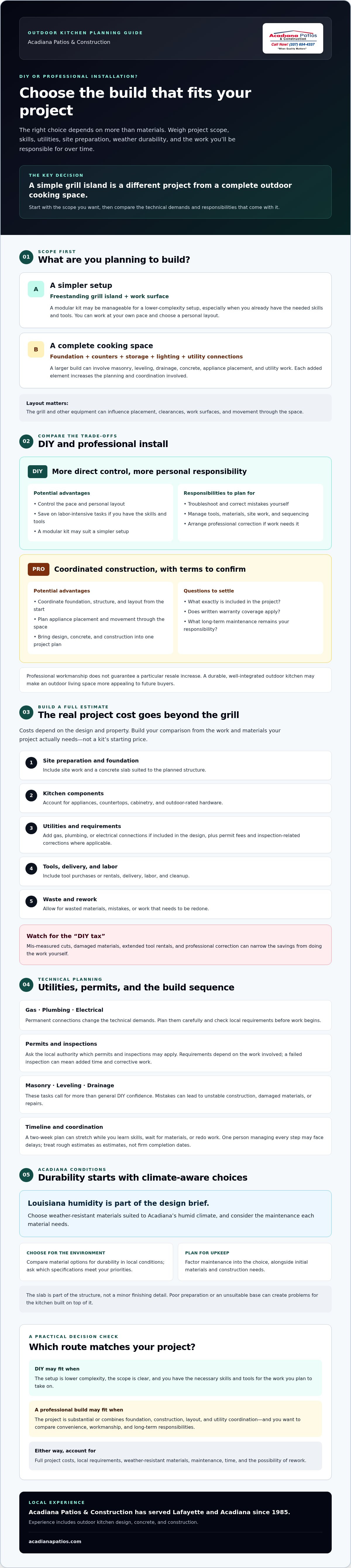
The right choice depends on the project’s scope, not just how handy you are. A freestanding grill island with a work surface is a different undertaking from a built-in cooking area with a concrete foundation, counters, storage, lighting, and utility connections. The grill itself also affects the layout. Explore different types of grills before settling on a design, since equipment needs can influence placement and clearances.
Masonry, leveling, drainage, and utility work call for more than general DIY confidence. Mistakes can lead to unstable construction, damaged materials, or repairs that reduce the savings from doing the work yourself. Timelines need the same scrutiny. A two-week plan can stretch if you’re learning new skills, waiting on materials, or redoing work. Delays are possible when one person is managing every step, so avoid treating a rough estimate as a firm completion date.
The DIY Appeal: Flexibility and Upfront Savings
For a low-complexity setup, a modular kit can offer a manageable way to arrange a grill and prep space without taking on a larger construction project. You can work at your own pace, choose a personal layout, and save on labor-intensive tasks if you already have the necessary skills and tools. Keep the scope clear: adding permanent structures or gas, plumbing, or electrical connections changes the technical demands. DIY also means you’re responsible for troubleshooting and correcting mistakes.
The Professional Advantage: Precision and Peace of Mind
A professional build can coordinate the foundation, structure, and kitchen layout from the start. Thoughtful design helps plan work surfaces, appliance placement, and movement through the space. Ask what the project includes and whether written warranty coverage applies. Don’t assume every contractor offers the same terms.
Professional workmanship doesn’t guarantee a particular resale increase, but a durable, well-integrated outdoor kitchen can make a home’s outdoor living space more appealing to future buyers. In Lafayette and Acadiana, Acadiana Patios & Construction has served local homeowners since 1985, with outdoor kitchen design and installation services and experience in concrete and construction. For a substantial build, a coordinated approach can help you compare convenience, workmanship, and long-term responsibilities before deciding.
The True Cost of Building an Outdoor Kitchen in 2026
A realistic budget covers more than the grill, island, and countertops. For a fair DIY outdoor kitchen vs professional install comparison, account for the full scope of work and the possibility of redoing anything that doesn’t hold up. Site preparation, a properly built concrete slab, materials, tool rentals, utility connections, permits, and labor can all affect the final spend. For a closer look at the factors involved, see the real cost to build an outdoor kitchen in Louisiana.
Costs depend on the design and property, so build your estimate from specific project details rather than a kit’s starting price. List the work and materials you expect to need:
- Site preparation and a concrete slab suited to the planned structure
- Appliances, countertops, cabinetry, and outdoor-rated hardware
- Gas, plumbing, or electrical connections, if included in the design
- Tool purchases or rentals, delivery, permit fees, and inspection-related corrections
- Labor, cleanup, and a contingency for waste or mistakes
That last category is the “DIY tax.” Mis-measured cuts, damaged materials, tools kept past the rental period, or work that needs professional correction can narrow the savings from doing it yourself. Before starting, check with the local authority to find out which permits and inspections may apply. Requirements depend on the work involved, and a failed inspection can mean added time and corrective work.
Hidden DIY Expenses You Might Overlook
A slab is part of the structure, not a minor finishing detail. Poor preparation or an unsuitable base can create problems for the kitchen built on top of it. Retail purchases can also make it easy to overlook delivery, specialty hardware, and the cost of buying only the quantities you need. Ask contractors which material options meet your priorities and whether alternate specifications could provide lasting performance without unnecessary upgrades. The industry research on outdoor kitchens can also inform decisions about design and materials.
Long-Term ROI: Professional Installs and Home Appeal
A finished outdoor kitchen may add appeal for future buyers, but no installation guarantees a higher appraisal or a specific return. Value depends on the home, local market, workmanship, and how well the space suits the property. Compare more than the initial outlay: consider likely maintenance, material durability, and who will handle repairs. A professional project may provide clearer accountability, but warranty terms vary, so review them in writing. Acadiana Patios & Construction offers outdoor kitchen design and installation alongside concrete and construction services. Explore its outdoor kitchen projects as you consider your options.
Navigating Technical Hurdles: Utilities and Local Codes
Utility connections can turn an outdoor kitchen from a straightforward build into a safety-critical project. A high-output gas grill may require a gas supply planned for its specifications and distance from the source. Electrical plans also need to account for outdoor-rated circuits, GFCI protection, lighting, and the combined demands of appliances. Guessing at line sizing or wiring can create hazards and costly rework. For homeowners weighing DIY outdoor kitchen vs professional install, consider whether the project includes work that calls for qualified trade expertise.
In Lafayette Parish, don’t assume permit and inspection requirements are the same for every design. Check with the local permitting authority before construction, especially if the project involves gas, electrical, plumbing, a permanent structure, or changes to an existing one. Confirm what plans, inspections, and qualified professionals may be required for your specific scope. Keep permit and inspection records, and ask your insurer how unpermitted work could affect coverage rather than relying on assumptions.
The Dangers of DIY Gas and Electric
Improper gas connections can leak, while poor appliance placement or inadequate ventilation can raise fire risks. Outdoor cooking equipment shouldn’t be treated as safe for an enclosed patio simply because it sits beneath a roof. Carbon monoxide can build up where ventilation is limited. Electrical mistakes add risks of shock and fire, particularly around wet surfaces. Leave utility design and connections to appropriately qualified professionals, and follow appliance instructions and local requirements.
Ensuring Proper Drainage and Foundation
A patio slab isn’t automatically designed for the added weight of masonry, counters, and appliances. Confirm the existing base is suitable before building on it. Plan drainage so water moves away from the kitchen and nearby structures rather than collecting around the foundation. Acadiana’s heavy rain makes site grading and water management practical design concerns, not afterthoughts.
Plumbing also needs a clear plan for drainage and wastewater connections if you’re including a sink. Improper routing can leave standing water or contribute to moisture problems. Coordinate these decisions with the slab and kitchen layout before construction begins. If you’re evaluating a new or existing base, review this guide to concrete slab installation. Acadiana Patios & Construction offers concrete slabs as well as outdoor kitchen design and installation, which homeowners can discuss as part of planning a connected project.
Durability in the Acadiana Climate: Why Materials Matter
In Acadiana, materials face persistent humidity, rain, intense sun, and temperature swings. These conditions can expose weaknesses quickly: indoor-grade cabinets may swell or deteriorate, untreated wood can rot, and finishes need upkeep to remain protective. In the DIY outdoor kitchen vs professional install decision, look beyond appearance. Ask how each material is rated for outdoor exposure and what care it requires.
Stainless steel grades also deserve a closer look. Both 304 and 441 are used in stainless applications, but they differ in composition and performance. Don’t assume they’re interchangeable or choose by grade number alone. Check the appliance manufacturer’s specifications, finish, and suitability for the conditions where the kitchen will sit, especially if the site is exposed to moisture or coastal air.
Plan for heat as carefully as weather. Follow the grill manufacturer’s clearances and installation instructions, and consider how heat could affect nearby siding, trim, or overhead construction. Settle proper placement and any required heat protection before the kitchen is built, not after surfaces show damage.
Weather-Proofing Your Investment
Outdoor-rated sealants and finishes can help limit weather exposure, but they need to suit the material and be maintained as directed. For countertops in strong sun, granite and quartzite are preferable choices to quartz, which can be damaged by prolonged sun exposure. An insulated patio cover can add overhead protection for the cooking area and appliances. Explore insulated patio covers when planning how to shelter the space while maintaining safe clearances around cooking equipment.
Local Material Excellence
Cypress is a strong option for Acadiana outdoor kitchens because its natural rot resistance suits the region’s humid conditions. Custom cypress construction can be shaped to fit a kitchen’s layout, while a prefabricated kit typically offers a more standardized arrangement. The better fit depends on the design, materials, and installation. Account for movement, too. Wood and other building materials can expand or contract with changing heat and moisture, so allow appropriate spacing and use suitable fasteners and finishes. Acadiana Patios & Construction specializes in cypress construction and outdoor kitchens, and can coordinate design and concrete work as part of the overall project. Explore custom outdoor kitchen options for a build planned around local conditions.
Partnering with Acadiana Patios for a Seamless Build
Choosing professional installation means more than bringing in help to assemble a kitchen. The design, concrete work, materials, and construction details need to fit together. Acadiana Patios & Construction has served Lafayette and the Acadiana area since 1985, with services that include custom outdoor kitchens, cypress construction, and concrete work. Its design and installation services let homeowners plan these elements as one project.
The result can be tailored to how you use your backyard, from an outdoor kitchen with a fireplace to a cooking area sheltered by a patio cover and motorized screens. Choose features with the site, layout, and intended use in mind. If you’re weighing DIY outdoor kitchen vs professional install, consider whether you want to coordinate those decisions and construction steps yourself or discuss them with a local company that builds outdoor living spaces.
For ideas on planning the larger space, explore this guide to backyard renovation in Lafayette.
A Coordinated Design and Installation Process
Start by outlining how you plan to cook, serve, and gather outdoors, along with the appliances and shelter you’re considering. A practical layout should account for movement, work surfaces, and how the kitchen connects to the yard and home. Then discuss material choices, such as cypress construction and concrete, with durability and maintenance in mind.
Before work begins, clarify the project scope, who is responsible for each part, and how permits and inspections will be addressed. Requirements depend on the project and local authority, so confirm what applies rather than assume those steps are automatically included. Discussing the plan with a contractor who works in the area can help you identify questions to resolve, while clear responsibilities help prevent surprises.
Craftsmanship, Accountability, and Next Steps
Good workmanship starts with a well-planned foundation and continues through the details that make the finished space functional. Ask about material specifications, installation responsibilities, and any written warranty terms before committing. Coverage and ongoing support can vary by project, so get the details in writing.
For homeowners who want a coordinated approach to outdoor kitchen, concrete, and construction work, Acadiana Patios & Construction offers design and installation services for outdoor projects. Explore outdoor kitchen project options and consider which features suit your Lafayette-area home.
Build an Outdoor Kitchen You’ll Enjoy for Years
The right choice in the DIY outdoor kitchen vs professional install decision comes down to project complexity, your skills, and how much responsibility you want to carry. A simple setup may suit a confident DIYer, but a custom kitchen with utility connections, structural work, and weather-resistant finishes calls for careful coordination. Budget for more than appliances: site preparation, permits, drainage, and durable materials all shape the finished project.
Acadiana Patios & Construction has served the Lafayette and Acadiana area since 1985, with experience in cypress construction and outdoor kitchen projects. Its design and installation services bring concrete and construction planning together, helping homeowners make informed decisions for their property and lifestyle.
Ready to discuss a kitchen designed for your home and the Acadiana climate? Contact Acadiana Patios & Construction about a custom outdoor kitchen.
Frequently Asked Questions
Is a permit required for an outdoor kitchen in Lafayette, LA?
A permit may be required, depending on the project’s features and scope. In Lafayette, outdoor kitchens involving plumbing, electrical work, or structural modifications may require a permit; a permanent roof or utility work can also affect requirements. Check with the local permitting authority before construction to confirm what applies to your property and which inspections may be needed. Don’t rely on rules for a different project or parish.
How much more does a professional outdoor kitchen install cost than DIY?
There’s no reliable single amount to compare because the total depends on the design, materials, site preparation, and work involved. A DIY estimate should include more than the grill and island: account for tools, concrete, delivery, permits, utility connections, and possible corrections. A professional estimate may include labor and project coordination. Compare written scopes line by line, and ask what is included or excluded before deciding which option offers better value.
Can I build an outdoor kitchen on my existing concrete patio?
Possibly, but the patio’s condition and ability to support the planned kitchen need to be assessed first. A freestanding grill station places different demands on a surface than a heavy masonry island with counters and appliances. Check for cracking, uneven areas, drainage concerns, and the proposed kitchen’s weight. If the design includes a roof or utility connections, account for those requirements too. A qualified construction professional can help assess whether the existing slab suits the project.
What are the best materials for an outdoor kitchen in Louisiana humidity?
Choose materials designed for outdoor exposure and moisture. Stainless steel, natural stone, sealed concrete, and weather-resistant composites are options to consider. For cabinetry, marine-grade polymer or stainless steel can be more suitable than indoor-grade cabinets, which may deteriorate in humid conditions. Cypress is a local wood choice valued for its natural rot resistance. Ask about maintenance requirements and confirm that every material is appropriate for its specific location and exposure.
How long does a professional outdoor kitchen installation take?
There isn’t one timeline that fits every outdoor kitchen. A straightforward installation differs from a custom project requiring a new slab, a patio cover, or gas, electrical, and plumbing connections. Design decisions, material availability, permit reviews, inspections, weather, and site conditions can also affect scheduling. Ask the contractor for a project-specific timeline, including major stages and factors that could cause delays, before work begins. Avoid relying on a general estimate for a different project.
Will a DIY outdoor kitchen increase my home value?
It may add appeal, but a DIY kitchen doesn’t guarantee a higher appraisal or a particular return at resale. Buyers may consider how well the kitchen fits the home, its condition, materials, and whether applicable permits and inspections were handled. Keep project records, including product details and approvals. For a Lafayette home, prioritize a functional, durable installation that suits the property and local climate rather than making decisions based on an assumed resale payoff.
What utilities are needed for a full-service outdoor kitchen?
It depends on the appliances and features you choose. A gas grill may need a gas connection; refrigeration, lighting, and other powered equipment may call for outdoor electrical service and appropriate GFCI protection. A sink requires plumbing and a plan for drainage. Before installation, list each appliance and its utility needs, then have the connections planned and completed by appropriately qualified professionals. Confirm local requirements for the specific work with the relevant authority.
Can Acadiana Patios help with just the concrete slab or the whole build?
Acadiana Patios & Construction offers concrete slabs as well as outdoor kitchen design and installation, so homeowners can discuss either a slab project or a broader build. The company has served Lafayette and Acadiana since 1985 and coordinates design, concrete, and construction for outdoor projects. The right scope depends on your site and plans. Describe the work you need and confirm which parts are included in the project proposal.