


How to Prevent Mold on a Screened Porch: A Practical Homeowner’s Guide
A screened porch can feel open and airy while still holding onto the moisture mold needs. If yours stays damp after rain or humid weather, it’s understandable to wonder how to prevent mold on screened porch surfaces without damaging screens or finishes. The lasting answer starts with moisture control, not a stronger cleaner. Water that lingers and stagnant air can give mold a chance to return.
This guide explains how to reduce dampness, improve airflow, clean common porch surfaces carefully, and spot signs that moisture may be coming from a larger drainage or building issue. You’ll also learn what to check after storms and how to create a manageable inspection routine for Lafayette and Acadiana’s humid conditions. Porch design and construction details affect how water moves and air circulates, so understanding those factors can help you take practical steps before recurring dampness becomes a bigger concern.
Key Takeaways
- Screening keeps insects out, but it doesn’t make a porch moisture-proof. Humid air and slow drying can still encourage mold.
- Trace recurring wet spots to possible contributors such as wind-driven rain, roof runoff, or water collecting near porch edges.
- For how to prevent mold on screened porch surfaces, focus on reducing moisture and helping them dry rather than masking odors or repeatedly wiping spots.
- Use a simple routine to inspect the porch, move damp belongings, clean surfaces appropriately, and let them dry fully.
- Recurring dampness, leaks, or musty odors may point to a larger issue involving runoff, roof connections, or damaged materials.
Why screened porches in humid Acadiana can still develop mold
A screen creates a boundary for insects, not a sealed barrier against moisture. Mold can develop when dampness persists on suitable surfaces. In South Louisiana, humid air and frequent rain can slow drying, especially in shaded or sheltered areas. A porch may seem open to the breeze while corners, furnishings, or framing stay damp after the weather clears.
Mold is more likely to grow where moisture repeatedly remains on a surface long enough for it to stay damp rather than dry fully. This general explanation aligns with the overview of mold in Understanding Mold. The practical point is to notice where water collects and how quickly those areas dry, rather than assuming screens alone keep a porch dry.
Not every dark mark is mold. Dirt, pollen, and other outdoor residue can also collect on porch surfaces, and appearance alone may not be enough to tell them apart. Before cleaning, note where the spot is, whether it changes or returns, and whether the surrounding material feels damp. Avoid aggressive scrubbing or applying a cleaner until you know what surface you’re working with and can choose an appropriate method.
Where mold can appear on a screened porch
Inspect shaded framing, flooring, stored cushions, and corners, particularly after wet weather. Furniture pushed close to a wall and planters set directly against a surface can restrict air movement, leaving those areas damp longer than nearby exposed sections. A musty odor or newly noticed spots are reasons to inspect more closely, not definitive proof of mold. Check nearby surfaces for moisture and look for a pattern that could point to repeated wetting.
Why screens do not prevent dampness
Screens limit insects while allowing humid air and wind-driven rain to pass through. A roof can reduce direct rainfall, but rain may still reach the floor or framing from the sides. Roof runoff and water collecting near the porch perimeter can keep lower surfaces wet. Shade matters, too: sheltered areas may get less sun and dry more slowly. These details affect how a porch handles water and airflow, which is why screened enclosure design matters for long-term comfort as well as appearance.
When learning how to prevent mold on screened porch surfaces, start by noticing moisture patterns. If one corner stays damp while the rest of the porch dries, look at what is above, beside, or beneath it. That observation can help distinguish ordinary outdoor residue from recurring moisture that deserves closer attention.
How moisture, airflow, and shade affect porch mold in South Louisiana
Mold risk often comes down to how long surfaces stay damp. A porch floor wet from wind-driven rain may dry quickly in an open, breezy spot, while water that repeatedly reaches a sheltered corner can linger. Roof runoff, splashback near the porch edge, or standing water can add moisture even when the main seating area feels dry. Each new shower can restart the drying process.
Moisture supplies the conditions mold needs, while airflow helps damp surfaces dry sooner. Shade can slow drying by limiting direct sun, but sun alone isn’t a complete solution. A sunny surface may still get wet from runoff or rain, and moisture can persist where air can’t circulate. To prevent mold on screened porch surfaces, consider where water arrives and where air can move afterward.
How airflow helps surfaces dry
Furniture, storage bins, and cushions placed tightly against a wall can create pockets where air barely moves. Give belongings some space from persistently damp walls and corners, and avoid piling wet items together. When the weather allows, opening doors or other access points can encourage air movement. Keep rain exposure in mind: opening an area during a storm could add moisture rather than help it dry.
How runoff and condensation keep surfaces wet
After rain, look for recurring drips, splashback, and standing water near the porch edges. Condensation forms when humid air meets a cooler surface—such as an exterior wall or glass cooled by indoor air conditioning—so dampness can appear even without a visible leak. For homeowners exploring comprehensive humidity and airflow solutions across their living spaces, B&B Air Conditioning & Heating Service provides heating, cooling, and ventilation support to keep indoor environments balanced. Note the location and timing of wet spots, such as after rain, overnight, or during a humid spell. A simple record can reveal whether the same area gets wet under similar conditions.
Use those observations to distinguish a one-time wet floor from a recurring moisture pattern. If one section dries slowly, compare it with a more exposed area. Is it shaded, blocked by stored items, or close to runoff? Does it become damp after rain or when the air feels humid? These clues can direct attention to the source rather than just the visible spot.
Porch layout and construction details influence exposure and airflow, so consider them alongside everyday habits. Homeowners planning a comfortable, functional outdoor space can explore screened enclosure design. Acadiana Patios & Construction builds screened enclosures and porches, with design considerations that shape how a porch interacts with its surroundings.
Mold prevention versus quick fixes: what actually helps a screened porch
Wiping away a visible spot can make a surface look better, but it won’t stop a damp area from becoming damp again. Lasting prevention means addressing the conditions behind recurring growth, such as repeated wetting, slow drying, or a leak. Cleaning still has a place: ordinary dirt and pollen need routine removal, and visible growth should be handled carefully. A clean-looking surface isn’t necessarily a dry, sound porch.
Fragranced sprays and other products that only mask odors don’t remove the source of moisture. They can make it harder to notice a musty smell that returns while the underlying dampness remains. A practical approach to how to prevent mold on screened porch surfaces pairs appropriate cleaning with attention to where moisture comes from and how the area can dry. If the same patch reappears, treat that pattern as useful information, not simply a reason to scrub harder.
Why cleaning visible spots may not prevent recurrence
Surface cleaning can remove residue, but continued dampness may allow growth to return. Separate routine dirt removal from investigating repeated wetness: a dusty floor calls for cleaning, while a spot that returns in the same place after rain deserves closer attention. Record where it appears, when you notice it, and whether the area feels damp. Those details can clarify whether the issue follows a weather pattern or may involve a persistent moisture source.
When to avoid aggressive cleaning
Abrasive pads and forceful scrubbing can damage screens, coatings, and finished surfaces. Before applying a cleaner, read its label and check the care guidance for the material. Test a compatible product on a small, inconspicuous area first, and never mix cleaning products. If growth is extensive or keeps returning despite reasonable upkeep, routine porch cleaning may not be enough. The moisture source and affected materials may need a more qualified assessment.
Choose the cleaning method for the surface, not just the mark. A finish, screen, or cushion may respond differently to the same cleaner, so don’t assume one product suits every porch material. Follow the label’s directions, including instructions about application and rinsing, and let the surface dry before returning furnishings or stored items. This final drying step helps prevent freshly cleaned areas from staying damp.
A useful decision sequence is simple:
- Clean: Remove ordinary outdoor dirt with a method suited to the surface.
- Observe: Note whether the mark or odor returns and where moisture remains.
- Address: Look for the recurring source instead of relying on scent or surface masking.
This approach keeps routine upkeep manageable while helping you recognize when the problem has moved beyond routine cleaning. Prevention and cleaning work together, but controlling ongoing moisture is what helps reduce repeat problems.
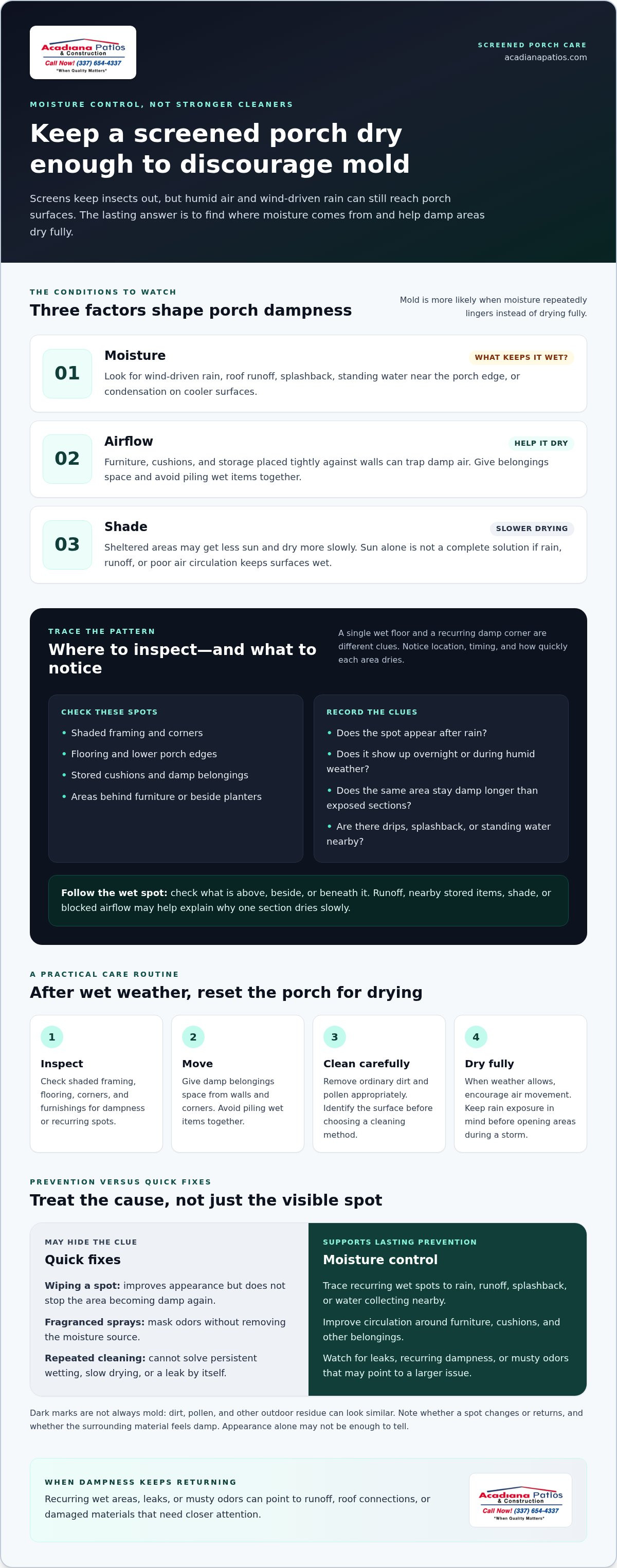
A simple screened-porch routine to prevent mold
A steady routine makes it easier to catch dampness before it becomes a recurring problem. After prolonged rain or a humid spell, take a quick look around the porch. Clear damp items, clean only where needed with a method suited to the material, and give surfaces time to dry. This practical sequence helps prevent mold on screened porch surfaces without turning routine upkeep into a major project.
A quick inspection after wet weather
Start by looking for fresh water entry, pooling, damp corners, and wet cushions or stored belongings. Check shaded areas and spots where furniture sits close to walls, since these can stay damp after more exposed areas dry. Notice whether the same place gets wet again and whether it dries between rain events. A short note about location and weather can help reveal a pattern.
Keep this checklist handy:
- Inspect: Look over the floor, framing, corners, and belongings for dampness or new spots.
- Notice water: Check for pooling, drips, and water entering near the porch edges.
- Clear clutter: Move damp cushions and stored items so air can circulate around them.
- Clean carefully: Remove loose debris first, then follow care instructions for the surface and cleaner.
- Dry fully: Let cleaned surfaces and belongings dry before putting items back.
- Track repeats: Record areas that remain wet or become damp again after rain.
Cleaning and drying without damaging porch materials
Begin with loose leaves, dust, and other debris before using a cleaner. Screens, flooring, and finished framing may require different care, so follow the material manufacturer’s guidance and the cleaner label. If the product calls for rinsing or wiping, follow those directions, then leave the area open to dry as conditions allow. Avoid abrasive scrubbing that could damage screens or finishes.
Cushions and stored items need their own drying time. Separate them so air can reach more of the fabric, and don’t return them to a damp corner or place them against a wet surface. If an item stays damp, keep it off the porch until it has dried. The routine works best when surfaces and belongings are dry before you put the space back in order.
Use inspection notes to distinguish a one-off splash from a repeated wet spot. If the same area stays wet after each storm, routine cleaning alone may not address the cause. Consider whether water is entering or collecting nearby, and keep tracking what you observe. For a porch designed around your home and outdoor space, explore screened porch options from Acadiana Patios & Construction.
When recurring porch mold points to a moisture or design issue
A spot that returns after cleaning is a useful signal to look beyond the surface. Repeated dampness, leaks, or a persistent musty odor may mean moisture is continuing to reach the same area or the porch isn’t drying well. That doesn’t identify the cause on its own, but it does call for closer observation. Sweeping and cleaning can address everyday dirt, but they can’t correct ongoing water entry or drainage concerns.
Signs the problem may need more than routine cleaning
Pay attention to repeated wet patches, visible deterioration, or growth that comes back after the surface has been cleaned and dried. Note the location, when the dampness appears, and whether it follows rain or another weather pattern. Photos and brief notes can help you track changes over time. Don’t assume a stain or musty smell proves hidden damage. Appearance alone can’t establish what’s happening behind or beneath a surface.
Consider whether the moisture seems limited to one small area or affects a larger section. A recurring patch near an edge may relate to water reaching that spot, while dampness near a connection between the porch and home may warrant a closer look at how the areas meet. These are observations, not diagnoses. If materials appear damaged or moisture keeps returning, a qualified assessment can help determine what needs attention beyond routine upkeep.
How porch design and construction fit into prevention
A porch’s layout and exposure influence how rain reaches its surfaces and how well they dry afterward. Roof coverage can limit direct wetting, while drainage paths affect where runoff travels. Material choices and the way the porch connects to the home also shape how it responds to outdoor moisture. For broader context on coverage and roof considerations, the patio cover installation guide explains factors homeowners can consider when planning a covered outdoor area.
These details connect construction to everyday prevention. A porch that sheds water away from frequently used areas and allows air to move around surfaces may be easier to keep dry, though no layout can replace attention to recurring dampness. If a spot stays wet, note where water appears to enter or collect, then observe whether it dries between rain events. That pattern gives you a clearer starting point for deciding whether the concern is ordinary upkeep or deserves a closer building assessment.
Understanding how to prevent mold on screened porch surfaces includes knowing when cleaning isn’t the whole answer. Acadiana Patios & Construction serves Lafayette and Acadiana, building screened enclosures, decks, and porches. Homeowners considering how porch layout and coverage affect an outdoor space can explore the company’s screened-enclosure expertise as part of their planning.
Plan a porch that’s easier to maintain
Use what you’ve noticed about your porch to guide your next step. If the same area stays damp or shows signs of wear, consider whether its exposure, layout, or connection to the home deserves a closer look. A clear record of where moisture appears can help you describe the concern and decide whether routine upkeep is enough or the porch needs a broader assessment.
For future improvements, think about how you want to use the space alongside how it meets rain, shade, and airflow. Design choices can shape everyday comfort and maintenance, so consider them before making changes. Keeping the focus on a well-planned outdoor space can make ongoing care feel more manageable.
Acadiana Patios & Construction designs and builds screened enclosures, decks, and porches for homeowners planning an outdoor living upgrade. Explore screened porch and enclosure options and take the next step toward a space that works well for your Lafayette home. With attentive care and thoughtful planning, you can feel more confident about enjoying your porch through Acadiana’s changing weather.
Frequently Asked Questions
Can mold grow on a screened porch?
Yes, mold can grow on a screened porch if surfaces or belongings stay damp. Screens keep out many insects, but humid air and rain can still reach porch materials. In Lafayette, inspect less visible spots such as the underside of stored items and areas beneath furniture feet. A small mark or musty smell alone doesn’t confirm mold, so look for a recurring pattern and persistent moisture before deciding how to clean.
Does vinegar prevent mold on a screened porch?
Vinegar shouldn’t be treated as a dependable way to prevent mold. A household remedy may not suit every porch surface, and using it won’t address an ongoing source of dampness. Before applying any cleaner, check the material’s care instructions and the product label, then test a compatible product in a discreet spot. Prioritize keeping the surface dry rather than relying on a treatment to prevent growth.
How often should I clean a screened porch to prevent mold?
There isn’t one schedule that fits every porch. In Lafayette, let conditions guide your routine: inspect after prolonged rain or humid spells, and clean when debris or residue builds up. If the porch stays dry and looks clean, a heavy wash may not be needed. Pay attention to areas under furnishings and near stored belongings, since a quick check can reveal dampness before it becomes a repeated concern.
Can I use bleach on a screened porch?
Bleach isn’t the best default cleaner for every porch surface. It may not work well on porous materials such as wood, and it could affect some finishes or fabrics. Follow the material manufacturer’s care guidance and the cleaner label; don’t mix bleach with other cleaning products. If growth covers a larger area or keeps returning, consider a qualified assessment instead of repeatedly applying stronger cleaners.
Should I remove porch cushions when it rains?
If wind-driven rain can reach your seating area, move cushions to a dry, protected spot before the weather arrives. A roof may not block rain that blows in from the sides, and cushion seams can hold moisture after the surface feels dry. If cushions get wet, separate them and let them dry fully before putting them back. Check care labels before washing or applying any product.
What should I do if mold keeps coming back on my porch?
Look for a continuing moisture source rather than repeating the same cleaning alone. Note where growth returns and whether it follows rain, a drip, or water collecting nearby. Don’t assume a visible mark reveals hidden damage. The EPA says homeowners can typically handle cleanup on areas under 10 square feet; for larger areas, it recommends professional consultation. If materials appear deteriorated, seek a qualified assessment of the affected area.