

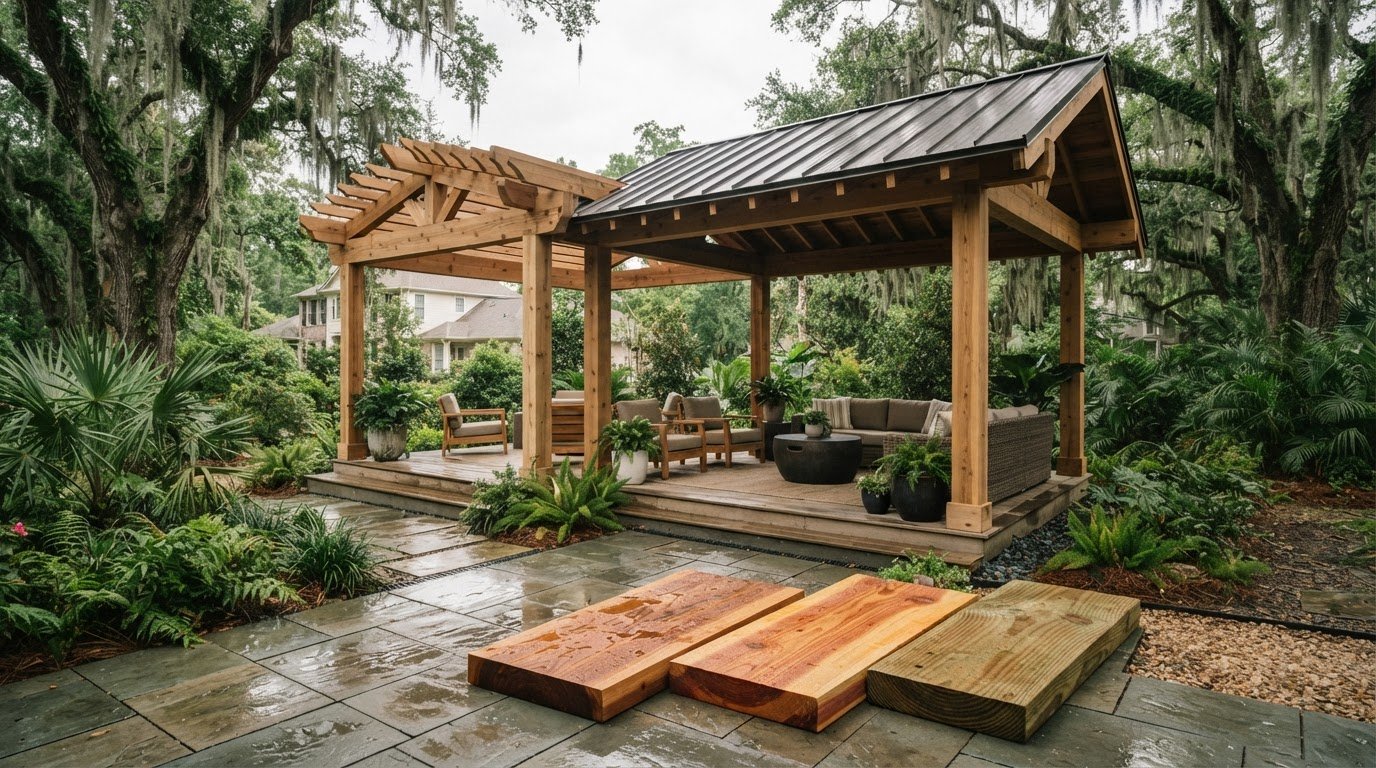
Best Wood for Outdoor Structures in Louisiana Humidity
The wood species alone won’t determine how long an outdoor structure lasts in Louisiana. If you’re comparing the best wood for outdoor structures Louisiana humidity can challenge, consider the material, how the structure is built, and the care it will need.
Heavy rain and persistent moisture can mean more upkeep or a shorter useful life, depending on the design and exposure. Cypress is a familiar regional option: its heartwood has natural resistance to decay and insects, but it isn’t immune to damage. Cedar, pressure-treated lumber, and dense hardwoods each bring different strengths and trade-offs, too.
This guide compares common choices and explains why heartwood, the right treated-lumber grade, and moisture-conscious construction details matter. You’ll also learn how site conditions and maintenance needs can shape the decision, from a deck to a covered outdoor living structure. Acadiana Patios & Construction has designed and installed outdoor structures in Acadiana since 1985, including cypress patio covers, pavilions, pergolas, and arbors.
Key Takeaways
- Compare cypress, cedar, and pressure-treated lumber by where they’ll be used, how exposed they’ll be, and the care each may need.
- The best wood for outdoor structures Louisiana humidity demands isn’t a species choice alone; moisture-conscious construction details matter, too.
- Use a simple selection process to match materials and maintenance plans to a deck, porch, pergola, or other outdoor structure.
- Consider how drainage, airflow, ground clearance, and exposed end grain affect moisture exposure.
- See how Acadiana Patios & Construction’s experience serving Lafayette and Acadiana since 1985 informs its cypress outdoor structure projects.
How Louisiana humidity affects wood for outdoor structures
Wood responds to moisture in the air and to direct contact with rain or damp surfaces. As it absorbs moisture, it swells; as it dries, it shrinks. These changes happen most noticeably across the grain, so boards can cup, warp, or develop gaps. That movement is different from decay, which can develop when wood stays damp long enough for wood-destroying fungi to thrive.
Outdoor exposure involves several stresses. Rain wets surfaces, while shaded joints can stay damp between showers. Sunlight heats and dries exposed faces, contributing to uneven moisture changes and surface weathering. Poor drainage adds risk by allowing water to pool near posts or splash onto lower boards. The USDA Forest Products Laboratory’s Wood Handbook explains that moisture conditions are a key factor in wood decay, so how long wood remains damp matters for outdoor durability.
What humidity and repeated wetting can do to outdoor wood
Humid conditions can leave wood with less opportunity to dry between rain events, but structures in the same neighborhood may face different exposure. A beam under a roof gets less direct rainfall than a deck board, yet a poorly ventilated corner can still hold moisture. Shade slows drying, while open airflow can help surfaces dry. Joints, board spacing, and the path water takes also affect where dampness lingers.
That’s why selecting the best wood for outdoor structures Louisiana humidity can challenge is only part of the decision. Naturally durable species offer useful resistance, but none is immune to damage. Lumber quality and placement, drainage, and airflow all influence how the structure performs over time.
Why Louisiana project conditions matter
In South Louisiana, warm, humid conditions and recurring rain make it sensible to plan for both wetting and drying. The state’s humid subtropical climate provides useful context, but a project’s actual exposure depends on its site and design. A deck close to soil faces different moisture conditions from a raised, roofed porch. A pergola provides shade without blocking rain, so its framing still needs to handle direct wetting.
Look closely at the structure’s surroundings. Does water drain away from posts or collect beside them? Can air move beneath a deck and around the framing, or is the area enclosed? Does roof coverage protect the wood from rain, and are the sides open enough to dry? These conditions matter in Lafayette and across Acadiana, where one yard may be breezy and well-drained while another has shaded, slow-drying areas. Choose materials after assessing those differences.
Cypress, cedar, and treated lumber: comparing outdoor wood choices
No single material fits every outdoor project. Wood performance depends on the species, the part of the tree used, how lumber is treated, and how much moisture and sunlight the finished structure receives. The USDA Forest Products Laboratory’s Wood Handbook explains that durability varies with wood properties and exposure conditions.
Use the comparison below as a starting point, then consider whether the wood will serve as structural framing, decking, or a visible finish. Heartwood and sapwood can differ: cypress and cedar heartwood have natural decay resistance, while their sapwood does not offer the same protection.
| Material | Durability and common uses | Appearance and care | Trade-offs |
|---|---|---|---|
| Cypress | Heartwood has natural resistance to decay and insects, making it a regional option for outdoor framing and visible elements such as porch or pavilion components. | Warm, recognizable wood grain; finishes can change its appearance. Like other exterior wood, it benefits from inspection and care suited to its exposure. | Heartwood content matters. Sapwood does not share the same natural resistance, and cypress still needs sound detailing to manage water. |
| Cedar | Heartwood is naturally decay-resistant and can suit outdoor trim, decking, and other visible applications. | Often selected for its distinct grain and color. A finish can help maintain a chosen appearance, while weathering changes the surface over time. | Heartwood and sapwood differ in durability. Suitability depends on the application and exposure, not the species name alone. |
| Pressure-treated lumber | Preservative treatment can make lumber suitable for outdoor uses, including locations where untreated wood would be more vulnerable. Use a grade intended for the specific application, such as ground contact or above-ground use. | Usually has a more utilitarian appearance than finish-focused species. Newly treated lumber can be wet; allow it to dry appropriately before applying a stain or sealer. | Treatment level and installation matter. Copper-based preservatives can corrode incompatible hardware, so use fasteners and connectors rated for treated wood. |
Comparison sources: USDA Forest Products Laboratory, Wood Handbook: Wood as an Engineering Material; USDA guidance on treated wood and the American Wood Protection Association’s U1 standard.
Match the wood to the project
Cypress may suit a visible structure where regional character and naturally durable heartwood are priorities. Cedar can work for exposed finish elements where appearance is part of the design. Pressure-treated lumber may be practical for framing or ground-near components when its treatment category matches the use. The best wood for outdoor structures Louisiana humidity puts to the test depends on balancing these needs, not choosing a universal winner.
For any option, plan inspection and maintenance around how the wood is used and exposed. Stain or sealer can support a maintenance plan, but it doesn’t replace drainage, airflow, or appropriate material selection. Explore outdoor structure design and installation as you plan the material and layout.
Does the wood species alone make a structure durable in Louisiana?
No. Naturally durable wood can be a sound material choice, but it can’t compensate for a design that repeatedly traps water. A cypress post set in persistently damp ground faces different exposure from a post kept clear of soil and able to dry. The same principle applies to cedar and treated lumber: material properties matter, as do the structure’s details and conditions.
Species selection and moisture-aware detailing work together. That’s the practical answer to choosing the best wood for outdoor structures Louisiana humidity puts under pressure. Some decisions depend on the material, such as using the appropriate treated-wood category. Others apply to every species: give water a way to drain, allow air to circulate, and avoid details that hold moisture against the wood.
Construction details that help manage moisture
Plan surfaces and connections so rain doesn’t sit in shallow pockets or collect at joints. Limit unnecessary contact with soil and standing water, and leave space for air to move around framing. Cut ends and exposed end grain can absorb moisture readily, so protect them with suitable detailing and finish systems. The USDA Forest Products Laboratory’s Wood Handbook discusses moisture, decay, and wood protection, supporting the idea that water management belongs in the design, not as an afterthought.
For a deck, consider how water drains between boards and beneath the framing. For a covered porch, roof coverage can reduce direct rainfall, but it won’t solve poor drainage or a persistently damp, closed-in corner. A pergola offers shade, yet its open top still lets rain reach beams and joints. Each structure needs details suited to how it gets wet and dries.
- Drainage: Shape and position surfaces so water runs off rather than pooling at joints or around posts.
- Airflow: Avoid tight, enclosed spaces around wood where dampness may linger.
- Ground clearance: Limit avoidable soil contact and standing water near wood components.
- Connections: Choose fasteners and connectors appropriate for the lumber, especially with pressure-treated wood. Copper-based preservatives can corrode incompatible hardware, so use corrosion-resistant hardware rated for the application.
What wood can and cannot promise
No outdoor wood choice removes the need to plan for exposure and care. Natural resistance varies within a species, and treated lumber depends on the correct treatment category for its use. Rain, shade, drainage, and airflow all influence how quickly a component dries. Periodic visual checks can help identify places where water collects, finishes have worn, or joints stay damp.
Think of species as one part of a complete system. Material helps determine the structure’s appearance, intended use, and care needs; design details manage how water reaches and leaves it. That combination is more useful than expecting any lumber to withstand every condition on its own. In Lafayette and across Acadiana, project planning can account for whether a structure is open to rain, sheltered overhead, close to the ground, or exposed to limited airflow.
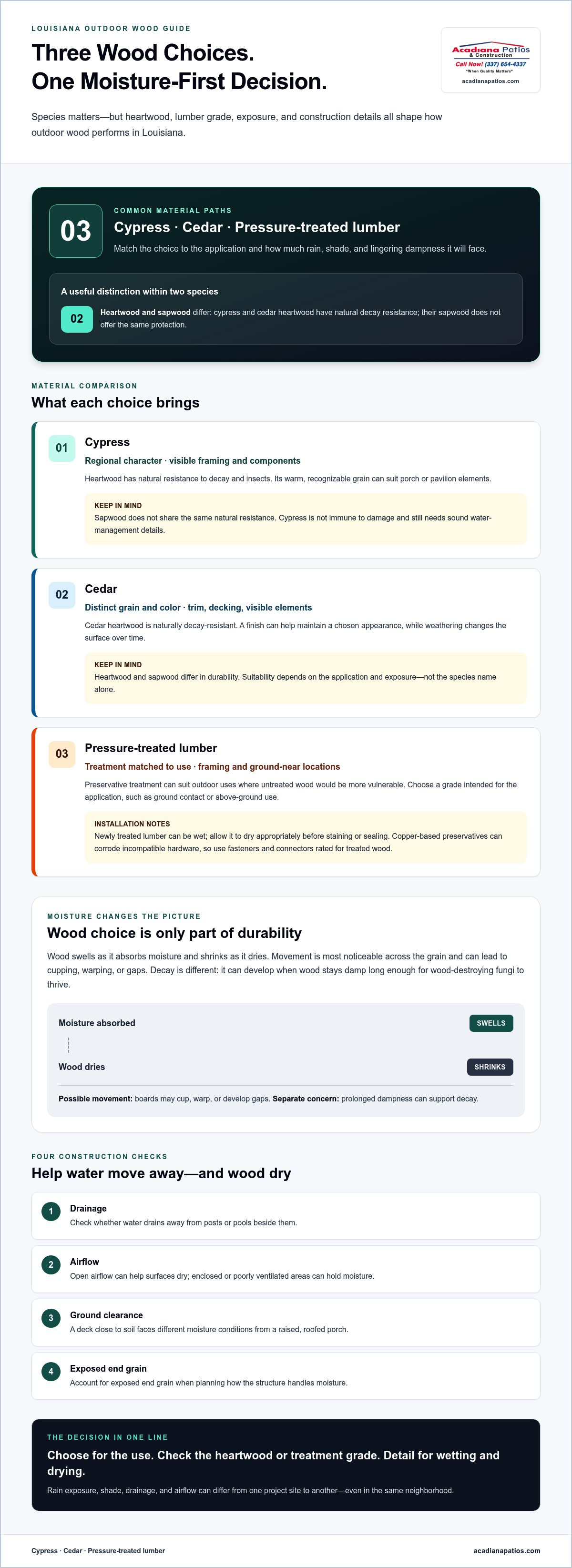
How to choose wood for a Louisiana deck, porch, or pergola
Start with the structure, not a favorite wood sample. A deck that receives rain and foot traffic has different demands from a covered porch or open pergola. Use this process to connect the project’s purpose, exposure, appearance, and maintenance needs before choosing materials.
- Define the structure and its use. Identify whether you’re building a deck, porch, pergola, or another outdoor space. Consider how people will use it, which parts need to carry loads, and which surfaces will be most visible. Framing and finish materials don’t have to be the same.
- Assess the site’s exposure. Look at direct rain, strong sun, nearby soil, drainage, and airflow around the structure. An open pergola may provide shade but still leave beams exposed to rain. A roofed porch gets less direct wetting, though its posts and lower areas can remain vulnerable if water collects or air circulation is limited.
- Compare materials for the specific job. Match the wood’s characteristics and treatment, where relevant, to its intended location. Consider appearance alongside structural use: visible grain and color may matter for a porch ceiling or pergola, while framing may call for a different priority. The best wood for outdoor structures Louisiana humidity challenges is the one that suits both the structure and its conditions, not a universal winner.
- Plan for care before construction. Decide how much finish upkeep you’re comfortable with, and factor in access for inspection and maintenance. Finishes can influence appearance and protection, but they don’t eliminate routine care.
Match wood selection to the structure and its exposure
Consider where water reaches the wood, not just whether a structure has a roof. A deck’s walking surface is directly exposed, and its framing may be near the ground. A covered porch reduces rainfall on some components, while an open-sided design may support airflow. A pergola remains open overhead, so its beams and joints still face rain and sun. Align the material and finish with the intended look, use, and exposure.
For a covered project, the patio cover installation guide can help you think through how coverage fits into the overall design. If you’re considering a deck, the Lafayette deck building costs guide offers related planning context. Keep material selection focused on the deck’s use and site as well as its budget.
Plan for finishing and routine care
Finishing decisions depend on the wood, its exposure, and whether you want to preserve a particular appearance or let the surface weather. Follow the finish manufacturer’s directions for surface preparation, application, and upkeep; treated lumber may need to dry before a finish is applied. Don’t assume one product or schedule works for every structure. Inspect the wood and respond to its actual condition and exposure.
For a project that brings material choices, coverage, and construction details together, plan your outdoor structure with Acadiana Patios & Construction.
Choosing cypress construction with Acadiana Patios & Construction
Choosing wood is one part of planning an outdoor structure. The material needs to fit the project’s purpose, the property, and the way the structure will meet rain, sun, and airflow. Acadiana Patios & Construction has served Lafayette and Acadiana since 1985, designing and installing outdoor living structures. Its cypress patio covers, pavilions, pergolas, and arbors bring material decisions together with the practical details of a complete project, without treating any wood choice as a guarantee against weathering or future care.
Cypress options for outdoor living
Cypress can be used in outdoor living projects such as patio covers, pavilions, pergolas, and arbors. Each structure has its own exposure: a patio cover provides overhead shelter, while an open pergola leaves its members more directly exposed to rain and sun. The right design depends on the property, intended use, appearance, and site conditions, including drainage and available airflow.
For a deck, planning also means thinking through the layout and how the space will be used alongside material choices. The 2026 deck building costs guide provides additional context for Lafayette-area deck planning. Across these project types, custom design and installation bring the structure’s form and material decisions together around the specific site.
Plan a wood structure for your Lafayette-area home
Before starting a project, outline what you want the structure to do and how you want it to look. Consider where rain reaches it, how close its components are to the ground, whether air can circulate, and what level of upkeep feels manageable. These details help shape a design that reflects your priorities and give material choices a clear purpose.
- Structure: Define whether you’re planning a deck, porch, patio cover, pavilion, pergola, or arbor.
- Site: Note direct sun and rain, drainage, ground proximity, shade, and airflow.
- Appearance: Consider how visible wood grain and finish fit the home and outdoor space.
- Care: Set realistic preferences for inspection, cleaning, and finish maintenance.
Acadiana Patios & Construction’s cypress construction experience is one local example of how material selection can be considered alongside project design and installation. The best wood for outdoor structures Louisiana humidity puts to the test still needs to suit its particular use and exposure. A clear plan helps turn those considerations into a thoughtful outdoor space for your home.
To discuss an outdoor structure project, explore outdoor living projects with Acadiana Patios & Construction.
Make your next outdoor project a thoughtful one
The best wood for outdoor structures Louisiana humidity will test is not simply the material with the strongest reputation. It’s the choice that fits your structure, site, preferred appearance, and willingness to maintain it, supported by design details suited to your home’s conditions.
Before moving ahead, picture how you want to use the space. Note where rain and sun reach, how the structure should complement your home, and what upkeep feels manageable. Those priorities give a design conversation a practical starting point and help turn a material decision into an outdoor plan.
Acadiana Patios & Construction designs and installs custom outdoor living projects in Lafayette and Acadiana. Explore outdoor living projects with Acadiana Patios & Construction to discuss a structure planned around your home and needs.
Frequently Asked Questions
Is cypress naturally rot-proof?
No. Cypress heartwood can resist decay, but it isn’t rot-proof. The USDA Forest Products Laboratory’s Wood Handbook: Wood as an Engineering Material explains that decay risk depends on wood properties and moisture conditions. A cypress component in a poorly drained, persistently damp spot may face different risks from one that dries readily. Species, grade, placement, construction, and care all matter, so cypress doesn’t guarantee a fixed service life.
Does cypress turn gray outdoors?
It can. Sunlight and weather gradually change exposed wood’s appearance, and the result depends on location, moisture exposure, and any finish used. Gray color alone doesn’t show that a structure has failed; check separately for damage such as soft or deteriorated areas. If you want to retain a particular look, choose a suitable finish for the wood and its exposure, then follow the manufacturer’s instructions for surface preparation and ongoing care.
Can a wood outdoor structure withstand Louisiana storms?
No wood species by itself makes a structure storm-proof. Storm performance depends on the complete design, including structural members, connections, foundations, installation, and requirements that apply to the specific project. A pergola and an attached porch, for example, have different layouts and connection needs. In Lafayette, project planning should account for the property and proposed structure rather than relying on lumber choice to determine performance in severe weather.
Is wood better than composite for an outdoor structure in humid Louisiana?
Neither is automatically better for every project. Wood offers natural grain and a choice of species, while composite materials have their own appearance, product-care directions, and design considerations. Compare the specific product guidance with your priorities: the look you prefer, the structure’s exposure, how you plan to clean and maintain it, and how it fits the design. The best wood for outdoor structures Louisiana humidity can challenge still depends on the project, not a blanket ranking.
Can different wood species be used in one outdoor structure?
Sometimes, but combining species should be a deliberate design choice. Visible trim and structural framing may have different appearance or performance goals, yet the materials still need compatible connections and finishing plans. Woods can respond differently to moisture changes, and finishes may look or wear differently across surfaces. A project design should identify each material’s role and account for those differences before construction, rather than mixing species based on appearance alone.
How much maintenance does an outdoor wood structure need in Louisiana?
There’s no single maintenance schedule for every structure. An open deck exposed to sun and rain may show surface wear differently from a sheltered porch, and drainage or nearby vegetation can affect how easily areas dry. Check the structure periodically for peeling finish, loose connections, damaged surfaces, or spots that remain damp. Follow the finish manufacturer’s care guidance, and adjust maintenance to the structure’s actual condition rather than relying on a universal refinishing interval.