

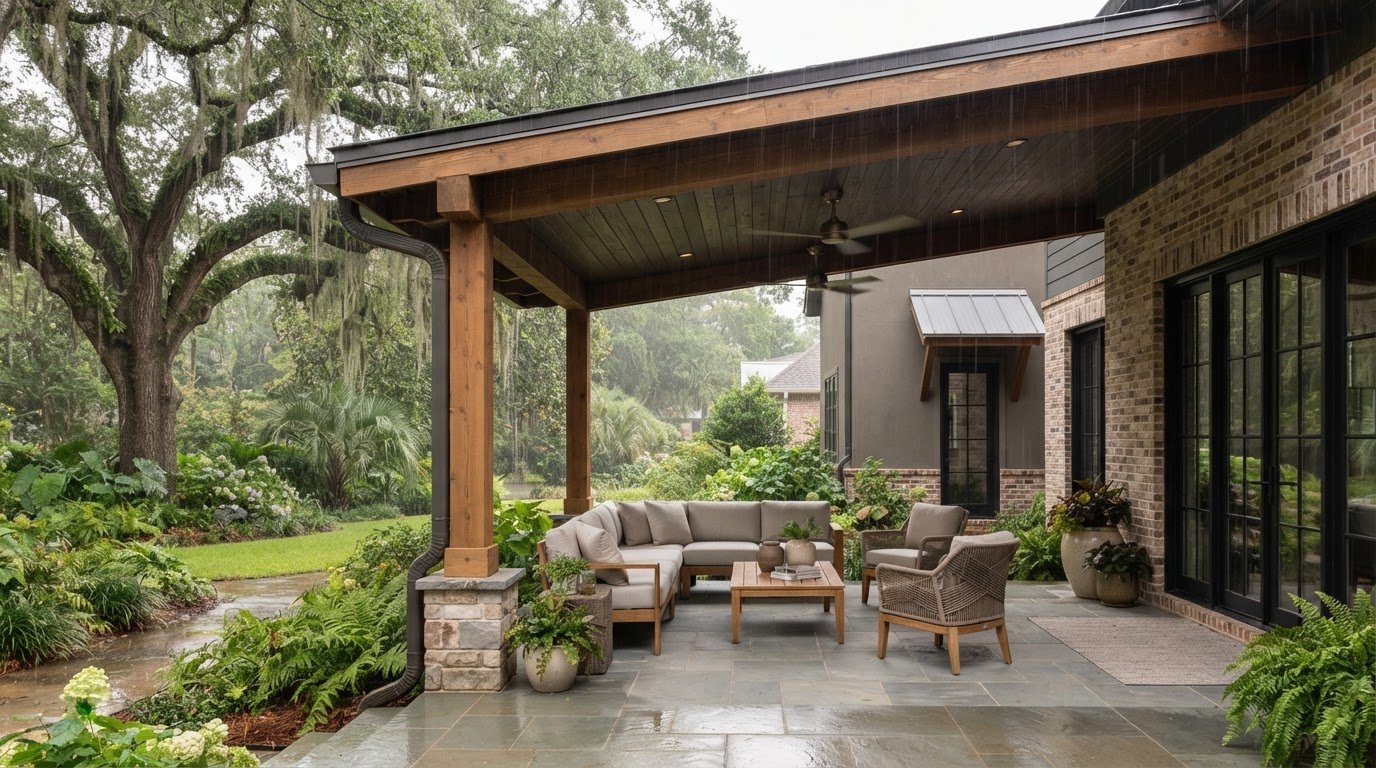
Covered Patio Value in Louisiana: Resale Returns and Materials
A covered patio can improve resale appeal, but it may not return every dollar invested. Homeowners often ask, “Does a covered patio add value to a home in Louisiana?” The answer depends on how well it suits the local climate, the house, and buyer expectations.
Potential resale value matters, but so does everyday comfort. In Louisiana’s hot, humid climate, a well-planned cover can make outdoor space more usable by providing shade and shelter from rain.
This guide explains what can influence resale value, how to consider return on investment, and why materials and design matter. You’ll learn how construction quality, practical features, and the fit with your home can affect whether a covered patio adds value in Louisiana.
Key Takeaways
- Learn why Louisiana buyers may value outdoor space they can use in hot, rainy weather, and what makes a patio cover practical.
- See how neighborhood expectations, design fit, construction quality, and permit records can shape a cover’s resale appeal.
- Compare the factors that influence resale return, so you can weigh potential buyer appeal against project cost.
- Explore materials and design choices suited to local heat, humidity, rain, and wind.
- Understand what to consider about insurance coverage and property assessments when adding a covered patio.
Are Patio Covers Worth the Investment for Home Values in Louisiana?
Homeowners often ask, “Does a covered patio add value to a home in Louisiana?” It can improve resale appeal by making outdoor space more useful, but it does not guarantee a higher sale price. Quality construction, a design that suits the home, and practical shelter from sun and rain can all strengthen its appeal.
Buyer Demand for Outdoor Living
Outdoor living means usable space beyond the home’s interior, such as a shaded dining area or poolside retreat. The National Association of Realtors identifies outdoor living as a desirable feature for buyers, so a thoughtfully designed patio can contribute to a home’s overall appeal.
In Louisiana, heat, humidity, and rain can limit how often homeowners use an exposed yard. A covered area helps buyers picture enjoying the space, whether for morning coffee or hosting friends. That practical value can matter even when buyers prioritize other features of the property.
Outdoor Comfort and Everyday Use
Comfort makes outdoor space useful beyond occasional gatherings. A covered table can provide shelter for meals, while poolside seating offers shade between swims. Plan the layout around movement: leave room to pull out dining chairs and move easily around loungers.
Consider how people will move between the patio, kitchen, and yard. Placing a dining area near the home’s entrance, for example, can make carrying food outside easier. When the space supports familiar activities, buyers are more likely to imagine using it rather than seeing it as decoration.
Features That Support Home Value
Resale appeal depends on how well the cover fits the house and property. Appraisers may consider the quality of materials and installation, whether the design complements the home’s architecture, and whether its proportions suit the house and lot.
Functional details can make the space more useful. Lighting, electrical features, and ceiling fans can support evening meals and warm-weather gatherings. An outdoor kitchen may also make cooking and entertaining more convenient when it suits the patio’s scale. To assess whether a covered patio adds value in Louisiana, consider whether its features improve daily use and meet local buyer expectations.
Resale, Insurance, and Property Taxes
Permits and inspection records help document a roofed patio project. Permit requirements for roofed patio covers can depend on the project and local rules, so check before construction. Keep approvals with the home’s records: unpermitted structures can reduce value and make the improvement harder to document during a sale.
Insurance and property assessments involve separate considerations. Tell your insurer about a structural addition so the home’s features are accurately represented. For resale, construction quality, project records, and how well the patio fits the property help explain the improvement to future buyers.
How patio covers may affect resale value
Resale value depends on how a cover fits the home, lot, and neighborhood. Attached covers connect directly to the house, while freestanding designs can serve a pool or separate entertaining area. Neither type is automatically more valuable.
Resale Price Factors
A home’s sale price reflects buyer appeal, comparable properties, and the quality of the finished improvement. An appraiser may consider the materials and installation, architectural fit, useful features, and how well the cover suits the home and lot.
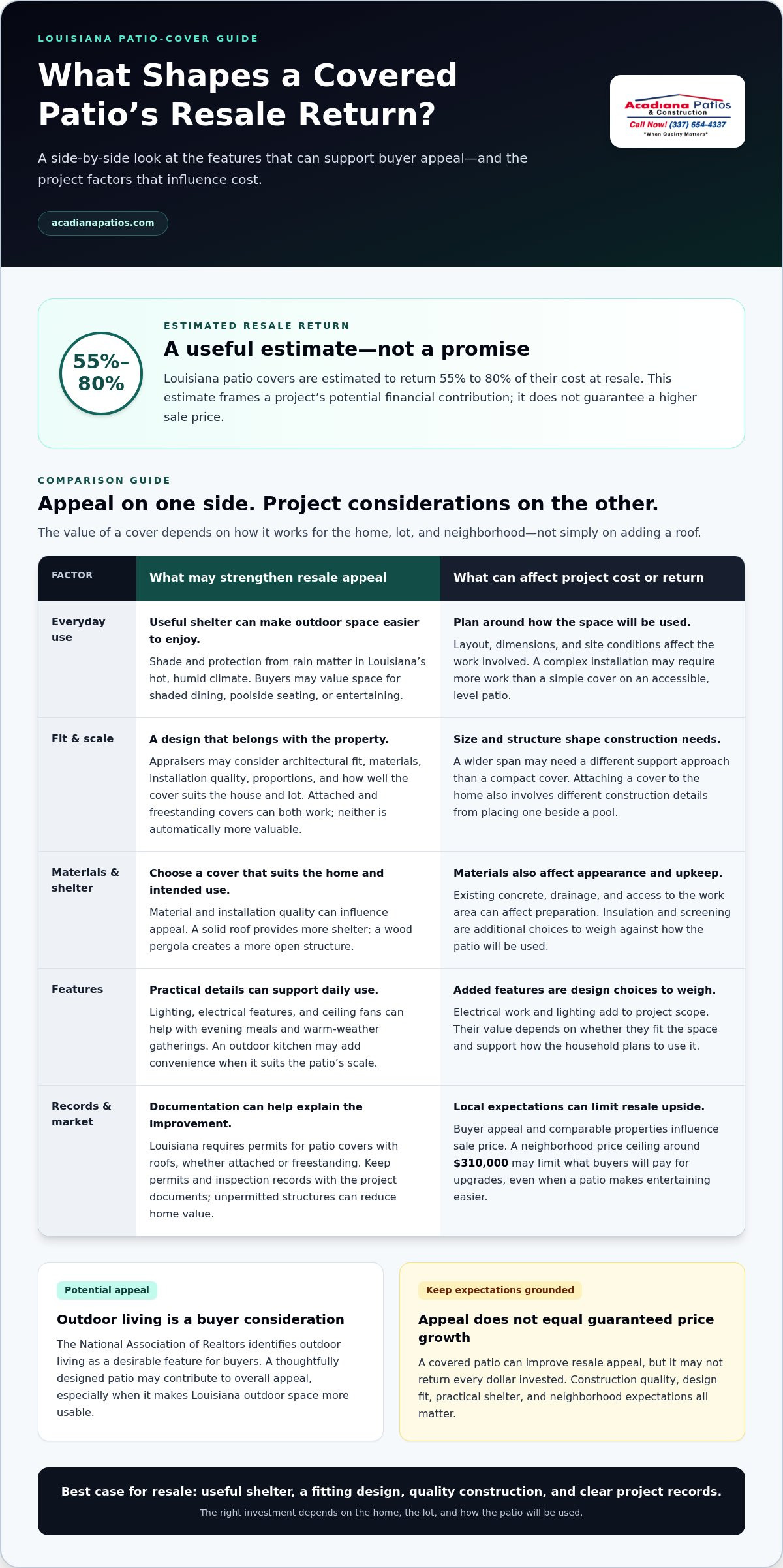
Neighborhood expectations matter, too. A price ceiling around $310,000 may limit how much buyers will pay for upgrades, even when a patio makes entertaining easier. A cover is more likely to support the asking price when it addresses a practical need without making the property feel out of step with nearby homes.
Documentation can build buyer confidence. Louisiana requires permits for patio covers with roofs, whether attached or freestanding, and unpermitted structures can reduce home value. Keep permits and inspection records with the project documents. A screen enclosure, pergola, or roofed cover should also look complete and integrated with the house, not tacked on.
Features such as electrical connections and lighting can improve evening use, but they need to suit the space. For example, lighting beside a dining area supports entertaining; poorly placed fixtures may add little. Explore patio cover options while considering how the design will work with the property.
Project Cost Factors
Project costs depend on the design, materials, dimensions, site conditions, and added features. A complex installation can require more work than a simple cover on an accessible, level patio.
For example, a wider span may need a different support approach than a compact cover. Attaching a structure to the home involves different construction details from placing a freestanding cover beside a pool. Existing concrete, drainage, and access to the work area can also affect preparation.
Material choice affects both appearance and upkeep. A wood pergola creates an open structure, while a solid roof offers more shelter. Insulation, screening, electrical work, and lighting are additional design choices to weigh against how you plan to use the space.
Permits are another planning consideration for roofed patio covers in Louisiana. The design and scope affect the required documentation and work. A clear plan helps align construction with the intended use, whether you want shaded dining, poolside seating, or a sheltered entertaining area.
Prioritize features that serve your household and suit the property. A well-proportioned cover with documented construction can make a stronger case to future buyers than an oversized addition with little practical use.
Estimated resale return on investment
Louisiana patio covers are estimated to return 55% to 80% of their cost at resale. That range helps frame a project’s financial contribution, but it is not the same as a guaranteed increase in sale price.
How to Interpret the Estimate
Return on investment compares the value recovered at sale with the project’s installation cost. A 55% return means the estimated resale contribution equals just over half the original outlay; an 80% return means it approaches four-fifths. The remaining value may come through years of use before the home is sold.
Think of the cover as both a functional improvement and a resale feature. An insulated patio, for example, can make outdoor dining more comfortable during Louisiana’s heat. A basic structure that offers little shade or shelter may appeal less to buyers, even if it covers a similar area.
What Can Shift the Return
Design, condition, and neighborhood fit all influence how buyers respond. A cover that complements the home, shelters a useful concrete patio, and supports entertaining gives buyers a clear reason to value the space. Poor proportions, visible wear, or awkward access can weaken that impression.
Added features matter when they improve everyday use. Insulated panels can make a covered area more comfortable, while lighting or a fan can support evening meals. These details are most useful when they serve a clear purpose, rather than adding complexity without improving the patio.
Local demand also affects resale appeal. A Louisiana buyer looking for shaded outdoor space may value a usable covered area more than someone focused on other home features. Comparable properties and the home’s overall condition influence the final sale, so assess the patio as part of the whole property.
Use the Estimate in Project Planning
Use the 55% to 80% estimate as a planning range, not as a promise of recovered cost. Compare the expected resale contribution with the project’s full installation cost, including the cover, supporting structure, concrete work, and functional additions. This keeps the calculation tied to the complete project rather than the roof panels alone.
A homeowner planning to sell soon may weigh resale appeal more heavily than someone expecting years of outdoor use. A durable, well-integrated cover can serve both: it improves daily comfort now and gives future buyers a more usable outdoor area.
Keep the design proportionate and the construction quality consistent with the home. These practical choices help the patio feel like part of the property, whether buyers assess it for everyday function or resale.
Patio-cover design and materials for Louisiana weather
Louisiana’s climate calls for a patio cover designed with heat, heavy rain, humidity, and local wind exposure in mind. The right materials and roof layout can make outdoor living more comfortable while complementing the home.
Choose a Roof for Heat and Rain
Insulated roof panels are one option for reducing heat beneath a solid cover. They can make a space more comfortable for dining or relaxing than an exposed patio, especially during hot Acadiana afternoons. Aluminum covers offer another material choice, while cypress suits homeowners who prefer a natural wood appearance.
Rain management matters just as much. Gutters collect runoff at the roof edge, while drainage planning directs water away from the home and patio. An attached cover needs a roof layout that manages water near the house instead of concentrating runoff beside the foundation. A freestanding design also needs a sensible route for roof drainage across the yard.
Plan for Local Wind Conditions
Wind exposure varies across the state, so a cover’s location affects its design. Ultimate design wind speeds range from approximately 115 mph in inland areas to over 160 mph along the coast. Here in the Acadiana region, wind requirements for covered structures reflect local building standards designed to withstand strong storm events.
These figures make location a practical design consideration, not a cosmetic detail. Roof shape, supports, connections, and placement should work together for the site. A cover attached to a home also needs a sound connection to the existing structure. The Louisiana State Uniform Construction Code Council says the state enforces the 2021 International Residential Code with state amendments, and Appendix AH addresses patio covers.
Match the Cover to How You’ll Use It
Start with the activities the space needs to support. A covered dining area benefits from shade and room for chairs, while poolside lounging may call for a wider sheltered area. Insulated panels may suit homeowners seeking more comfort beneath a solid roof; an open pergola provides a different balance of sun and shade.
Heat makes that distinction useful. Lafayette experiences numerous days per year with temperatures at or above 90 degrees, making effective shade a priority for outdoor comfort. These local conditions can guide decisions about shade, ventilation, and how much of the patio to cover.
Coordinate the roofline, materials, and color with the house. A proportionate attached cover can feel like an extension of the living space, while a freestanding structure can define a separate destination. When building with Acadiana Patios & Construction, thoughtful construction, effective drainage, and climate-aware materials help the finished patio serve its purpose in Louisiana weather.
Does a covered patio affect homeowners insurance or property taxes in Louisiana?
A covered patio can affect insurance and property taxes through separate processes. Insurance concerns the home’s coverage and rebuilding needs; property assessments concern its value. For Louisiana homeowners, these are distinct questions, and one change does not automatically determine the other.
Homeowners Insurance and the Added Structure
A roofed patio becomes part of the home’s physical features, which may matter when an insurer reviews coverage. Replacement cost is one consideration: rebuilding a home with an attached patio cover may involve different materials and labor than rebuilding the house alone. The policy’s covered structures and limits determine how the addition is treated.
For example, a homeowner adds an attached cover and electrical lighting. The structure and its installed features could affect the amount needed to repair or rebuild after covered damage. Any effect on premiums depends on how the insurer evaluates the property, coverage, construction, and risk. Policy terms may also distinguish a freestanding cover from one attached to the home.
Keep the project details together. Record the construction scope, materials, dimensions, and permit documents, then share relevant changes with your insurer. If a storm damages the patio, dated photos and receipts can help show what existed before the loss. Clear records also help distinguish damage to the cover from damage to the main home.
Property Assessments and Taxes
Property taxes are tied to assessed property value and applicable local tax rates. A new improvement may factor into an assessment because it changes the property’s features. That does not mean the project cost becomes the assessment increase or that every patio has the same tax result.
Consider two Louisiana homes with different lots and existing improvements. The same patio design could contribute differently to each property’s overall value. Assessment details, local practices, and the property’s condition all matter. Keep the contractor’s project description distinct from the assessor’s valuation: they serve different purposes.
Keep the project file with the property records. Include plans, construction details, permit paperwork, and completion information. If an assessment notice changes after construction, those documents help clarify how the improvement appears in the property record. The patio’s size, attachment, and features describe what was added.
Plan for Both Reviews
Before construction, list the proposed features, such as an attached roof, lighting, or a concrete slab. After completion, keep final documents and photographs. These steps give an insurer and local assessor clearer information about the finished improvement without treating insurance coverage and tax assessment as interchangeable.
For a patio design that fits the home and its intended use, plan your covered patio project around the structure, materials, and outdoor space.
Acadiana Patios & Construction: Motorized Shades & Screens
Acadiana Patios & Construction helps homeowners turn patio plans into practical outdoor spaces. If you’re considering shade, weather protection, or how a cover will fit your home, explore Cypress Patio Covers, Insulated Patio Covers, and Motorized Shades & Screens.
These options serve different needs. A patio cover provides overhead shelter, while motorized shades and screens help manage exposure around the space. Concrete Slabs & Concrete Coloring can complement a patio by providing a finished surface for dining or relaxing.
Bring your priorities, such as outdoor comfort, design fit, and intended use, into the planning conversation. Contact Acadiana Patios & Construction to discuss your patio project.
Make Your Outdoor Plans Work for You
Before choosing a design, decide how you want the space to serve your household. A shaded dining area, poolside retreat, and sheltered gathering space each call for different layouts and coverage. Defining your priorities helps you assess whether a covered patio adds value to your home in Louisiana, both for your plans and a future sale.
Acadiana Patios & Construction offers Cypress Patio Covers, Motorized Shades & Screens, and Carports & Garages. The right project depends on your home, intended use, and priorities. Consider how each feature will fit into daily life before settling on a design.
Ready to discuss possibilities for your outdoor space? Start a conversation about your patio project and take the next step toward a space that feels right for your home.
Frequently Asked Questions
Can a patio cover be added to an existing patio or deck?
A cover can be added to an existing patio or deck when the structure and attachment points suit the new load. A concrete patio, for example, may need different preparation than an elevated deck. Supports, the connection to the home, roof drainage, and access all shape the design. In Lafayette, include the existing surface and its condition in the project plan before choosing a cover style.
Can patio covers withstand hurricanes or strong storms?
Storm performance depends on the structure’s design, construction, connections, and exposure to wind at its location. A patio cover should be designed for the conditions where it will stand, not considered hurricane-proof based on material alone. On a coastal property, roof attachment and support details deserve particular attention. A well-planned design can address local wind demands, but no cover is immune to severe storm damage.
Is a Patio Cover a Smart Choice for Your Home?
A patio cover makes sense when it meets a regular household need, such as providing a shaded place for meals or sheltering outdoor furniture. Consider how often you’ll use the space, how the design fits your home, and whether the project suits your plans for the property. For a Lafayette household that entertains outdoors, usable shelter can matter as much in daily life as it does to future buyers.
Do I need a permit, and what does it add?
Louisiana requires a permit for a patio cover with a roof, whether attached to a home or freestanding. The permit process adds review and documentation, but it does not guarantee resale value. Keep approved plans, permit records, and inspection paperwork with your home documents. Organized records can help a future buyer understand how a roofed patio was built and approved.
How much does a covered patio increase home value in Louisiana?
There’s no single dollar amount that applies to every Louisiana home. Patio covers are estimated to return 55% to 80% of their cost at resale, so the project’s cost and the property’s market influence the potential contribution. A cover that suits the house and supports a practical use can appeal to buyers, while neighborhood expectations and comparable homes also affect the final sale price.
What is the average cost to build a covered patio in Louisiana?
Project cost depends on dimensions, materials, site conditions, and construction complexity. An attached insulated cover, for example, involves different materials and work from a simpler open structure. Concrete work, drainage needs, and design features can also affect the scope. For an accurate budget, request a project quote based on your home and planned design rather than relying on a broad statewide average.
What is the typical return on investment for a covered patio?
Louisiana estimates place the resale return for patio covers at 55% to 80% of project cost. That figure compares estimated value recovered at sale with the original investment; it doesn’t measure the years of use a household gets beforehand. For example, a homeowner who regularly entertains outdoors may value the added function differently from someone preparing to sell soon.
Do Louisiana homebuyers value covered patios and outdoor living spaces?
Yes, outdoor living is a feature the National Association of Realtors identifies as desirable to buyers. A covered patio can make a backyard more useful for dining, relaxing, or hosting guests. In Lafayette, buyers may also consider how the space works with the home’s layout and their routines. A clear connection between indoor and outdoor areas can help them picture using the patio.