Deck vs Patio Cost in Lafayette: Compare Price and Value
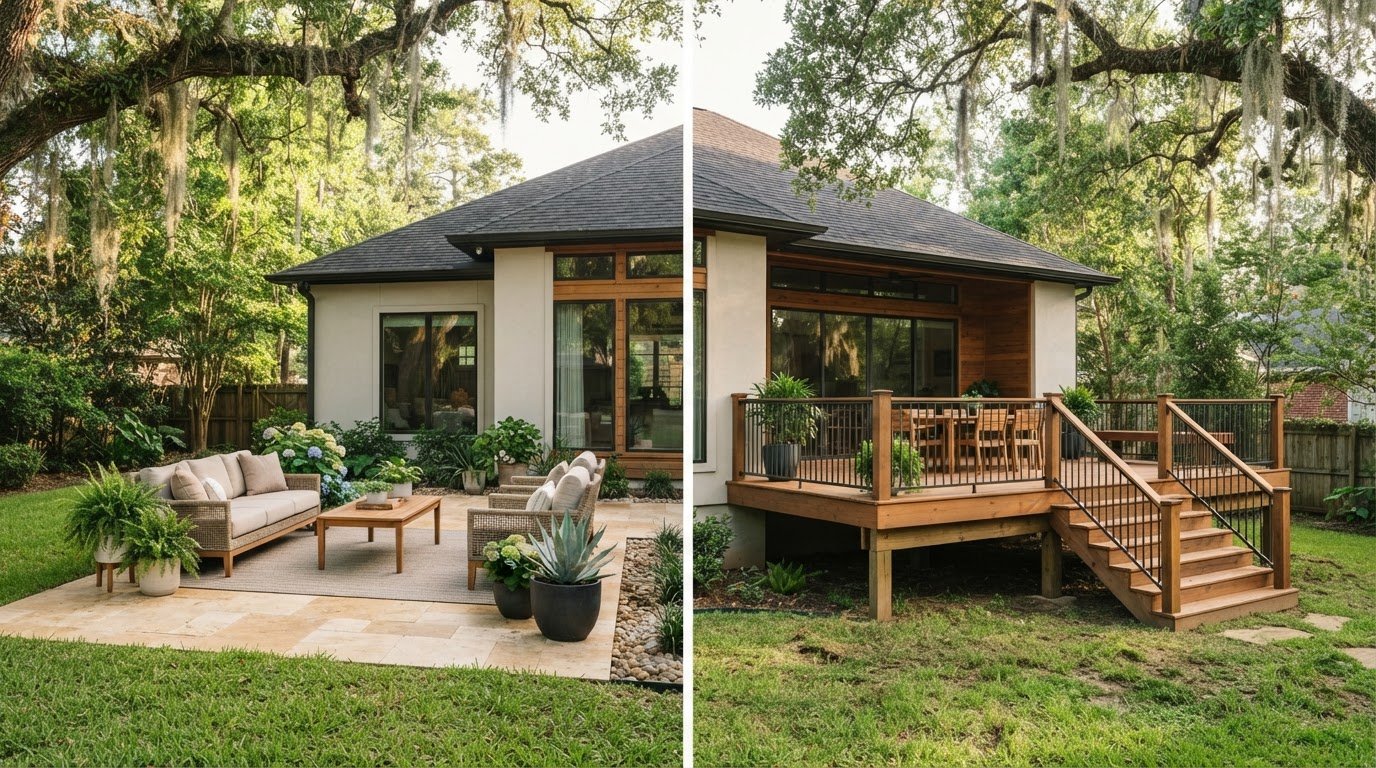
A ground-level patio is usually the lower-cost starting point in Lafayette, while a deck typically costs more because it needs a supporting structure and more carpentry. The deck-versus-patio cost comparison in Lafayette depends on materials, site conditions, size, and design, so the least expensive option upfront may not be the best fit for every home.
Compare more than the initial build: a wood deck needs regular upkeep, while patio maintenance depends on its surface and installation. This guide explains how common patio and deck materials compare, what affects project costs, how location and elevation shape the design, and how lifespan and resale value factor into your decision.
A ground-level patio may make practical sense in one yard, while a raised deck may better suit another home and outdoor space. Use the guidance below to weigh upfront cost against maintenance, durability, and how you plan to use your yard.
Key Takeaways
- Compare the full project scope, not just the surface material: a deck’s support structure and carpentry can raise its upfront cost, while a ground-level patio is often simpler to build.
- Match material choice to your maintenance preferences; wood needs periodic staining, while patio upkeep depends on the surface and its joints.
- Consider your yard’s layout before choosing: elevation, uneven ground, stairs, and custom details can all affect the design and cost.
- Weigh expected lifespan and resale appeal alongside installation cost to understand the longer-term value of each option.
- Use the decision guide to identify whether a deck or patio better fits your home, outdoor routines, and budget priorities.
Lafayette deck and patio installation costs
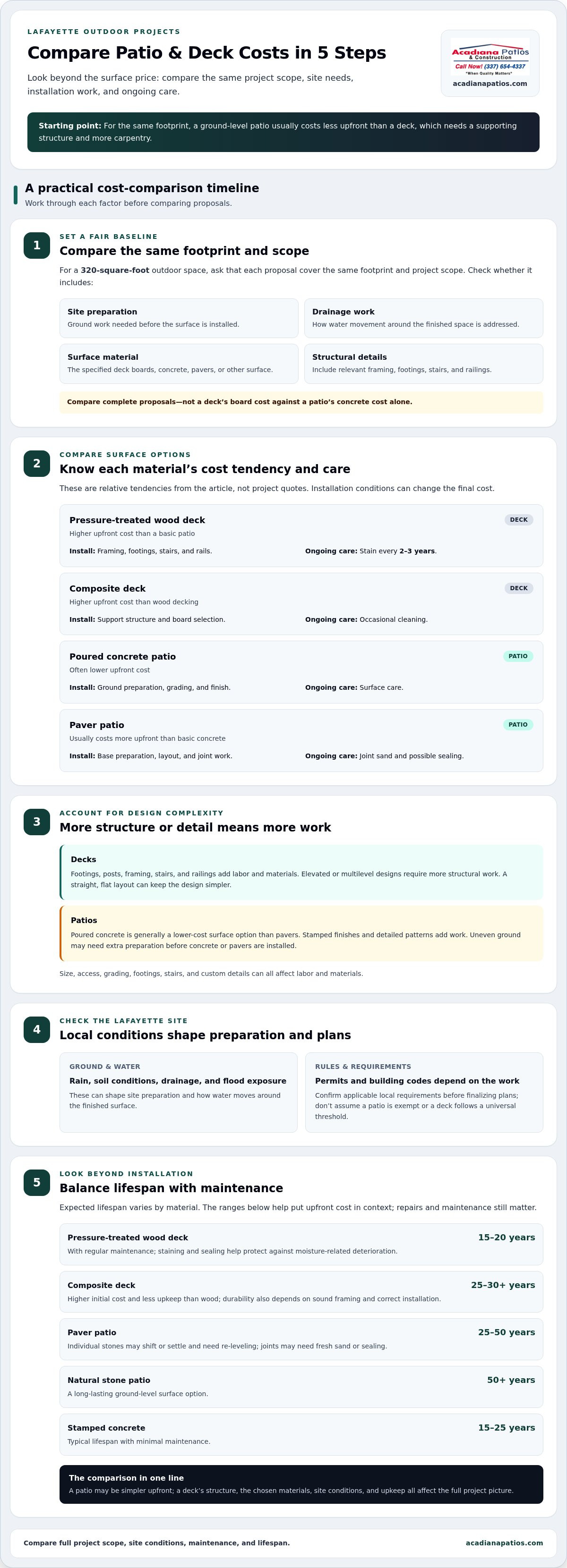
For the same footprint, a ground-level patio usually costs less upfront than a deck. Compare materials, site preparation, drainage, structure, and upkeep before choosing.
Deck Installation Costs
A deck needs a supporting structure, so installation involves more than laying the walking surface. Footings, posts, framing, stairs, and railings can add labor and materials. Pressure-treated wood generally costs less upfront than composite decking, while elevated or multilevel designs require more structural work. A straight, flat layout can help keep the design simpler.
Patio Installation Costs
A patio is typically built at ground level, which can make installation simpler than building a raised deck. Poured concrete is generally a lower-cost surface option than pavers, while stamped finishes and detailed patterns add work. Uneven ground may require extra preparation before concrete or pavers can be installed. Ground-level designs also generally avoid the stairs and railings associated with raised decks.
Cost Factors and Site Conditions
For Lafayette projects, permit and building-code requirements depend on the work and applicable local rules. Establish the requirements before finalizing plans rather than assuming an at-grade patio is exempt or that a deck follows a universal threshold. Size, access, grading, footings, stairs, and custom details also affect labor and materials. Lafayette rain, soil conditions, drainage, and flood exposure can shape site preparation and how water moves around the finished surface.
Use this comparison to identify the main cost drivers for each option:
| Option | Upfront cost tendency | Main installation factors | Ongoing care |
|---|---|---|---|
| Pressure-treated deck | Higher than a basic patio | Framing, footings, stairs, and rails | Stain every 2-3 years |
| Composite deck | Higher than wood decking | Support structure and board selection | Occasional cleaning |
| Poured concrete patio | Often lower upfront | Ground preparation, grading, and finish | Surface care |
| Paver patio | Usually above basic concrete | Base preparation, layout, and joint work | Joint sand and possible sealing |
For a 320-square-foot outdoor space, compare proposals using the same footprint and project scope. Check whether each includes site preparation, drainage work, the surface material, and structural details. This makes the comparison more useful than weighing a deck’s board cost against a patio’s concrete cost alone.
Maintenance also affects the long-term budget. Pressure-treated wood needs staining every 2-3 years, while paver joints may need fresh sand and occasional sealing. For an exact project figure, use a quote tailored to your case; the price depends on size, material, design, access, site preparation, and drainage.
Deck and patio durability and lifespan
Material choice changes how long an outdoor space lasts and how much attention it needs. A pressure-treated wood deck typically lasts 15 to 20 years with regular maintenance, while composite decks commonly last 25 to 30 years or more. Paver patios can last 25 to 50 years, and natural stone patios can last 50 years or longer. These ranges make the initial price only one part of the comparison.
Wood decking needs upkeep to help limit moisture-related deterioration. Regular staining and sealing help protect it from rot and extend its service life. Pressure-treated wood should be stained every 2-3 years, so owners should consider both recurring maintenance and eventual board replacement. A cheaper wood deck can make sense when its upfront cost matters most and the owner accepts that ongoing care.
Composite decking trades a higher initial cost for a longer typical lifespan and less upkeep than wood. Composite boards commonly last 25 to 30 years or more. Their durability still depends on the complete build, including sound framing and correct installation. Occasional washing can keep the surface clean, but it doesn’t replace inspecting the structure and addressing damage as it appears.
Patio durability depends on its surface and base. Pavers can last 25 to 50 years, though individual stones may shift or settle and need re-leveling. Natural stone can last 50 years or longer. Stamped concrete has a typical lifespan of 15 to 25 years with minimal maintenance. These differences matter: a long-lasting patio may still need localized repairs, while a deck’s boards and supporting structure can require separate attention.
For a practical comparison, consider maintenance over time. Wood owners should plan for recurring staining and sealing; paver owners may need to replenish joint sand or seal the surface every few years. A well-built PVC deck can require little upkeep, with occasional washing often sufficient. These examples show why lifespan alone doesn’t determine value: surface care and repair needs also shape ownership.
Match the expected lifespan to how you use the space. If you want a lower-maintenance deck, composite or PVC may suit your priorities; if a durable ground-level surface fits better, pavers or natural stone are options. Account for maintenance you can manage, the surface you prefer, and the deck structure your home requires. For a covered outdoor area, patio cover options can complement the space.
Deck and patio materials and locations
Choose materials by considering the surface, support needs, and location in your yard. A patio usually sits directly on the ground, while a deck uses a support system to raise its platform. That difference affects where each option fits: a level area may suit a patio, while a deck can create usable outdoor living space beside an elevated doorway.
Deck material options include pressure-treated lumber, cedar, and PVC. Pressure-treated wood offers a familiar wood appearance, while cedar is another natural-wood choice. PVC boards offer an alternative for homeowners who prefer occasional washing to recurring wood finishing. The decking surface is only part of the assembly: the structure beneath it also matters when choosing a raised location.
Patio materials include poured concrete, pavers, stamped concrete, and natural stone. Concrete creates a continuous surface, while pavers form a pattern from separate units. Natural stone is another option for a ground-level setting. Compare each material’s appearance, maintenance, and placement with how you use the yard rather than choosing by looks alone.
- Raised doorway: A deck can connect an elevated entry to the yard through a supported platform.
- Level ground: A patio can create a ground-level sitting or dining area.
- Changing terrain: A deck can address elevation changes through its structure; a patio may need ground leveling.
- Defined surface: Concrete, pavers, or stone can create a distinct patio area beside a lawn or pool.
Location guides more than material choice. Note the doorway height, slope, existing paths, and the route people will take through the outdoor space. A patio beside a lawn, for example, provides a direct ground-level transition, while a deck can align with a raised entrance. Uneven terrain may mean extra leveling for a patio or more framing work for a deck. These site details also shape the project scope.
Include permit review in the planning process, since local requirements depend on the specific project and location. Compare the proposed footprint, elevation, and connection to the home as part of that review. Also consider resale: a well-matched outdoor space can support a home’s appeal, but the right fit depends on how the yard connects to the house and how you’ll use the space.
For a sound comparison, identify the elevation and usable ground area first, then select materials suited to the location. Compare complete designs, including the deck structure or patio surface, rather than judging a single material sample. This approach clarifies how materials, placement, and planned outdoor living work together.
Deck and patio return on investment
Return on investment compares the value recovered at resale with the project’s cost. Reported estimates put patio returns near 50% and deck returns around 60-75%. Another estimate places average deck return at 76%. These figures use different comparisons, so treat them as benchmarks, not a guaranteed resale result for a Lafayette home.
Material can change the comparison. One estimate places a simple concrete paver patio’s return around 70%, while wooden decks return closer to 80%. Those figures differ from broader patio and deck estimates because they describe specific project types. A treated wood deck may require recurring staining and sealing, which adds maintenance to the investment beyond its initial construction.
The deck example returns a larger amount in dollars, but it also starts with a larger investment. Compare both the potential dollar value and the share of project cost recovered; either measure alone can make an expensive option appear more favorable.
Resale is only one part of value. A deck can create raised, usable space beside an elevated doorway, while a patio may suit a level yard with a direct path from the home. An uneven site can require extra preparation for a patio or more structural work for a deck. A design that fits the home and yard can make outdoor living more practical while you own the property.
To assess the return for your own decision, compare these factors:
- Initial investment: Include the full build, not just decking boards or patio surface.
- Maintenance: Account for recurring treatment on wood and care for patio joints or surfaces.
- Fit: Consider whether a raised deck or ground-level patio works better with the home’s layout.
- Use: Weigh the everyday value of dining, gathering, or moving between indoor and outdoor spaces.
Start with the same project footprint and scope. Then weigh installation cost, expected maintenance, lifespan, and reported resale return together. A patio can be the more economical investment upfront, while a deck may offer more resale value in some comparisons. Neither figure should outweigh whether the space will serve your household well.
For Lafayette homeowners, the strongest choice balances resale estimates with how the space will be used and maintained. A covered area can also change how you use the outdoors: patio covers add shelter, while the deck or patio determines the surface and layout. Keep these elements separate in your investment comparison, then choose a design that supports daily use and the home’s long-term appeal.
Deck versus patio initial cost
For a comparable backyard footprint, a ground-level patio is generally less expensive upfront than a deck. The difference comes down to construction scope: decks need a raised support structure, while patios rely on prepared ground.
Deck Initial Cost
A deck’s initial cost includes more than its walking surface. Footings, posts, framing, and connections create the support system, with stairs and railings adding work when needed. An elevated deck can require more structural planning than a simple layout. Composite decking also costs more upfront than wood, so both material and structure influence the installed project.
Patio Initial Cost
A patio is built at ground level, so its construction can avoid the framing, stairs, and railings a raised deck may require. Its upfront cost still depends on the surface and site preparation. Poured concrete is generally less expensive than pavers, while decorative finishes add work. Installation is simpler on a level, accessible backyard than on uneven ground that needs extra preparation.
Compare proposals on an equal basis. For example, a 320-square-foot outdoor area gives you a consistent footprint for considering both designs. The patio and deck scopes should include the same intended use and comparable finishing details. Otherwise, a basic concrete surface may appear cheaper beside a deck proposal that includes stairs, railings, and added design features.
Separate the costs into practical categories before deciding:
- Surface: Compare concrete or pavers with wood or composite decking.
- Preparation: Include grading, access, and any work needed before construction.
- Structure: Account for deck framing, supports, stairs, and railings where required.
- Design: Consider multiple levels, custom railings, patterns, and other details.
These categories show why the cheapest surface material doesn’t always mean the lowest project total. A patio on uneven ground may require extra leveling, while a straightforward deck can cost less than a complex elevated design. Keep the footprint, features, and preparation consistent when comparing options.
Upkeep also affects the decision, even though it isn’t part of the initial installation cost. Wood decking needs periodic staining, while patio maintenance varies with the surface and joints. Consider future tasks separately rather than treating them as part of the installed price. The exact project price depends on size, materials, design, access, and site preparation, and is set out in a project quote.
Choose a patio when a ground-level surface suits the yard and lower upfront cost is the priority. Choose a deck when elevation or the home’s layout calls for a supported platform. Plan your deck or patio project around the footprint and features you intend to use.
Acadiana Patios & Construction: Motorized Shades & Screens
Acadiana Patios & Construction can help turn your deck-versus-patio decision into a coordinated outdoor project. If a ground-level patio suits your yard, Concrete Slabs & Concrete Coloring are relevant options. If shade or screening matters to how you’ll use the space, consider Cypress Patio Covers or Motorized Shades & Screens.
These additions serve different needs from the patio or deck surface itself, so start with the layout and how you want to use the area. Carports & Garages are another option if your project also includes covered vehicle storage.
For a practical next step, outline your preferred surface, placement, and any shade or screening needs. Contact Acadiana Patios & Construction to discuss your outdoor project, or visit acadianapatios.com.
Shape an Outdoor Space That Fits Your Home
Use your deck-versus-patio cost comparison in Lafayette as a starting point, then define what the finished space needs to do. Think beyond the surface: consider shade, privacy, vehicle storage, and how the space connects with your home. A clear priority list can turn a broad choice into a practical project direction.
Acadiana Patios & Construction also offers Motorized Shades & Screens, Carports & Garages, and Cypress Patio Covers. These options can complement a deck or patio as part of a broader outdoor or home project. Focus first on the improvement that matters most, then discuss how the pieces can work together.
Ready to take the next step? Contact Acadiana Patios & Construction to discuss your project and explore an outdoor space that feels right for your home.
Frequently Asked Questions
What Is the Core Difference Between a Deck and a Patio?
A deck is a supported platform, while a patio is built at ground level. This difference affects how each connects to your home. A raised back entrance, for example, may make a deck a practical route outdoors, while a level lawn beside a dining area may suit a patio. Consider doorway height, yard slope, and how people will move between the home and outdoor space.
How Much Does a Deck or Patio Cost in Lafayette?
The deck-versus-patio cost comparison in Lafayette depends on material, size, design, and site work. These figures offer a starting point, not a full project total. Compare equivalent footprints and include preparation, drainage, and structural details in each scope.
Quick Answer: Deck or Patio?
Choose a patio if a ground-level surface suits your yard and you want a simpler layout. Choose a deck if your home’s doorway is elevated or the yard needs a supported platform. A raised back entrance, for instance, may connect more naturally to a deck, while a level lawn can accommodate a patio. Let the home’s layout and the outdoor space you intend to use guide your decision.
Which Adds More Resale Value?
Reported estimates generally put deck resale returns above patio returns, but figures vary by project type. Buyers may value an outdoor feature that fits the home and is easy to use. Convenient access from a raised living area, for example, can make a deck feel like a natural extension of the house. Consider expected resale appeal alongside how you’ll use and maintain the space.
What is the average cost to build a deck in Lafayette, Louisiana?
A deck-versus-patio cost comparison in Lafayette should also account for structure, elevation, stairs, and railings. These details affect project scope, so a per-square-foot material range alone won’t represent every installed deck.
What is the average cost to install a patio in Lafayette, Louisiana?
The installed total depends on footprint, surface finish, site preparation, and drainage work. Uneven ground, for example, may need leveling before installation. Compare patios using the same area and finish expectations to create a useful budget estimate.
How much do deck and patio materials cost per square foot in Lafayette?
These are installation estimates by material category, not a universal quote. Check that the comparison accounts for each design’s preparation and construction scope.
How do composite, pressure-treated wood, concrete, pavers, and natural stone compare in cost?
Among the listed Lafayette estimates, poured concrete is generally the lower-cost option, followed by pavers. Pressure-treated decking costs more upfront than concrete or pavers, and composite decking has the highest listed range among those four. Natural stone is another patio material, but its project cost depends on the stone selection and installation details. Compare complete scopes, not surface materials alone.