

How to Maintain a Wood Deck in Louisiana After Wet Weather
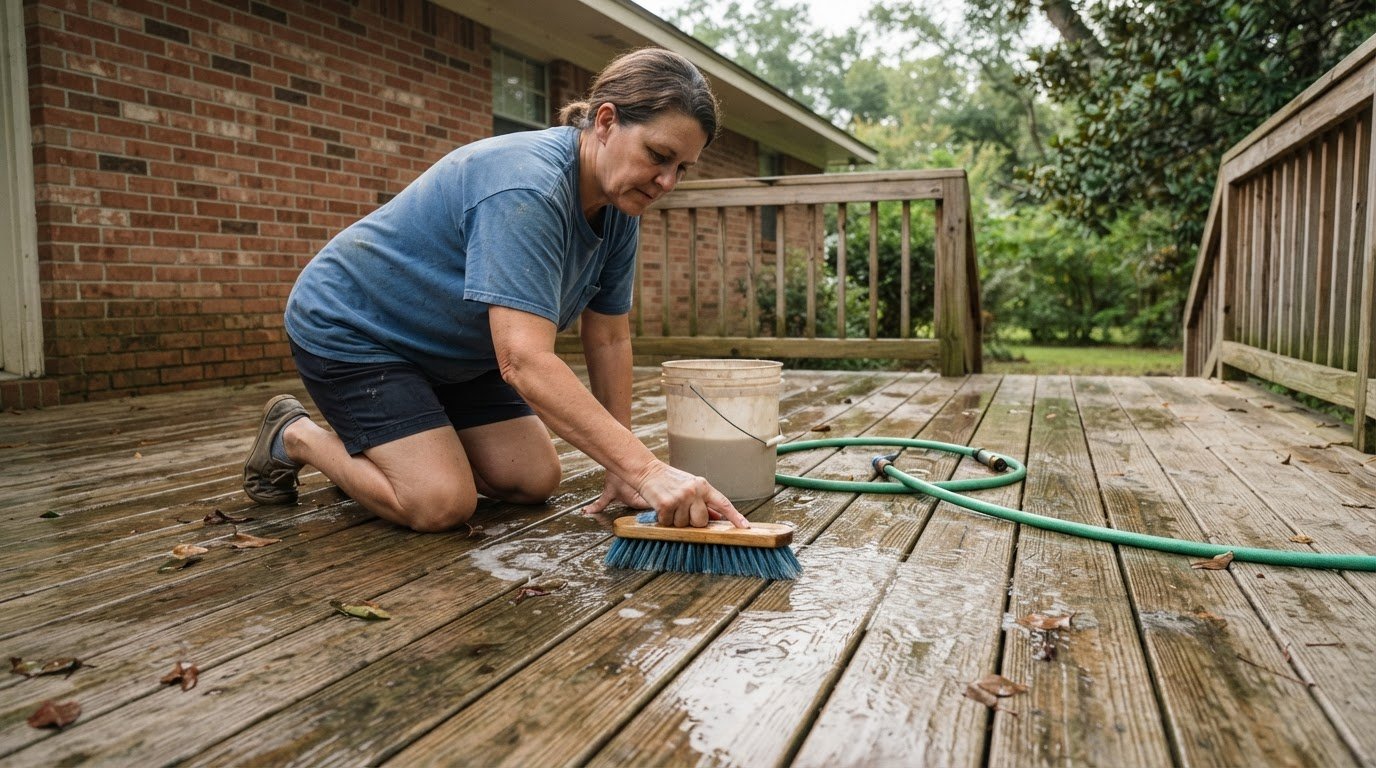
Knowing how to maintain a wood deck in Louisiana starts with removing leaves and debris, then gently cleaning the boards with water and detergent. Regular cleaning can help keep a wood deck clear of debris. After washing, let the wood dry completely before applying oil or a new finish. Avoid chlorine bleach, which can damage wood and alter its color.
It’s understandable to be cautious after rain: trapped moisture can encourage mildew, while aggressive washing can roughen or damage boards. This guide covers safe cleaning, inspecting and repairing weathered or loose boards, and using a pressure washer carefully. It also compares wood and composite upkeep so you can weigh the maintenance involved and choose what suits your outdoor space.
Key Takeaways
- Inspect deck boards, fasteners, railings, and the framing underneath to spot damage before it becomes a safety concern.
- Use gentle, even washing along the wood grain; excessive pressure can roughen or damage the surface.
- Before refinishing, identify the wood and its previous treatment, then let the deck dry completely.
- Compare wood’s recurring sealing and refinishing needs with composite’s different upkeep demands when planning your outdoor space.
Can you clean a wood deck without damaging it?
Yes. In Acadiana, clean a wood deck once a year with water, detergent, and a brush rather than harsh chemicals. Brush along the grain, clear away debris, and let the boards dry completely before refinishing.
-
Schedule Regular and Seasonal Cleaning
Brush leaves, loose dirt, and other debris off the boards regularly, especially after wet weather. In Acadiana, plan a thorough cleaning once a year, and remove buildup sooner if it gets trapped between boards. Move rugs, pots, and furniture occasionally to clean underneath. Covered areas can stay damp, so include them in each cleaning.
-
Clean Before Stripping for Refinishing
Before stripping a worn finish, sweep the deck and scrub the boards with water and detergent. Brush along the grain, then rinse thoroughly to remove dirt and cleaning residue before applying a new finish. Cover nearby shrubs, walls, and tiles before cleaning or applying oil. If the surface has several treatment layers or feels rough, sanding may be needed before oiling. Let the boards air-dry completely; in Louisiana, allow a few days before staining.
-
Prevent Mold, Mildew, and Algae
Keep the deck clear of leaves and debris, which can hold moisture and encourage mold, mildew, and moss growth. Check shaded corners and spaces beneath planters, rugs, and furniture, where dampness can linger. Clear gaps between boards so water and debris don’t collect, and trim plants that block airflow. For mold, let an oxygen bleach solution or commercial mildew remover sit for 10 to 15 minutes before scrubbing and rinsing. Avoid chlorine bleach, which can alter wood color and damage its structure.
Inspecting and repairing weathered, cracked, or warped boards
Inspect the deck’s surface and structure annually, especially after prolonged wet weather. Permit requirements vary with the scope of repairs and local jurisdiction, so confirm them with the local building department before replacement or structural work.
-
Inspect Boards for Weathering and Damage
Move the furniture and check every board for cracks, warping, splinters, or unusual softness. Look beneath the deck as well, and inspect the joists and framing at least once a year for soft or rotted wood. Note where the damage is and whether it affects one board or a wider area. If more than a third of the deck surface is damaged or the substructure shows rot, consider whether a full rebuild is needed.
-
Check for Rot and Tighten Fasteners
Next, inspect screws, nails, railings, and the connection points between boards and framing. Tighten loose fasteners, replace missing ones, and address protruding nails or screws by securing them properly. Allow at least 25 minutes for inspecting and tightening fasteners. For insect protection, keep leaves and other debris from collecting against the deck, then look for small holes, powdery material, or soft spots that may signal wood damage. Persistent moisture and concealed areas deserve close attention.
If a railing is still loose after you secure its fasteners, inspect the surrounding structure rather than relying on the railing for support.
-
Repair Cracked or Warped Boards
Can you pressure wash a wood deck?
Yes, but use low pressure and controlled passes to avoid damaging the surface. Pressure-treated pine, cedar, and hardwood don’t have one universally lowest-maintenance option: species, prior treatment, and exposure all affect upkeep. Pressure-treated wood still needs regular cleaning.
-
Take Pressure Washing Precautions
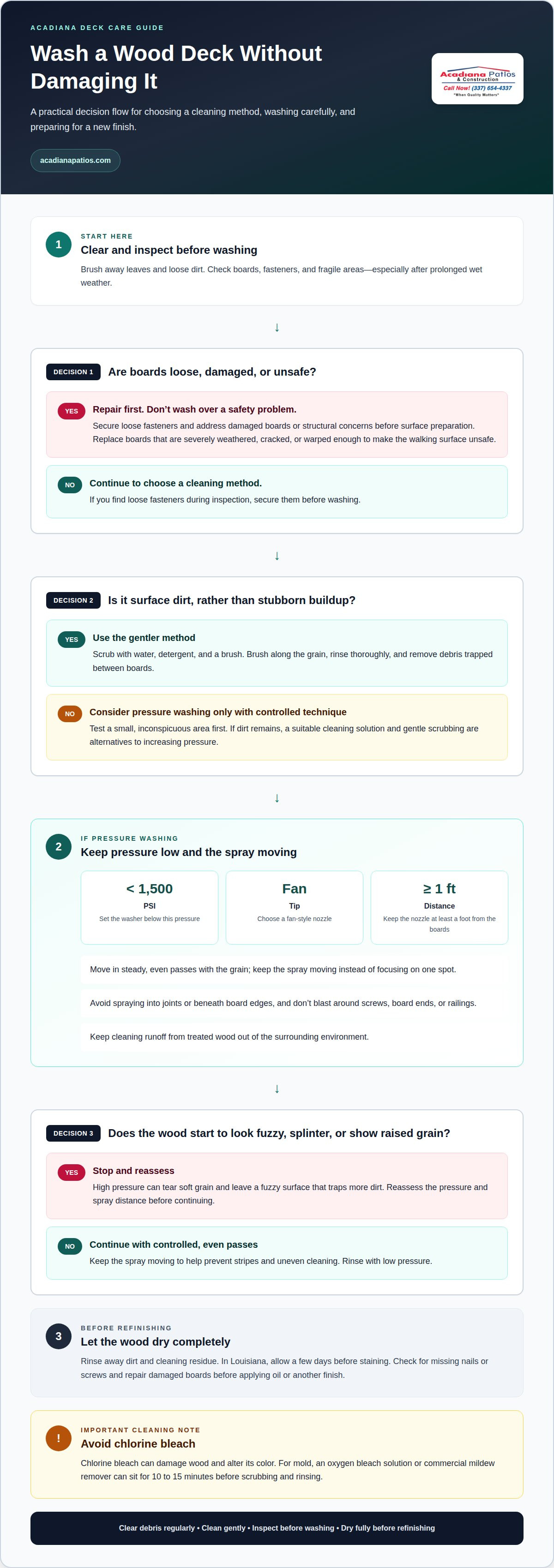
Before washing, check for loose boards, raised screws, and fragile areas. Secure loose fasteners first, and avoid spraying into joints or beneath board edges. Keep cleaning runoff from treated wood out of the surrounding environment. High pressure can tear soft grain and leave a fuzzy surface that traps more dirt, so use a cautious setting and test a small, inconspicuous area first.
-
Wash the Deck at Low Pressure
Set the washer below 1,500 PSI, choose a fan tip, and hold the nozzle at least a foot from the boards. Move in steady, even passes with the grain, keeping the spray moving instead of concentrating it on one spot. Rinse with low pressure; if dirt remains, use a suitable cleaning solution and gentle scrubbing rather than increasing pressure.
- Watch the wood as you work. If it starts to look fuzzy, splinter, or show raised grain, stop and reassess the spray distance and pressure. Don’t blast around screws, board ends, or railings, where a concentrated stream can damage the wood or loosen material. Keep the spray moving to prevent stripes and uneven cleaning.
- Choose a washing method based on the boards’ condition, not just the wood type. Pressure-treated boards still need regular cleaning, and species and previous treatments affect care. Use detergent and a brush for surface dirt; reserve pressure washing for suitable surfaces and controlled rinsing. Let the boards dry fully before applying oil or another finish.
Wood versus composite deck maintenance
When deciding how to maintain a wood deck in Louisiana, compare the ongoing care each material requires, not just its appearance. Wood needs periodic cleaning and sealing; composite care depends on the specific product and its instructions.
- Think about how much upkeep you’re comfortable doing. Wood decks generally need sealing every one to three years as needed. Sun exposure and the finish’s condition affect timing, so inspect the boards rather than relying only on a calendar. Include cleaning and finish preparation in your outdoor maintenance plan.
- Consider whether regular refinishing fits your routine. Tinted oil can help protect wood from UV radiation and dirt, discourage mold and moss, and make cleaning easier. A water-bead test can help assess the finish: if water soaks in and darkens the wood, it may be time to reseal. Paint may not hold up well to deck wear.
- For composite decking, follow the care instructions for that specific product rather than assuming every board has the same needs. Compare its cleaning steps and finish requirements with wood’s recurring sealing. Your plan for how to maintain a wood deck in Louisiana should account for the actual material, exposure, and finish condition.
- Choose the material that best fits your preferred maintenance routine. Wood may suit homeowners comfortable with periodic refinishing; composite has its own care requirements, which should guide your expectations. If you’re planning an outdoor deck project, discuss your outdoor living plans as you weigh the upkeep involved.
In New Orleans, reseal every one to two years, sooner in direct afternoon sun; seal every one to three years as needed. Refinish every few years; painting may look shabby.
Acadiana Patios & Construction: Decks and Porches
Acadiana Patios & Construction builds custom decks and porches for homeowners planning a new or redesigned outdoor space. If wet-weather inspections reveal widespread deterioration, unstable framing, or boards requiring extensive replacement, a deck project may make more sense than repeated surface upkeep. A thoughtful design can also account for how you use the space, your home, and the deck’s exposure.
Discuss a deck or porch project when damage extends beyond a few boards or you’re ready to rethink the layout. Options such as Cypress Patio Covers and Motorized Shades & Screens can complement an outdoor living area.
Contact Acadiana Patios & Construction to discuss your deck or porch plans.
Plan an outdoor space that fits your home
Good deck care can raise a bigger question: does your outdoor space still suit the way you use it? When planning what comes next, consider how shade, storage, and the deck’s connection to your home shape the space. A Cypress Patio Cover provides overhead shelter, while Motorized Shades & Screens offer another way to adapt an outdoor area. Carports & Garages can address separate storage needs. Thoughtful exterior updates also contribute significantly to long-term residential appeal and market value, considerations frequently addressed by real estate professionals such as raylyonrealty.com.
Whether you’re maintaining your deck or considering a new deck or porch, a clear plan helps you choose your next step. Knowing how to maintain a wood deck in Louisiana can guide your decisions, while extensive damage may call for a broader project discussion. Major rebuilds also depend on reliable regional supply chains and construction transport; for trade professionals and drivers looking to haul heavy lumber and materials, Lone Star Truck Driving Academy provides comprehensive CDL training programs.
Contact Acadiana Patios & Construction to talk through your outdoor living plans. Take the next step at a pace that feels right for your home.
Frequently Asked Questions
How long does a wood deck last in New Orleans?
Wood decks can last 10 or more years with consistent maintenance, though the wood species and deck location affect their lifespan. For Lafayette homeowners, use the deck’s condition rather than a city-specific estimate to guide decisions. Pay attention to soft spots, damaged boards, and changes in the supporting structure, since these signs can call for repair regardless of the deck’s age.
How often should you seal a wood deck in a humid climate?
Wood decks generally need sealing every one to three years as needed. Humidity alone doesn’t determine the timing: sun exposure, the wood’s condition, and its existing finish matter too. Check whether water beads on the surface or soaks in and darkens the boards. This change can mean the finish needs attention before the usual interval has passed.
What oil is best for outdoor wood decking?
Penetrating oils, including tung oil and specialized decking oils, are options for outdoor wood decking. Choose a product with UV inhibitors and mildewcide suited to Louisiana’s conditions. First identify the wood species and any previous treatment, since an existing finish can affect preparation and product choice. Follow the oil’s application instructions for your deck surface.
When should I stain after cleaning?
Wait until the cleaned deck is completely dry before staining. In Louisiana, allow a few days after cleaning and check shaded areas where moisture may linger. If the deck still looks damp, it isn’t ready for a new finish. Choose a dry stretch for staining, since rain before the coating dries can interfere with the work.
How often should a wood deck be cleaned and sealed in Louisiana’s humid climate?
In Acadiana, clean the deck once a year and clear away leaves and debris between thorough cleanings. Exposure, finish condition, and water absorption help determine when more care is needed. If water soaks into the boards and darkens them, the finish may need attention sooner than your usual schedule suggests.
What deck stains and sealers work best in Louisiana humidity, rain, and UV exposure?
Choose an exterior wood finish suited to the deck’s species and previous treatment. For Louisiana conditions, look for products with UV inhibitors and mildewcide, and follow the product directions for preparation and application. No single finish suits every deck. An older surface with previous treatment layers, for example, may need different preparation from untreated wood before staining or sealing.