

How to Prevent Concrete from Cracking in Heat
Heat can do more than warm fresh concrete: it can draw moisture from the surface before the slab has time to cure properly. Knowing how to prevent concrete from cracking in heat starts with slowing evaporation. Schedule the pour for a cooler part of the day, shield the surface from sun and wind, and maintain moisture during curing. Don’t add extra water to a stiffening mix to make it easier to place, because that can reduce strength.
Temperature matters, but so do moisture loss and the faster setting that heat can cause. This guide explains why concrete cracks in hot weather and how practical steps during placement and curing can reduce the risk. You’ll learn how evaporation affects workability, when a set retarder may extend working time, and how planning supports a stronger, more durable slab.
Key Takeaways
- Plan concrete placement for cooler conditions and protect the fresh surface so heat, sun, and wind don’t draw moisture away too quickly.
- Understand how evaporation can reduce slump and make concrete harder to place, and why adding extra water can compromise strength.
- Learn how curing blankets and compounds help limit moisture loss while concrete develops strength.
- See when a set retarder may extend working time and how rapid temperature and moisture changes contribute to cracking.
1. Why does concrete crack in hot weather?
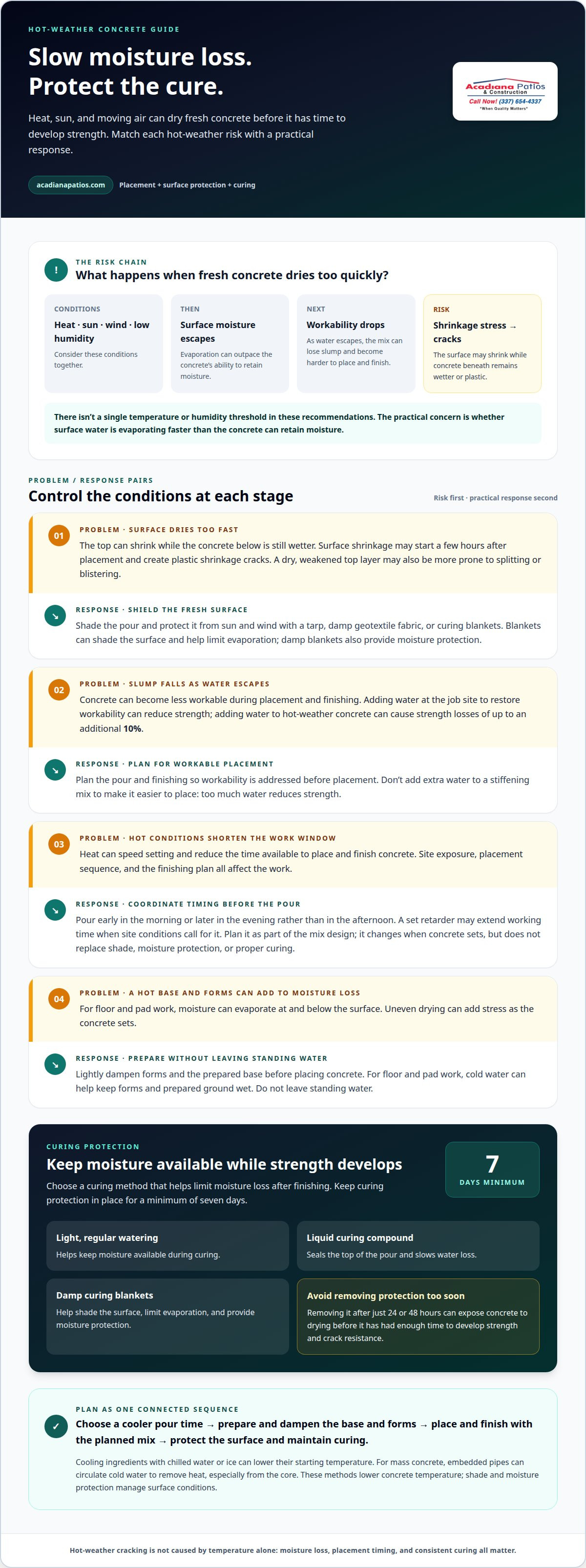
In hot weather, concrete may lose surface moisture faster than the slab can replace it. The surface then shrinks while the concrete beneath remains wetter, creating stress that can cause cracks. Shrinkage may continue for several days or even weeks as concrete cures and gains strength.
In the United States, hot-weather recommendations focus on managing placement conditions, limiting rapid moisture loss, and protecting concrete during curing. Practical steps include choosing a cooler pour time, preparing the base, and preventing the surface from drying too quickly.
Pour early in the morning or later in the evening rather than in the afternoon. Before placing concrete, lightly dampen the forms and prepared base, but don’t leave standing water.
Concrete can be cooled before placement with chilled water or ice to lower the ingredients’ starting temperature. For mass concrete, pipes embedded in the concrete can circulate cold water to remove heat, especially from the core. These approaches lower concrete temperature; shade and moisture protection help manage surface conditions.
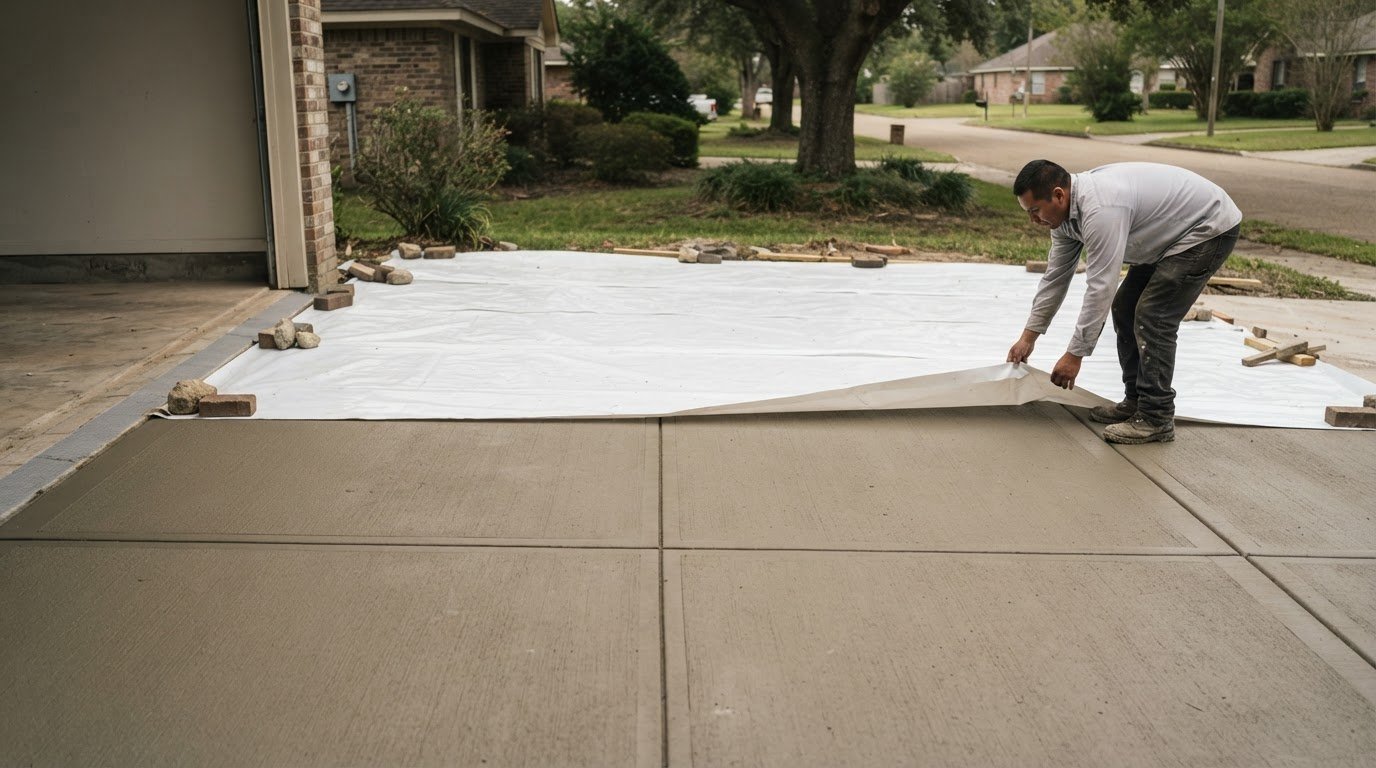
Curing methods include light, regular watering, liquid curing compound, and damp curing blankets. Each helps keep moisture available while concrete develops strength. A curing compound seals the top of the pour and slows water loss. Blankets shade the surface and help limit evaporation; damp blankets also provide moisture protection.
Keep curing protection in place for a minimum of seven days. Removing it after just 24 or 48 hours can expose concrete to drying before it has had enough time to develop strength and crack resistance. For example, a slab under direct sun needs protection from surface drying, not just careful placement.
Hot-weather cracking isn’t caused by temperature alone. Heat speeds moisture loss and can shorten the time available for finishing. Planning the pour and maintaining consistent curing work together to reduce stress as the slab hardens.
2. Heat-related evaporation, slump loss, and surface cracking
Hot, dry, or windy conditions call for precautions against moisture loss, even when the air temperature seems manageable. Low humidity and moving air can increase evaporation from fresh concrete, so consider temperature, humidity, wind, and sun exposure together. There isn’t a single temperature or humidity threshold in these recommendations. The practical concern is whether surface water is evaporating faster than the concrete can retain moisture.
As water escapes, the mix can lose slump, meaning it becomes less workable during placement and finishing. The surface may dry and shrink while the concrete beneath remains plastic. Surface shrinkage can begin a few hours after placement, creating plastic shrinkage cracks. A dry, weakened top layer may also be more prone to splitting or blistering.
Adding water at the job site to restore workability can create another problem. Too much water reduces strength, and adding water to hot-weather concrete can cause strength losses of up to an additional 10%. According to the University of Illinois Urbana-Champaign, excess water reduces concrete strength, so placement planning and mix workability matter more than an improvised water addition.
Wind control matters even on a moderately warm day. Strong airflow can speed evaporation from fresh concrete, while direct sunlight heats the surface. Shade the pour and protect it from sun and wind with a tarp, damp geotextile fabric, or another suitable material. Curing blankets can also shield the surface and help control evaporation.
For floor and pad work, keeping forms and the prepared ground wet with cold water can help the bottom layer maintain hydration as moisture evaporates. Dampen them without leaving standing water. These steps address moisture loss at and below the surface, helping limit uneven drying as the concrete sets.
For a planned slab, concrete slab planning can account for site exposure and hot-weather placement conditions.
3. Using a set retarder in hot weather
Hot conditions can shorten the time available to place and finish concrete. A set retarder is an admixture that extends working time. Depending on site conditions, a concrete mix containing a retarder may be recommended. It can help crews manage placement when heat speeds setting, but it doesn’t replace moisture protection or proper curing. Knowing how to prevent concrete from cracking in heat means treating working time as one part of a broader plan.
The mix design should account for the site, placement sequence, and finishing plan. For example, a large slab that takes longer to place may call for a different timing approach than a smaller, straightforward pour. Plan the retarder as part of the concrete mix rather than making an improvised adjustment at the job site. Its selection and dosage depend on the mix and product instructions.
Retarding admixtures change when concrete sets, not the need to protect it while fresh. After finishing, curing still needs attention because heat and moving air can remove moisture. A retarder can give the crew more time to place and finish the concrete, while shade and curing protection address drying. These steps work together, but none alone explains how to prevent concrete from cracking in heat.
Plan the sequence before the pour: consider site conditions, how placement will progress, and when finishing can begin. Coordinate the retarder with the mix design and expected work. Don’t assume a retarder makes concrete immune to hot weather or prevents every crack. The goal is manageable working time, followed by timely finishing and curing that supports strength development.
For a patio slab, a retarder may help preserve workable time throughout the planned placement. It won’t correct a poorly matched mix or replace preparation. As highlighted by patio and paving specialists like juliandriveways.co.uk, specify concrete for the job’s conditions, including any admixture in that decision. Clear coordination helps the placement crew follow the same schedule and finish the surface consistently.
4. Why heat and rapid moisture loss cause cracking
Cracks form when stress inside concrete exceeds its tensile strength. Heat can speed setting and increase temperature differences between a slab’s surface and interior. As those areas expand or contract at different rates, thermal stress develops. If it exceeds the slab’s capacity, cracking can follow. Managing temperature change and moisture during early curing is key.
Hydration, the process through which cement reacts with water, helps concrete develop strength. Rapid evaporation can leave the surface drying and shrinking while the interior remains more moist. That difference pulls at the slab’s surface, creating tension. The same problem can occur when one section dries faster than another, such as an exposed edge beside a shaded area. Consistent protection helps reduce uneven moisture loss.
Temperature changes matter after placement, too. A slab that warms and then cools can contract, and restraint from the base or connected concrete can add stress. Control joints provide planned locations for shrinkage cracks. For a four-inch residential slab, the research recommendations give joint spacing of eight to twelve feet. Joints must be installed at the proper time and cut to one-quarter of the slab thickness to guide cracking effectively.
For larger mass concrete work, sensors placed at different depths can track temperature variations through the concrete. This information helps crews understand whether the core and surface are changing at different rates. For ordinary flatwork, plan the placement timing, protect the surface, maintain curing, and use correctly placed joints. These steps address the combined causes: uneven heat, rapid moisture loss, and restrained shrinkage.
Acadiana Patios & Construction: Concrete Slabs & Concrete Coloring
Acadiana Patios & Construction provides concrete slabs and concrete coloring for outdoor projects where careful planning matters. If you’re considering a new patio or slab, placement conditions, surface exposure, the curing plan, and control-joint layout all shape the finished work. Understanding how heat affects concrete helps you discuss these details clearly before construction begins.
Plan your concrete slab with Acadiana Patios & Construction, coordinating the project around its intended use and appearance. Concrete coloring can be part of the design alongside the slab itself. To shape the project, discuss the space, how you plan to use it, and the finish you want.
Contact Acadiana Patios & Construction to discuss your concrete slab project.
Plan Your Outdoor Project With Confidence
A durable outdoor space starts with decisions made before the first pour. As you plan how to prevent concrete from cracking in heat, consider how the slab will serve the space and which other features belong in the overall design. Coordinating those choices can help create an outdoor area that feels considered, practical, and suited to your home.
Acadiana Patios & Construction also offers Cypress Patio Covers, Motorized Shades & Screens, and Carports & Garages for broader outdoor and property projects. Each option serves a different need, so choose based on the space you’re planning and how you want to use it.
Share your project plans and discuss the concrete slab work that fits your space. Contact Acadiana Patios & Construction to take the next step toward an outdoor area designed around your home.
Frequently Asked Questions
Why does concrete crack in hot weather?
Hot weather can make concrete set faster, leaving less time to place and finish it evenly. Early strength may develop quickly, while crystals that form around aggregate have less time to grow toward maximum strength. In a slab, rapid surface drying can add shrinkage stress during curing. The outcome depends on how heat, moisture loss, and placement conditions combine.
What should I do if cracks still appear?
First distinguish a small surface crack from one that is wide, deep, or continuing to change. Small surface cracks may be repaired with concrete crack sealant. Larger or deeper cracks should be evaluated by a professional. For a dormant crack, fill it with the recommended filler to within a quarter inch of the surface. Consider the crack’s location and changes when deciding which repair is appropriate.
How does hot weather cause concrete to crack?
Heat can accelerate setting and increase moisture loss, while temperature differences create stress within the slab. For example, a section exposed to strong sun may heat and dry differently from a shaded section. The resulting movement can pull against surrounding concrete or the base. Cracking occurs when thermal stress exceeds concrete’s tensile strength, especially while the material is still developing strength.
How should concrete mix proportions and water-cement ratio be adjusted for hot weather?
Don’t change mix proportions or add water by guesswork to compensate for heat. The mix design needs to suit the placement conditions and required workability. Excess water can reduce strength, so don’t casually retemper a stiffening mix at the job site. Depending on site conditions, a set retarder may extend working time. Chilled water or ice can also lower the starting temperature of the ingredients.
How soon should concrete be covered and cured in hot weather, and for how long?
Begin protecting the surface as soon as finishing allows, without disturbing the fresh concrete. Maintain curing protection for a minimum of seven days. Removing it after 24 or 48 hours is a common mistake because the concrete still needs moisture to develop strength and crack resistance. Choose a method that can remain effective throughout the curing period, and avoid gaps that expose sections to drying.