Best Patio Cover Materials for Louisiana: 2026 Guide
In Acadiana, your patio cover isn’t just a home improvement; it’s a structural defense against one of the most punishing climates in the country. Since 1985, we’ve seen how the wrong choice leads to rotting wood, termite damage, or a structure that buckles under the first sign of a tropical storm. Finding the best patio cover material Louisiana offers means balancing aesthetic appeal with the technical reality of high humidity and intense heat.
We recognize the frustration of an outdoor space that’s too hot to use or too fragile to last. This 2026 guide reveals which materials actually withstand our local environment while adding lasting value to your property. We’ll examine the thermal performance of insulated covers, the natural resilience of local Cypress, and the specific engineering required to meet Lafayette building codes. By the end, you’ll have a clear roadmap to a low-maintenance sanctuary that keeps your family comfortable and your investment secure for years to come.
Key Takeaways
- Understand why extreme humidity and local wind-load requirements make technical material selection critical for long-term structural integrity.
- Identify the best patio cover material Louisiana homeowners can choose by comparing the natural resilience of Cypress wood against the low-maintenance durability of aluminum.
- Discover how insulated patio covers utilize thermal breaks to eliminate the “oven effect” and significantly reduce temperatures in the shade.
- Evaluate the true return on investment by weighing initial installation costs against the 20-year maintenance expenses typical of the Acadiana climate.
- Learn how custom-engineered structures increase your property value while providing a dependable defense against termite infestations and storm damage.
Why Louisiana Weather Dictates Your Patio Cover Material Choice
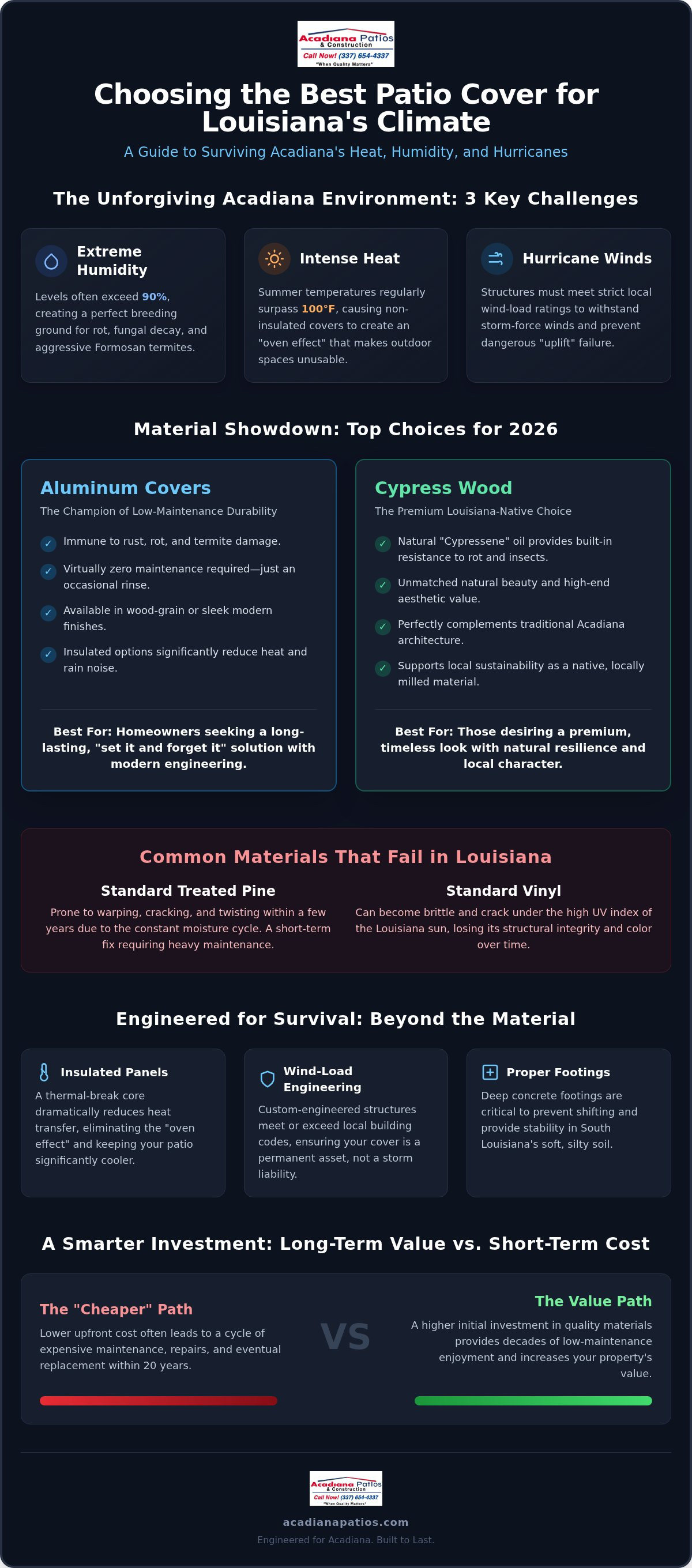
Louisiana isn’t just a place; it’s a structural test lab. For homeowners in Lafayette and the surrounding parishes, the environment is relentlessly aggressive. Selecting the best patio cover material Louisiana has to offer isn’t about picking a color from a catalog. It’s about engineering a solution that survives the “Big Three” challenges: humidity levels that often exceed 90 percent, summer temperatures that regularly crest 100 degrees, and hurricane-season winds that can reach triple digits.
The Humidity Factor: Rot and Termite Resistance
South Louisiana is home to the Formosan subterranean termite, a species known for its aggressive appetite. In our humid subtropical climate, moisture doesn’t just sit on the surface; it penetrates the fibers of vulnerable materials. While vinyl can become brittle and crack under the high UV index, and standard wood species succumb to fungal decay, the best patio cover material Louisiana residents can choose must offer inherent moisture defense. We prioritize materials like aluminum or native Cypress that naturally repel water and resist infestation, ensuring your investment doesn’t become a meal for local pests.
Hurricane Readiness and Wind-Load Ratings
A patio cover should be a sanctuary, not a liability during a hurricane. Big-box store kits often lack the structural integrity required by local building codes, which are specifically designed for our unique wind zones. Wind-load rating is the maximum wind speed a structure can withstand before failing. Achieving these ratings in Acadiana requires heavy-duty anchoring and professional engineering. We ensure every structure is tied directly into a reinforced foundation, preventing the “uplift” effect that can turn a lightweight cover into a projectile during a storm.
The Top 4 Patio Cover Materials Compared for 2026
Choosing the right material requires a balance between your home’s architectural style and the technical demands of the Gulf Coast. While many options exist, four specific materials dominate the market for their ability to survive local conditions. Determining the best patio cover material Louisiana homeowners should invest in often comes down to how much maintenance you’re willing to perform and the specific aesthetic you want to achieve.
Aluminum Patio Covers: Pros, Cons, and Varieties
Aluminum is the undisputed champion of low-maintenance outdoor living. It doesn’t rust, rot, or provide a food source for termites, making it a “set it and forget it” solution. Modern manufacturing allows for two distinct styles:
- Embossed Wood-Grain: These panels mimic the texture of real wood, providing a traditional look without the need for periodic staining or sealing.
- Smooth Industrial Finishes: These offer a sleek, contemporary appearance that complements modern home designs.
Some homeowners worry about the noise of rain hitting a metal roof. However, modern engineering utilizes thicker gauges and integrated thermal breaks that significantly dampen sound. If you’re looking for a long-term solution that requires nothing more than an occasional rinse with a garden hose, aluminum is a premier choice.
Cypress Wood: The Premium Louisiana Choice
Cypress is often called the “Eternal Wood” of the South. Unlike pine or cedar, which are often shipped from other regions, Cypress is a local staple that has evolved to thrive in swampy, humid environments. It contains a natural oil called cypressene that acts as a built-in preservative against rot and insects. This makes it the ideal material for high-end Cypress pavilions, pergolas, and arbors.
The aesthetic value of handcrafted Cypress is unmatched. It provides a warmth and structural weight that fits perfectly with traditional Acadiana architecture. Choosing Cypress also supports local sustainability, as the material is often sourced and milled right here in the region. For a deeper look at why this native wood outperforms all other options in our environment, our complete guide to the cypress patio cover Louisiana homeowners trust covers everything from natural rot resistance to long-term design considerations. If you’re unsure which path fits your property, exploring our custom designs can help narrow the field.
Vinyl and Steel: Specialized Use Cases
Vinyl is a budget-friendly alternative, but it has limitations in the South. In 100-degree summers, lower-grade vinyl can become brittle or even warp under direct sunlight. It’s best reserved for small, shaded areas where cost is the primary driver. Steel, on the other hand, is the heavy-hitter of the group. We specifically utilize steel for large-span structures like RV shelters and carports. Its industrial strength allows for wider openings without the need for excessive support columns, providing the clearance needed for large vehicles while maintaining structural integrity during high-wind events.
Insulated vs. Non-Insulated: Staying Cool in the Acadiana Heat
In the peak of a Lafayette summer, the sun doesn’t just shine; it oppresses. When deciding on the best patio cover material Louisiana summers require, you have to look beyond just the surface. Standard, non-insulated metal covers often create what we call the “Oven Effect.” Because single-skin aluminum panels absorb solar energy, they radiate that heat directly downward onto your patio. This can make the air beneath the cover feel significantly hotter than the actual ambient temperature, rendering your outdoor space unusable during the most beautiful parts of the day.
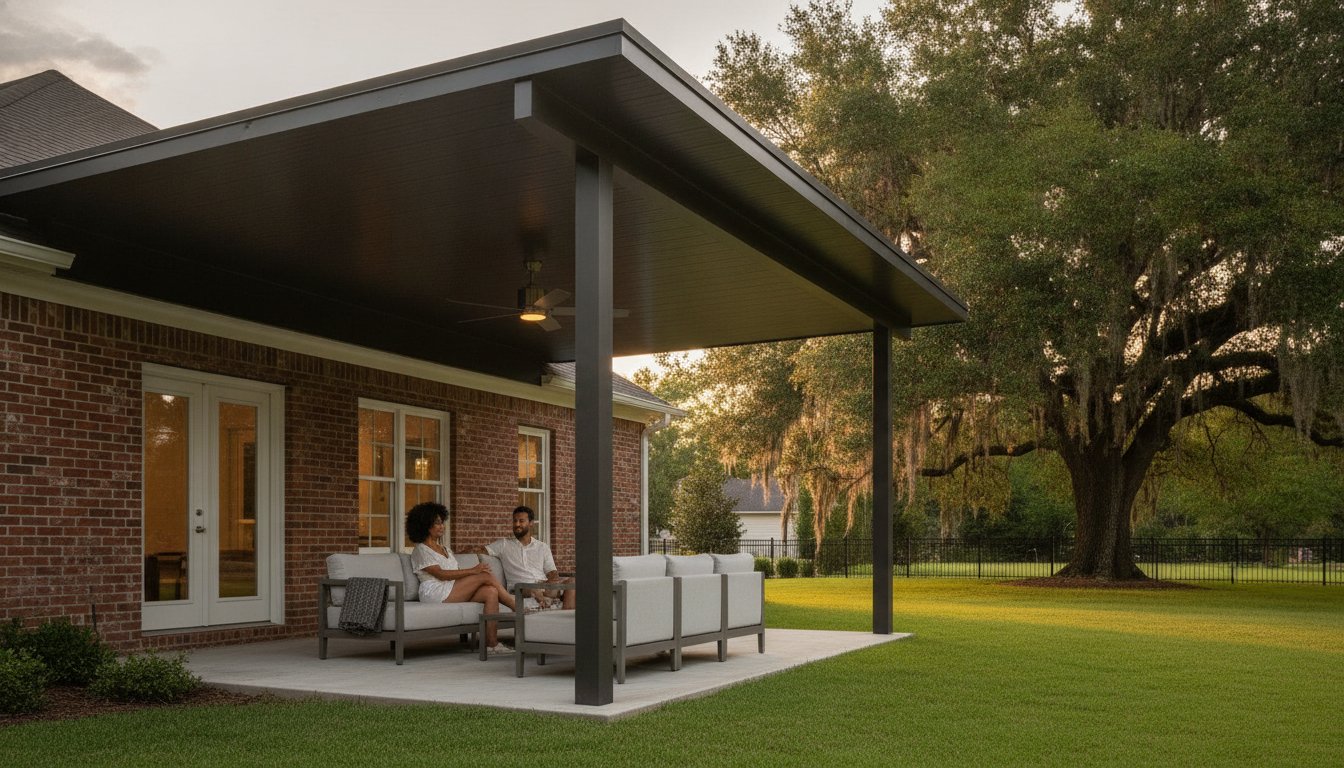
Insulated patio covers solve this problem through advanced engineering. These systems utilize thick, high-density foam cores sandwiched between two layers of heavy-duty aluminum. By incorporating thermal breaks, the structure prevents heat from transferring from the top of the panel to the bottom. This thermal efficiency is why many experts consider insulated aluminum the best patio cover material Louisiana homeowners can select for year-round comfort. Homeowners frequently report a “Real Feel” temperature reduction of up to 15 degrees when sitting under an insulated roof compared to a traditional non-insulated structure.
Beyond temperature control, insulated panels offer a significant advantage for modern amenities. The hollow-core design provides a protected internal channel for electrical wiring. This allows us to install ceiling fans, recessed LED lighting, and even outdoor speaker systems without visible conduits or messy wires. The result is a clean, professional finish that feels like a natural extension of your home’s interior.
Achieving this level of architectural integration is a specialty of top-tier designers such as Patios Coast2Coast, who focus on creating seamless transitions between indoor and outdoor spaces.
How Insulation Blocks Radiant Heat
The physics of a Louisiana summer involve intense radiant heat that traditional pergolas or open-slat structures simply cannot stop. While a pergola provides dappled shade, it does nothing to lower the air temperature. High-density EPS foam cores embedded within the patio panels provide essential R-value insulation that acts as a physical barrier to block solar heat from penetrating the structure. This solid barrier is superior for primary shade because it creates a consistent thermal shield that protects your patio furniture and your family from UV exposure and heat exhaustion.
Aesthetics and Integration
A major benefit of insulated systems is their ability to mimic the look of a finished room. The underside of the panels features a smooth or embossed finish that looks like a high-quality ceiling rather than the underside of a roof. We take great care to match your new structure to your home’s existing roofline and shingles, ensuring the addition looks intentional rather than like an afterthought. For those seeking total climate control, these covers pair perfectly with motorized shades to block the low-angle afternoon sun and keep the humidity at bay.
Maintenance, Lifespan, and ROI for Louisiana Homeowners
The true value of an outdoor structure reveals itself five to ten years after installation. In our local climate, the “Louisiana tax” on home improvements is usually paid in the form of constant maintenance or premature replacement. When you evaluate the best patio cover material Louisiana offers, you’re looking for a material that reduces your “cost per year” over two decades. A cheap structure that requires replacement every seven years is far more expensive than a premium build that lasts thirty.
In the Acadiana real estate market, a professionally engineered patio cover is a high-yield asset. Appraisers and buyers in Lafayette look for structures that meet current wind-load requirements and show no signs of rot or termite damage. Unlike “off-the-shelf” kits that often lack the structural depth to pass local inspections, custom builds are appraised as permanent home additions. This distinction significantly impacts your home’s resale value and curb appeal, turning a simple shade structure into a strategic financial investment.
Long-Term Value Comparison
The choice between materials often dictates your home’s future maintenance schedule. High-grade aluminum and Cypress wood are considered legacy materials because they break the “replacement cycle” common with pressure-treated pine. While pine is inexpensive upfront, the cost of staining it every two years and eventually replacing warped boards quickly exceeds the initial price of a more durable material. Investing in the best patio cover material Louisiana provides ensures that your outdoor space remains a selling point rather than a liability when it’s time to move.
Maintaining Your Investment
Even the most durable materials require a basic care routine to combat Louisiana’s aggressive environment. We recommend a simple seasonal checklist to keep your structure in peak condition:
- Inspect Anchors and Joints: After every major storm season, check the fasteners and the ledger board for any signs of shifting or loosening.
- Algae and Mildew Removal: Our high humidity often leads to “green” mold on white aluminum. A solution of mild soap and water is usually enough to restore the finish without damaging the protective coating.
- Cypress Care: To maintain the rich honey hue of new Cypress, plan to restain every three to five years. If you prefer a rustic look, you can allow it to weather naturally into a beautiful silver-grey patina.
A structure is only as good as the guarantee behind it. When selecting a contractor, ensure they provide a clear warranty that covers both the material integrity and the labor. To ensure your project is built to last and adds maximum value to your home, schedule a professional consultation with our team of master builders today.
Designing Your Dream Space with Acadiana Patios & Construction
At Acadiana Patios & Construction, we believe the best patio cover material Louisiana has to offer is only as effective as the craftsmanship behind it. Since 1985, we’ve focused on building structures that don’t just survive our climate but enhance the way local families live. Our “Acadiana Way” approach means we treat every project as a custom architectural addition, not a generic kit. Whether you’re looking for the thermal efficiency of an insulated cover or the timeless beauty of a cypress patio cover Louisiana craftsmen have perfected over generations, our team brings three decades of local insight to the drawing board.
A truly functional outdoor space often requires more than just a roof. We provide a comprehensive, one-stop solution that can integrate outdoor kitchens, fireplaces, and custom concrete slabs or coloring. This holistic method ensures that your foundation, your cooking space, and your overhead protection work together seamlessly. By handling the entire project from design to installation, we eliminate the stress of managing multiple contractors and ensure a consistent standard of excellence across every square inch of your new retreat.
The Custom Design Process
Every home in Lafayette has a unique character. We take the time to match our materials and structural designs to your existing architecture and lifestyle needs. This planning phase is crucial. We help you visualize how the structure will interact with your yard and home before the first post is ever set. Often, this starts from the ground up, where custom deck building serves as the perfect structural foundation for your new patio cover.
Why Experience Matters in Lafayette
As a local family-operated business, we have a deep-rooted accountability to our community. We aren’t a national franchise using a one-size-fits-all manual. We understand the specific soil conditions of Acadiana and the precise wind-load requirements of Lafayette Parish because we’ve been building here for over 30 years. Our established network of local installers and material suppliers ensures that every project uses the highest caliber of regional resources. This local expertise is what allows us to recommend the best patio cover material Louisiana environments demand for each specific neighborhood we serve.
Your path to a more comfortable, durable outdoor space begins with a conversation. We’ll guide you through the technical choices and design possibilities to find the perfect fit for your budget and home. Schedule your free design consultation with Acadiana Patios today and take the first step toward enjoying your first mosquito-free evening under a structure built to last a lifetime.
Transforming Your Backyard Into a Permanent Sanctuary
Selecting the best patio cover material Louisiana homeowners trust involves balancing the natural resilience of local Cypress with the technical thermal performance of insulated aluminum. As we’ve explored, the right choice protects your investment from humidity, termites, and the intense summer heat while ensuring your structure meets strict local building codes. Your patio should be a reliable extension of your home that provides peace of mind through every season.
Since 1985, we’ve served the Lafayette and Acadiana area as a local family-operated business committed to high-standard craftsmanship. With our A+ BBB rating and specialization in handcrafted Cypress pavilions and high-performance insulated covers, we ensure your project is built for longevity. You deserve an outdoor space that adds real value to your property and provides a cool, comfortable retreat for your family. Build your perfect outdoor retreat with Acadiana’s patio experts. We look forward to helping you design a space where you can finally relax and enjoy the best of Louisiana living.
Frequently Asked Questions
What is the best patio cover material for high humidity in Louisiana?
High-grade aluminum and native Cypress wood are the premier choices for managing extreme humidity. Aluminum is entirely impervious to moisture and rot, while Cypress contains natural oils that act as a built-in preservative. These materials prevent the structural failure often seen with standard pressure-treated pine in the Acadiana climate. Selecting the best patio cover material Louisiana offers ensures your structure remains stable even when humidity levels consistently exceed 90 percent.
Can an aluminum patio cover withstand a hurricane?
A professionally engineered aluminum patio cover can withstand hurricane-force winds when it’s tied into a reinforced foundation. We build every structure to meet specific local wind-load requirements in Lafayette Parish, ensuring it remains anchored during severe weather events. Unlike retail kits, our custom installations use heavy-duty gauges and structural anchoring systems specifically designed to resist the uplift forces common during tropical storms and hurricanes.
Is Cypress wood better than Cedar for Louisiana patios?
Cypress is generally superior to Cedar for local projects because it’s native to our swampy environment. While Cedar is a quality wood, Cypress contains higher concentrations of natural preservatives that protect against the aggressive rot and Formosan termites found in South Louisiana. Handcrafted Cypress pavilions offer a level of structural weight and regional authenticity that Cedar simply can’t match in our specific climate.
Do insulated patio covers really keep the area cooler?
Insulated patio covers significantly reduce temperatures by blocking radiant heat from the sun. These panels use high-density foam cores that provide a thermal barrier, preventing the “oven effect” associated with single-layer metal roofs. Homeowners in Acadiana often experience a temperature drop of up to 15 degrees in the shade. This makes the patio a comfortable space even during the peak of a 100-degree summer day.
How much maintenance does a wood patio cover require in Lafayette?
Maintenance requirements depend on the wood species, but a Cypress structure typically needs restaining every three to five years to maintain its original color. If you prefer a weathered look, you can let it age naturally into a silver-grey patina with very little intervention. Regardless of the finish, you should perform an annual inspection of the joints and anchors to ensure the structure remains secure after our heavy storm seasons.
Do I need a permit for a patio cover in Lafayette Parish?
Most permanent outdoor structures in Lafayette Parish require a building permit to ensure they meet safety and wind-load codes. We handle the permitting process as part of our comprehensive service, ensuring your project complies with all local zoning laws and structural regulations. This professional oversight protects your home’s value and ensures that the structure is legally documented for future property appraisals or insurance claims.
Which material is best for an RV shelter in South Louisiana?
Structural steel is the most effective material for RV shelters because it allows for the wide spans and high clearances needed for large vehicles. Steel provides the industrial strength necessary to maintain structural integrity over a large area without requiring a forest of support columns. These shelters are engineered to provide maximum protection for your investment against the heavy rain, hail, and intense UV exposure common in South Louisiana.
How long does a professionally installed aluminum patio cover last?
A professionally installed aluminum patio cover can easily last 20 to 30 years or more with minimal upkeep. Because aluminum is resistant to rust, rot, and insect damage, the structural components remain sound for decades. The high-quality baked-on finishes used in modern manufacturing also resist fading and peeling. This ensures the structure looks as good in year twenty as it did on the day of installation.