Cypress Pergola vs. Pavilion in Louisiana: The 2026 Homeowner’s Comparison Guide
If you’re building a backyard retreat with anything other than local cypress, you’re essentially setting a countdown timer on your investment. When weighing the choice of a pergola vs pavilion Louisiana homeowners quickly learn that our 90% humidity and aggressive Formosan termites make short work of standard construction materials. It’s frustrating to invest in a beautiful patio only to watch the wood soften and decay after just a few seasons of tropical storms. We agree that your outdoor space should be a sanctuary, not a source of constant maintenance or worry about structural integrity during high-wind events.
This 2026 comparison guide will help you decide which structure best suits your lifestyle by looking at shade coverage, rain protection, and long-term durability. We’ll explore how these custom-built structures can lower your patio’s ambient temperature and why cypress remains the “Wood Eternal” for structures meant to last 30 years or more. From meeting local wind-load requirements to achieving that perfect handcrafted look, you’ll find the professional insights needed to build with absolute confidence.
Key Takeaways
- Understand why native Louisiana cypress provides a natural biological shield against Formosan termites and the rapid decay caused by 90% humidity.
- Evaluate the functional differences of a pergola vs pavilion Louisiana to decide between an architectural open-air accent or a fully covered outdoor living space.
- Learn why handcrafted, site-built timber framing is necessary to meet 2026 wind-load requirements and outperform mass-produced retail kits.
- Discover the specific cleaning and maintenance strategies that allow a professional cypress structure to serve as a 50-year legacy for your home.
- Identify how custom integrations like concrete coloring and outdoor kitchens can maximize your property value and backyard utility.
Why Cypress is the Gold Standard for Louisiana Pergolas and Pavilions
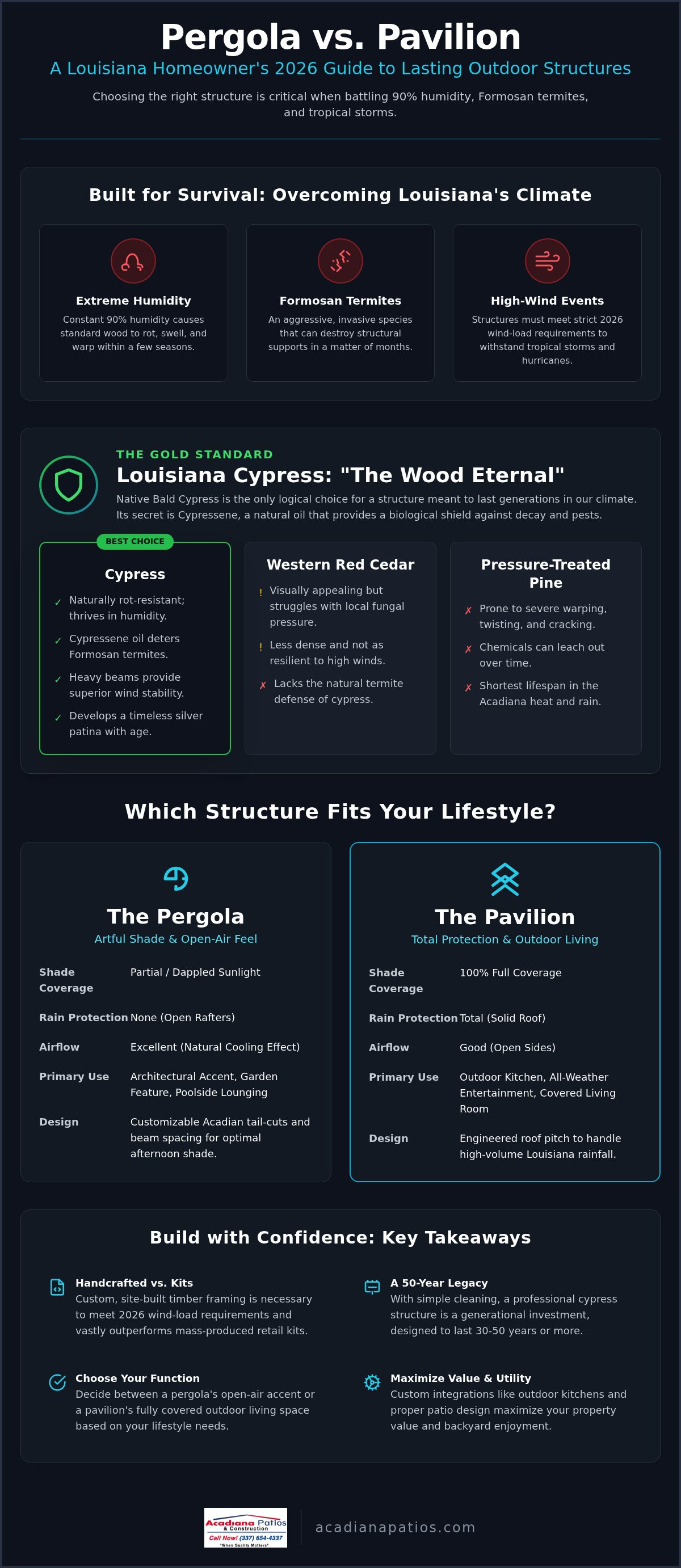
In Louisiana, we don’t just build for style; we build for survival. Bald Cypress, scientifically known as Taxodium distichum, has earned the local title “The Wood Eternal” because of its incredible lifespan in swampy, high-moisture environments. When you’re deciding between a Pergola vs pavilion Louisiana homeowners must prioritize materials that can handle our specific biological pressures. Cypress is the only logical choice for a structure meant to last a generation.
The secret to this longevity lies in a unique chemistry. Cypress produces a natural oil called cypressene, which saturates the wood fibers and creates a biological shield against decay. While 90% humidity causes traditional softwoods to swell, warp, and eventually rot, it actually keeps cypress heartwood stable and resilient. We’ve seen how different materials perform in the Acadiana heat, and the results are clear:
- Cypress: Locally sourced and naturally rot-resistant. It becomes stronger with age in our wet climate.
- Western Red Cedar: Visually appealing but often struggles with the intense fungal pressure and heat of the Deep South.
- Pressure-Treated Pine: An affordable entry point that is prone to severe warping, twisting, and chemical leaching over time.
Natural Resistance to Formosan Termites
Formosan subterranean termites represent the single greatest threat to wooden structures in our region. These invasive pests can consume entire support beams in months if the wood isn’t naturally defended. We focus exclusively on using cypress heartwood, which contains the highest concentrations of protective oils. Cypressene acts as a natural deterrent that prevents termite nesting. Unlike sapwood, which is the soft outer layer of the tree, the dense heartwood provides an unappetizing barrier that keeps your structure standing securely for decades.
Weathering the Acadiana Climate
Our weather is a cycle of extremes. One day it’s a torrential downpour, and the next it’s 100-degree heat. This rapid expansion and contraction destroys lesser woods by causing deep cracks and structural failure. Cypress handles the Louisiana wet-dry cycle with ease. The wood maintains its structural integrity without splitting, and our heavy cypress beams provide the necessary mass for stability during high-wind events. As the years pass, untreated cypress develops a classic silver driftwood patina that adds a timeless, custom-built character to your backyard.
Pergola vs. Pavilion: Which Structure Fits Your Lifestyle?
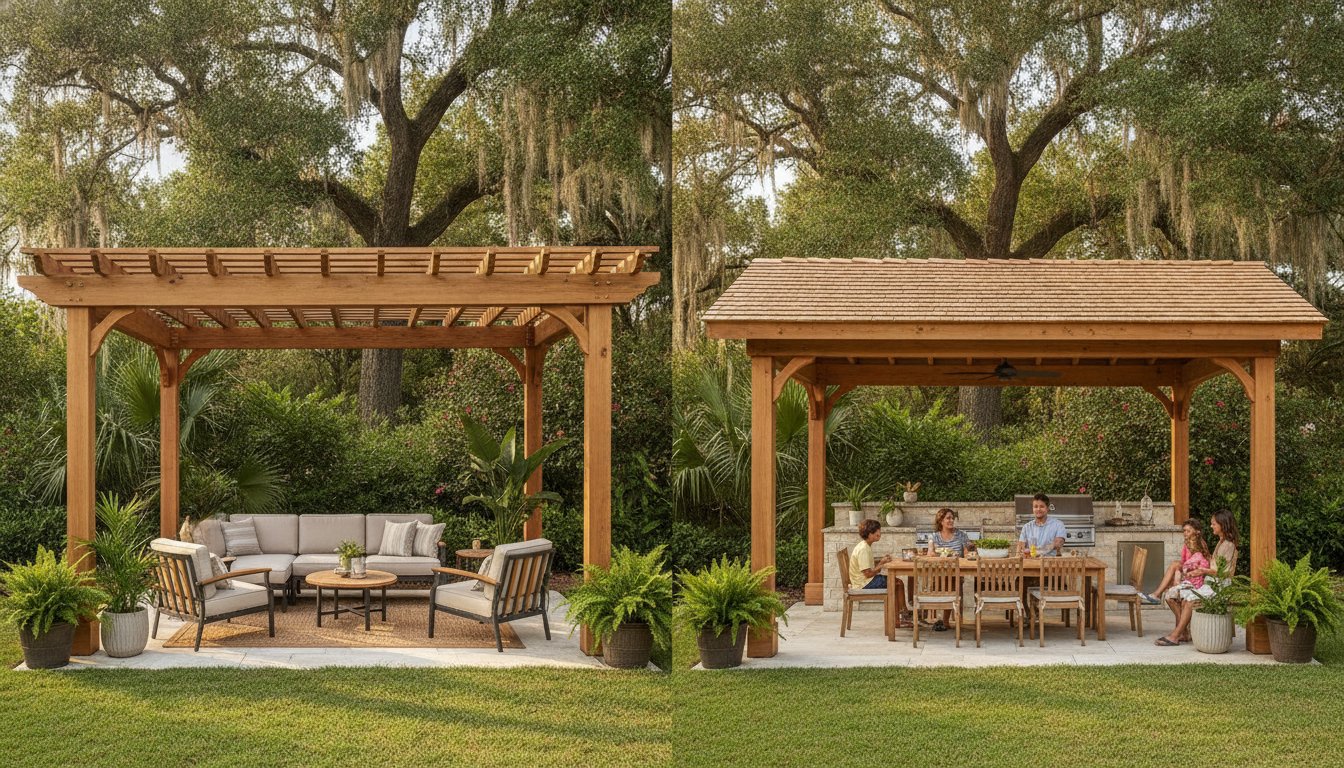
Choosing between a pergola vs pavilion Louisiana homeowners often find themselves balancing aesthetics against the reality of our weather. The fundamental difference lies in how you intend to use the space. A pergola serves as a stunning architectural accent that provides partial shade while maintaining an open-air feel. In contrast, a pavilion offers a solid roof for total weather protection. When comparing a pergola vs pavilion Louisiana residents must decide if they want a garden-style lounging area or a fully functional outdoor living room that remains usable during a summer thunderstorm.
Orientation to the Louisiana sun plays a critical role in the design phase. For a pergola, we calculate beam spacing to maximize shade during the hottest parts of the afternoon. For pavilions, the roof pitch must be engineered to handle our high-volume rainfall without water backing up toward the house. If you are developing a comprehensive backyard renovation plan, these structures often serve as the focal point that ties together your deck, pool, and patio.
The Cypress Pergola: Artful Shade and Airflow
A cypress pergola is ideal for garden accents or poolside lounging. It’s the perfect choice for those who enjoy dappled sunlight but want to avoid the stifling heat of a closed structure. One major advantage is the “Cooling Effect.” Unlike metal structures that can trap heat, the open beams of a wooden pergola allow hot air to rise and escape naturally. We customize every build with traditional Acadian tail-cuts, including scalloped, beveled, or square-cut ends, to ensure the structure complements your home’s architecture. If you prefer a lighter, more decorative touch, our local master builders can design a pergola that enhances your landscaping without overwhelming the space.
The Cypress Pavilion: Year-Round Rain Protection
If your goal is to host dinners or watch the game outside, a pavilion is the superior option. It provides a permanent shield from sudden Louisiana downpours. You can choose roofing that matches your existing shingles or opt for the durability of cypress-framed insulated patio covers. A pavilion is also the only logical choice for a custom outdoor kitchen. Protecting your grill, cabinetry, and electronics from the elements ensures your investment lasts for decades. This structure essentially adds a new room to your home, offering a stable environment for furniture and appliances that would otherwise suffer from sun and rain exposure.
The Master Builder Process: From Raw Timber to Backyard Masterpiece
Building a custom structure requires more than just a stack of lumber and a set of tools. We source our cypress locally because the timber has already acclimated to the specific South Louisiana humidity levels. This local sourcing prevents the severe warping and twisting often seen in retail “kit” pergolas that use wood shipped from vastly different climates. When weighing the choice of a pergola vs pavilion Louisiana homeowners should view their project as a permanent home addition rather than a temporary garden fixture. Handcrafted, site-built structures offer a level of precision and structural weight that mass-produced kits simply cannot replicate.
Maneuvering heavy timbers through established Lafayette neighborhoods requires careful planning and professional logistics. We manage the entire process to ensure minimal disruption to your property while maintaining the high standards of a master builder. This methodical approach ensures that every beam is perfectly aligned and every connection is secure.
Step 1: Site Assessment and Foundation
Louisiana’s soft, silty soil presents unique engineering challenges that many national contractors overlook. Before construction begins, we evaluate the concrete slab integrity to ensure it can support the immense weight of cypress timber framing. In Lafayette Parish, building codes typically require structures to withstand wind loads between 110 and 130 mph. We calculate these requirements during the design phase, determining the optimal post placement to ensure maximum safety without obstructing your backyard views.
Step 2: Timber Selection and Joinery
For the “Grand Acadian” aesthetic, we typically select 8×8 or 10×10 posts. These larger dimensions aren’t just for visual impact; they provide the necessary mass to resist the uplift forces of tropical storms. While some builders rely on basic structural brackets, we utilize traditional timber joinery techniques that allow the wood to move naturally with the seasons. We also insist on using stainless steel or galvanized hardware. Standard steel fasteners react with the natural oils in the wood, causing dark streaks known as cypress “bleeding” that can permanently stain the timber. Using the right hardware preserves the clean, high-caliber finish of your custom build.
Durability and Maintenance: Protecting Your Investment
While cypress is legendary for its resilience, the idea that it requires zero upkeep is a common misconception. To ensure your structure lasts 50 years, you must account for the specific environmental stressors of the Lafayette region. When deciding between a pergola vs pavilion Louisiana homeowners should consider how each design interacts with moisture and sun exposure. Cypressene oils provide the internal shield, but the surface still faces the elements daily. Intense UV rays in Acadiana can strip moisture from the outer layers of the wood faster than the heartwood can replenish it. This imbalance leads to “checking,” which are small surface cracks that don’t compromise structural integrity but can affect the smooth, professional finish of your beams.
Algae and mildew are inevitable in our 90% humidity, especially on the north-facing sides of a structure. We recommend a soft wash with an oxygen-based cleaner every 12 to 18 months to keep the wood looking pristine. Avoid using high-pressure power washers, as these can “fuzz” the wood fibers and create a porous surface where mold can more easily take root. A gentle cleaning routine preserves the high-caliber look of your investment without damaging the natural biological shield of the timber.
To Stain or Not to Stain?
Choosing a finish is primarily a matter of aesthetic preference. Many clients prefer to maintain the “Honey Gold” look of fresh cypress by using top-rated UV-inhibitor stains designed for high-humidity environments. These stains block the sun’s rays and keep the wood’s color vibrant for several years. Alternatively, you can allow the wood to age naturally into a “Natural Silver” patina, which offers a classic, weathered Acadian look. While cypress can be left raw, a sealant prevents surface checking in the sun. If you want to maintain a specific color, plan on reapplying a professional-grade stain every three to five years.
Long-Term ROI of Cypress Structures
A custom-built cypress structure typically offers a higher return on investment than other outdoor wood projects because it doesn’t need to be replaced every decade. Standard treated pine often fails within 7 to 10 years in the South, whereas cypress serves as a permanent asset that increases your home’s appraisal value. When you compare the pergola vs pavilion Louisiana market, pavilions often command a higher resale price because they provide year-round utility. Integrating your structure with motorized patio screens further maximizes this value by creating a versatile, insect-free environment. If you’re ready to design a structure that stands the test of time, consult with our master builders to explore your options.
The Acadiana Patios Difference: 40 Years of Local Excellence
Choosing between a pergola vs pavilion Louisiana involves more than just picking a design from a catalog. It requires a builder who understands the local environment and the heritage of our materials. Since 1985, Acadiana Patios & Construction has served as the premier master builder for the Lafayette region. Being a local, family-operated business means we offer a level of accountability that national franchises simply cannot match. We don’t just sell kits; we create handcrafted legacies. Our commitment to excellence is visible in every joint and every beam we place, ensuring your structure remains a source of pride for decades.
Our team handles the entire construction lifecycle under one roof. This comprehensive approach eliminates the stress of coordinating multiple subcontractors for your project. Whether you need a new foundation or a custom-framed roof, we bring decades of expertise to every phase. By managing the design, concrete work, and timber framing ourselves, we maintain total control over the quality of the finished result. This is the hallmark of a master builder who values precision over speed.
Comprehensive Outdoor Living Solutions
We provide a wide range of custom solutions, from intricate cypress arbors to expansive outdoor kitchens. A successful project often begins with the ground beneath your feet. We specialize in integrating your new structure with professionally installed stamped concrete to create a cohesive aesthetic. Managing the logistics of construction in Acadiana can be complex, but we simplify the process by coordinating directly with local HOAs and permitting offices. Our portfolio, built over 40 years of service, reflects our deep understanding of Lafayette building codes and regional architectural styles.
Start Your Custom Cypress Project
Your journey toward a better backyard begins with an on-site design consultation. We take the time to listen to your needs, evaluate your property’s unique layout, and discuss the specific merits of a pergola vs pavilion Louisiana homeowners should consider for their specific sunlight and drainage needs. We then translate that vision into a structural reality using the finest locally sourced cypress. Our goal is to provide a seamless experience that results in a structure of unmatched durability. If you’re ready to enhance your home with the “Wood Eternal,” contact the master builders at Acadiana Patios & Construction today to begin your transformation.
Transform Your Backyard with a Legacy of Craftsmanship
Choosing the right structure for your patio is a significant investment in your home’s future and your daily quality of life. Whether you prefer the airy, architectural charm of a pergola or the robust, year-round protection of a pavilion, your choice must be built to withstand the unique environmental pressures of the Acadiana region. When evaluating a pergola vs pavilion Louisiana homeowners find that native heartwood cypress is the only material that truly defeats the humidity and termites that plague our local climate.
Since 1985, our family-operated team has served as the premier master builder for Lafayette, specializing in handcrafted timber framing that meets 2026 wind-load standards. We don’t believe in temporary solutions or mass-produced kits. Instead, we focus on high-standard craftsmanship that adds lasting property value and creates a seamless outdoor living experience. You deserve a sanctuary that remains beautiful and structurally sound for decades to come.
Request Your Custom Cypress Structure Consultation today to begin your journey toward a handcrafted backyard masterpiece. We look forward to helping you build a legacy of excellence on your own property.
Frequently Asked Questions
Is cypress better than cedar for pergolas in Louisiana?
Yes, cypress is the superior choice for our specific region. While Western Red Cedar is a popular material nationally, it often struggles with the extreme fungal pressure and intense heat of the Deep South. Locally sourced Bald Cypress contains natural oils that create a biological shield against rot. This makes it more stable during the rapid wet-dry cycles common in Lafayette, ensuring your investment remains structurally sound for decades.
How long does a cypress pavilion last in the Deep South?
A professionally built cypress pavilion can easily last 30 to 50 years. Known as the “Wood Eternal,” cypress heartwood is naturally resistant to the decay caused by our 90% humidity levels. By using handcrafted timber framing techniques instead of mass-produced kits, we ensure the structure remains stable. Regular cleaning and basic surface care will extend its lifespan even further, making it a permanent legacy for your home and property.
Do I need a building permit for a pergola in Lafayette, LA?
Generally, yes. In Lafayette Parish, you typically need a permit for structures over 120 to 200 square feet, those attached to your house, or any build involving electrical wiring. Since the 2026 update to the Louisiana Uniform Construction Code, regulations ensure all structures meet specific wind load requirements. Our team handles the coordination with local permitting offices to ensure your project complies with all current safety and zoning standards.
Are cypress pergolas truly termite-proof?
Cypress heartwood is naturally resistant to Formosan termites, though no wood is entirely proof. The heartwood contains cypressene, a natural oil that acts as a deterrent to nesting and consumption. However, the outer sapwood is more vulnerable. We prioritize using dense heartwood for critical structural beams to provide maximum protection. When comparing a pergola vs pavilion Louisiana homeowners should still maintain a clear perimeter to prevent termite bridges from the soil.
What is the difference between a cypress pergola and a pavilion?
The primary difference is the roof structure and weather protection. A pergola features an open-beam design that provides dappled shade and allows heat to escape, making it an architectural garden accent. A pavilion has a solid, fully covered roof that offers total protection from rain and direct sun. When deciding on a pergola vs pavilion Louisiana residents often choose pavilions for outdoor kitchens to protect appliances from sudden tropical downpours.
Can a cypress pavilion withstand a hurricane?
Yes, provided it is engineered correctly. We design our structures to meet Lafayette Parish wind load requirements, which typically range from 110 to 130 mph. By using heavy 8×8 or 10×10 cypress posts and traditional timber joinery, we create a massive, stable structure that resists uplift. Unlike lightweight retail kits, our site-built pavilions are anchored deep into concrete slabs to provide peace of mind during severe weather events.
How much maintenance does a cypress outdoor structure require?
Maintenance is relatively minimal but essential for longevity. You should soft-wash the wood every 12 to 18 months to remove local algae and mildew. It’s best to avoid high-pressure washing, as it can damage the wood fibers and create a porous surface. If you choose to stain the structure, you’ll need to reapply a UV-inhibitor every three to five years. Raw cypress requires even less work, as internal oils continue to protect the timber.
Should I stain my cypress pergola or let it weather?
This is a personal aesthetic choice. Staining with a UV-inhibitor preserves the “Honey Gold” color of new wood and helps prevent surface checking. If you prefer a rustic look, you can let the cypress weather naturally into a classic silver driftwood patina. Both options are structurally sound. However, applying a clear sealant can help the wood fibers stay smooth while allowing the natural graying process to occur over time.