Durable decking materials for Louisiana: compare wood and composite
The wood that looks toughest may not be the easiest deck to live with. Among durable decking materials for Louisiana homes, composite is often a practical choice for frequent use and humid conditions because it resists moisture, insects, and rot and needs little staining or refinishing. Dense hardwood can also stand up to rot and moisture when properly installed and maintained, but it requires more upkeep.
Strength matters when a deck will see plenty of footsteps, rain, and sun. But the best fit depends on more than the boards: upkeep, exposure to coastal conditions, color, and the supporting structure all play a part. This comparison explains how wood and composite perform under frequent use, what Louisiana’s climate demands of each material, and how maintenance affects durability. Use these trade-offs to choose an option suited to how you plan to use your deck.
Key Takeaways
- Match the decking material to foot traffic and the amount of upkeep you’re prepared to handle.
- For humid or coastal exposure, consider how moisture, salt, and sun affect the boards and supporting structure.
- Pressure-treated wood can be a practical option, but plan for ongoing maintenance and eventual replacement.
- Compare the full deck system, including supports, hardware, and railings, rather than choosing boards by appearance alone.
Which is better, wood decking or composite?
Heavy foot traffic tests the whole deck, not just its surface boards. For elevated decks, permit and construction requirements depend on local rules and the project.
Composite Decking
Composite boards combine materials and offer a practical alternative to traditional wood in Louisiana’s damp conditions. They resist moisture, insects, and rot, and generally need little staining or refinishing. Capped composite resists mold and mildew, while composite boards do not split or crack like traditional wood. Their consistent color options also make it easier to coordinate the deck’s appearance.
Moisture protection depends on the full assembly. Flashing tape and protective barriers at joist, ledger, and beam connections help limit water intrusion and extend deck life. Properly specified hidden fasteners can provide holding power with composite and wood systems.
| Option | Moisture and rot | Upkeep | Foot traffic consideration |
|---|---|---|---|
| Composite | Resists moisture, insects, and rot | Little staining or refinishing | Boards don’t split or crack like traditional wood |
| Pressure-treated pine | Treated for rot and insect resistance | Regular upkeep may be needed | Choose traffic-resistant boards and sturdy supports |
| Dense hardwood | Naturally resists rot, insects, and moisture when properly installed and maintained | Traditional hardwood needs maintenance every 1-3 years | Installation and maintenance affect performance |
Choose composite for less refinishing, or wood if its appearance and upkeep suit your priorities.
Treated Lumber
Pressure-treated pine is a common wood choice for decks and docks. Treatment helps resist rot and insects, but it doesn’t remove the need for care. Pressure-treated decks will likely need replacement after 10-15 years. In most situations, treating wood increases its life expectancy to five or more times that of untreated wood, according to the U.S. Environmental Protection Agency.
There are safety considerations with treated lumber. CCA-treated wood releases more chemicals during the first rainy season, followed by smaller amounts that decrease slightly over time, according to Taunton Press. Composite’s relevant performance concerns differ: its moisture protection, mold and mildew resistance, and board condition matter in a humid climate. For either option, durable decking materials for Louisiana need sound connections and supports, not just resilient boards.
Decking performance in humid and coastal climates
Louisiana decks face moisture, coastal salt, and strong sun. Material choice matters, but supports and hardware also affect how well the structure holds up.
Humid and Coastal Conditions
Composite and PVC decking suit areas with high humidity, frequent rain, or intense sun. Composite resists moisture, insects, and rot, while PVC is highly resistant to moisture, salt, and ultraviolet radiation. That makes PVC worth considering for docks and other waterside areas. PVC boards may have three- or four-sided capping, and PVC decking is engineered to be slip resistant.
Wood remains an option, but choose a material that suits its exposure. A deck near the water, for example, faces different conditions from one sheltered from coastal salt. Louisiana pecky cypress also varies in pecking from board to board and is characteristically brittle, so its distinctive appearance comes with a material consideration.
Fasteners and Framing Materials
For humid, coastal decks, pair traffic-resistant decking with durable supports and non-corrosive hardware. The boards take foot traffic, while the support system carries the structure. Sturdy railing completes the assembly. Choose components as a system rather than selecting boards without accounting for the frame and connections.
At joist, ledger, and beam connections, flashing tape and protective barriers help prevent water intrusion and extend deck life. These details matter where rain can reach joints and framing. Properly specified and installed hidden fastening systems provide holding power for both wood and composite boards.
For full sun and hot climates, lighter decking colors are recommended because darker colors feel hotter. Compare samples in the deck’s actual exposure, then consider how shade and sun affect the areas used most. A sunlit seating area, for example, may benefit from a lighter surface than a shaded section.
- For a waterside location, weigh PVC’s resistance to moisture and salt.
- For humid, rainy exposure, compare composite and PVC with wood options.
- For any deck, include supports, non-corrosive hardware, and railing in the material decision.
If shade is also part of your outdoor-space plan, explore covered outdoor living ideas.
Pressure-treated wood durability and upkeep
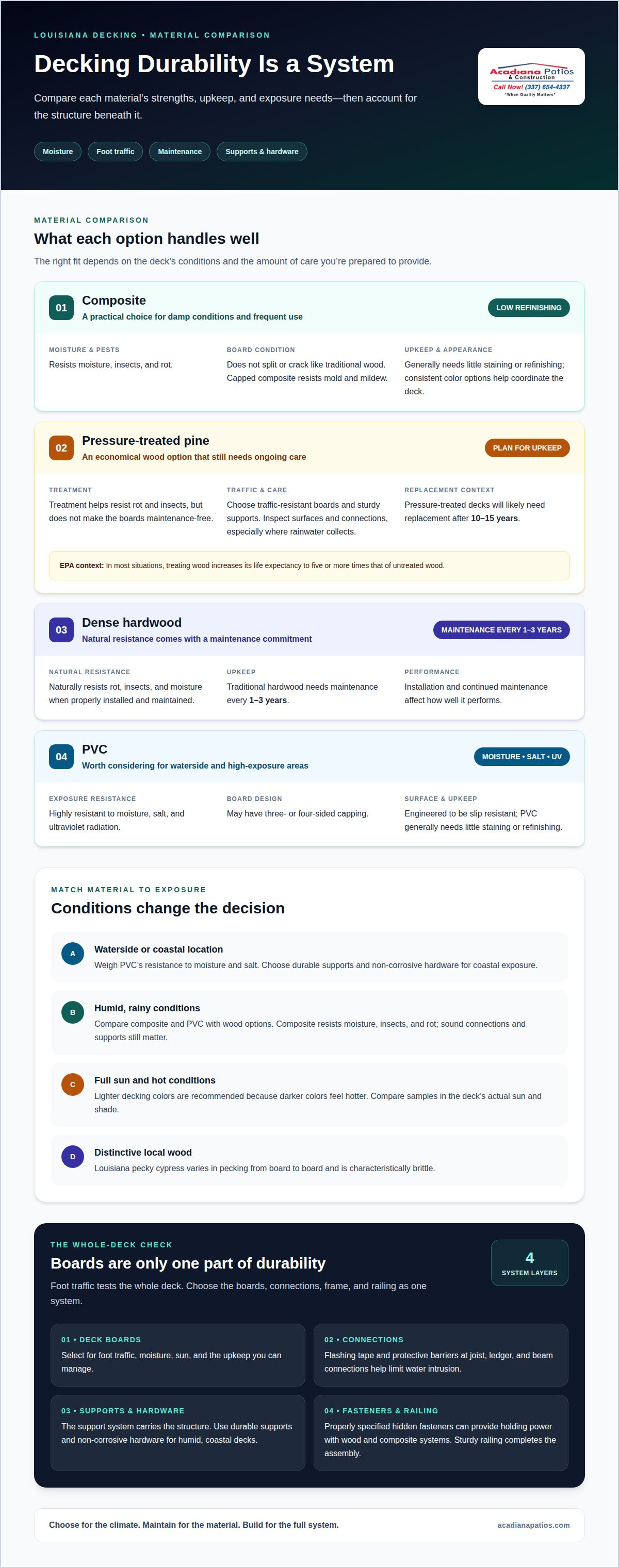
In Louisiana, composite and PVC generally need little staining or refinishing, while wood needs more ongoing care. Wood finishes help limit sun damage but require regular reapplication. Match maintenance to the material and its exposure.
Pressure-Treated Lumber
Pressure-treated pine is described as the most economical decking or dock material option for Louisiana projects. Its treatment helps resist rot and insects, but it does not make the boards maintenance-free. Inspect the surface and connections as part of routine deck care, especially where rainwater collects or wood meets framing. These areas can show wear before the open deck surface does.
Sun exposure adds another upkeep task for wood. UV-resistant finishes can help wood decking withstand sunlight, but they need regular reapplication. A sunny deck may therefore require more attention to its finish than a shaded one. Traditional hardwood also requires maintenance every 1-3 years, so include refinishing in the long-term care plan when comparing it with treated pine.
The practical upkeep difference is straightforward: composite generally needs little staining or refinishing, while PVC’s resistance to moisture, salt, and UV radiation makes it an option for exposed locations. Wood needs regular finish care, and pressure-treated lumber still benefits from inspection and maintenance. Louisiana’s humidity and rain make it sensible to clear debris from joints and watch for places where water lingers.
- Composite: Keep the surface clear of debris and monitor board condition.
- PVC: Consider it for moisture- and sun-exposed areas, including waterside settings.
- Wood: Inspect boards and connections, then reapply a suitable UV-resistant finish as needed.
When comparing durable decking materials in Louisiana, weigh each surface’s maintenance against its resistance to local conditions. A homeowner seeking less refinishing may favor composite or PVC. Anyone choosing wood should plan for finish care and routine inspections. The right upkeep routine depends on the material and the sun, rain, and foot traffic the deck receives.
Decking material selection
Composite and PVC suit humid, rainy, or intensely sunny Louisiana sites. Pressure-treated pine is economical; cedar and redwood resist decay, while Ipe, Cumaru, and Garapa resist rot when properly installed and maintained.
PVC Decking
PVC boards contain no wood fibers and are highly resistant to moisture, staining, and fading. Their resistance to salt and ultraviolet radiation makes PVC a strong option for docks and other waterside areas. Some boards have three- or four-sided capping, and PVC decking is engineered to be slip resistant. Unlike wood, PVC does not have wood-specific rot concerns.
Pressure-Treated Wood
Pressure-treated pine is described as the most economical decking or dock material option for Louisiana projects. Treatment helps the wood resist rot and insect damage, but it still needs upkeep and may eventually require replacement. Compared with composite or PVC, pine provides a wood surface, but account for maintenance as well as material preference when making a long-term choice.
Cedar Decking
Cedar has natural decay resistance and weathers beautifully with maintenance. It suits homeowners who want wood’s natural character and are prepared to care for the surface. Unlike composite or PVC, cedar’s appearance changes with weather and maintenance. Redwood shares these decay-resistant qualities.
Tropical Hardwood Decking
Ipe, Cumaru, and Garapa are dense tropical hardwoods that naturally resist rot, insects, and moisture when properly installed and maintained. Their strength and natural resistance distinguish them from pressure-treated pine, which relies on treatment for protection. Tropical hardwood still requires ongoing maintenance, so consider whether its upkeep fits your priorities.
For Louisiana’s high humidity, frequent rain, or intense sun, weigh exposure, maintenance, and the surface you prefer. Use those criteria to plan your deck material selection around the conditions your deck will face.
Acadiana Patios & Construction: Motorized Shades & Screens
Acadiana Patios & Construction can help extend your outdoor living plan beyond material selection with options for shade and shelter. Motorized Shades & Screens help manage sun exposure, while Cypress Patio Covers and Insulated Patio Covers create covered areas beside your outdoor living space. Screened Enclosures offer another way to enjoy the outdoors within a defined boundary.
These additions make sense when your plans go beyond choosing deck boards, such as creating a shaded place to sit or a protected area for outdoor use. The right combination depends on how you want to use the space and how much sun it receives.
Visit acadianapatios.com to explore options for your outdoor living project.
Plan a deck that fits your outdoor life
Choosing durable decking materials for Louisiana is one part of shaping an outdoor space you’ll enjoy. Before moving forward, picture how people will enter the deck, where they’ll gather, and how the space should connect with your home. These decisions can guide the layout and help the finished area feel purposeful, not simply added on.
Consider the whole setting, too. A sunny seating area may call for shade, while nearby vehicle or storage needs could influence other improvements around the property. Acadiana Patios & Construction offers Motorized Shades & Screens, Carports & Garages, and Cypress Patio Covers as complementary outdoor-living options.
With your priorities in mind, take the next step at a pace that suits your project. Contact Acadiana Patios & Construction to discuss your outdoor plans and explore a direction that feels right for your home.
Frequently Asked Questions
What is the best deck material for heavy foot traffic?
Composite or dense hardwood can suit decks with frequent foot traffic. Composite boards do not split or crack like traditional wood, while dense hardwoods such as Ipe, Cumaru, and Garapa resist rot and insects when properly installed and maintained. For a busy path from the house to an outdoor dining area, consider the boards alongside sturdy supports, secure connections, and railings.
What is the best deck material for long-term costs?
No single material is automatically the least costly over its full service life. Pressure-treated pine is described as an economical Louisiana option, while composite generally needs little staining or refinishing. Compare the initial material choice with expected upkeep, finish reapplication, and possible board replacement. If reducing routine refinishing matters most, that preference may point away from a wood-first choice.
What is the best deck material for mold and mildew resistance?
Capped composite is a strong choice for mold and mildew resistance. Its capped surface offers good resistance, making it worth considering in damp parts of a yard or where the deck gets frequent rain. Composite also resists moisture, insects, and rot. PVC offers other benefits, but capped composite is specifically identified for mold and mildew resistance.
What decking materials last longest in Louisiana’s heat, humidity, and heavy rain?
Composite, PVC, and properly maintained dense hardwoods are options for Louisiana’s demanding conditions. Composite and PVC suit high humidity, frequent rain, or intense sun, while dense hardwoods such as Ipe, Cumaru, and Garapa resist rot and moisture when properly installed and maintained. For a sunny deck, lighter colors are recommended because darker surfaces feel hotter.
What are the typical installed costs per square foot for decking materials in Louisiana?
Installed costs vary by project, so a typical per-square-foot figure would not reliably describe every Louisiana deck. The total depends on the material, deck dimensions, layout, site access, framing, hardware, and railing choices. A project-specific quote accounts for those details. For a deck project, the price depends on the specific work and is provided after a quote request.
Which decking materials resist termites, rot, mold, and mildew in Louisiana?
Composite resists insects and rot, while capped composite also offers good resistance to mold and mildew. Pressure-treated lumber is treated to resist rot and insects. Dense hardwoods such as Ipe, Cumaru, and Garapa naturally resist insects and rot when properly installed and maintained. Each material addresses different concerns, so match your choice to the exposure and upkeep you can manage.