

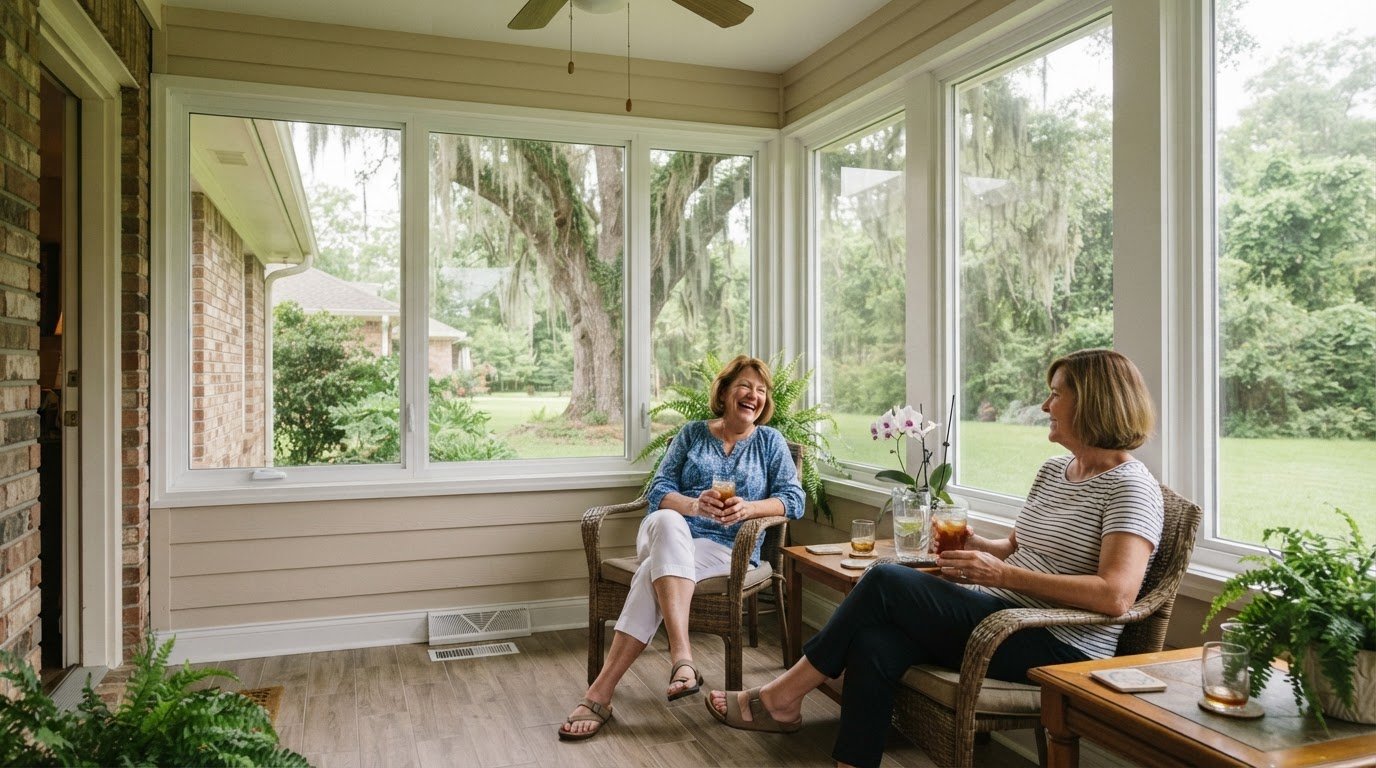
Expert Sunroom Installers in Lafayette for Insulated Comfort
A sunroom’s comfort depends on more than its windows: the room’s intended season of use, insulated walls, and installation quality all matter. When comparing expert sunroom installers in Lafayette, look at how they explain those choices, the workmanship warranty, and the way financing fits into your project.
You want a bright, comfortable space that feels thoughtfully built, not a room that’s difficult to use when conditions change. That makes it sensible to weigh the details before choosing a design or moving ahead with construction.
This article explains how insulated walls and energy-efficient windows shape comfort, what separates three-season and four-season rooms, and which project details to review, from warranty terms to financing. You’ll also see how a local sunroom project can move from your initial goals to a clear construction plan.
Key Takeaways
- Match the room’s design and construction plan to how you want to use the space, including its connection to the home.
- Compare insulated walls and energy-efficient windows as part of the overall comfort plan, not as isolated upgrades.
- Choose between a three-season and four-season room by considering the conditions and times of year you expect to use it.
- Review workmanship warranty terms and financing details carefully so you understand what each covers before moving forward.
Why Choose us for your Sunroom needs in LaFayette?
A well-planned sunroom starts with how you’ll use it, where it connects to your home, and what the design requires. In Lafayette, compare the room’s purpose, enclosure, and overall project scope before settling on a plan.
Custom Design and Construction
Custom design connects the room’s purpose to its layout, openings, and construction details. For example, a screened enclosure prioritizes airflow and an outdoor feel, while a glass-enclosed room creates a different boundary from the elements. Before choosing, decide how the space should connect to the house and whether you want it for dining, relaxing, or plant growth. Ask prospective expert sunroom installers in Lafayette how those choices shape the plan, materials, and work sequence.
Permits and Building Codes
A sunroom addition must meet the permit and building-code requirements that apply to its scope. Requirements depend on the design, its connection to the home, and whether construction changes the existing structure. Discuss the footprint, roof connection, foundation, and enclosure as part of the project plan so these details are considered before construction begins.
Installation Timeline
There isn’t one dependable installation duration for every Lafayette sunroom. The schedule depends on the design, site preparation, foundation work, materials, and finishing. A project that changes an existing patio may follow a different sequence from a new addition. Ask which stages are included in the project scope and how site preparation, framing, window installation, and finishing fit into the plan.
Climate-Ready Materials and Features
For Lafayette’s heat, humidity, and storms, compare materials and features as a coordinated system. Extruded aluminum construction is one option to discuss for the enclosure’s framework; ask how its design connects with the selected windows, walls, and roof. A greenhouse calls for a different plan, with layout and glazing suited to growing plants. Also review how screened sections, seals, drainage, and shaded areas fit the design. Specific choices should follow the room’s purpose and site conditions, not appearance alone.
Insulated walls and energy-efficient windows
Insulated walls and energy-efficient windows work together to shape a sunroom’s comfort. Walls limit heat transfer, while glass affects sunlight and indoor temperature. In Lafayette, consider how the room’s orientation and intended use affect those choices. A sunny space used for reading may need different window placement than one designed for dining. Treat the wall assembly, window type, and planned climate control as one design decision.
Natural light is a key benefit, but larger glass areas also change how the room feels throughout the day. Double-hung windows offer an opening at the top, bottom, or both, giving you control over airflow when outdoor conditions are comfortable. Compare their placement with fixed windows: fixed glazing brings in light without opening, while operable units add ventilation. The balance depends on the room’s use and how it connects to existing living space.
Window performance depends on the complete window assembly, not just the glass. Ask how the frame, glazing, seals, and installation work together. A well-sealed window can help limit drafts around the opening, while placement affects direct sun exposure. Compare options in practical terms and consider how each supports your comfort goals. Avoid choosing glass by appearance alone.
- Map where morning and afternoon sunlight enters the room.
- Choose opening windows where ventilation matters, and fixed glazing where it doesn’t.
- Review how insulated walls, window seals, and climate control fit together.
These steps help you compare designs without treating insulation and glazing as separate upgrades. If your plans also include a covered outdoor area, insulated patio cover options can help you consider how that space relates to the sunroom. Keep the room’s purpose at the center of each decision, then weigh light, ventilation, and insulation together.
Three-season and four-season room differences
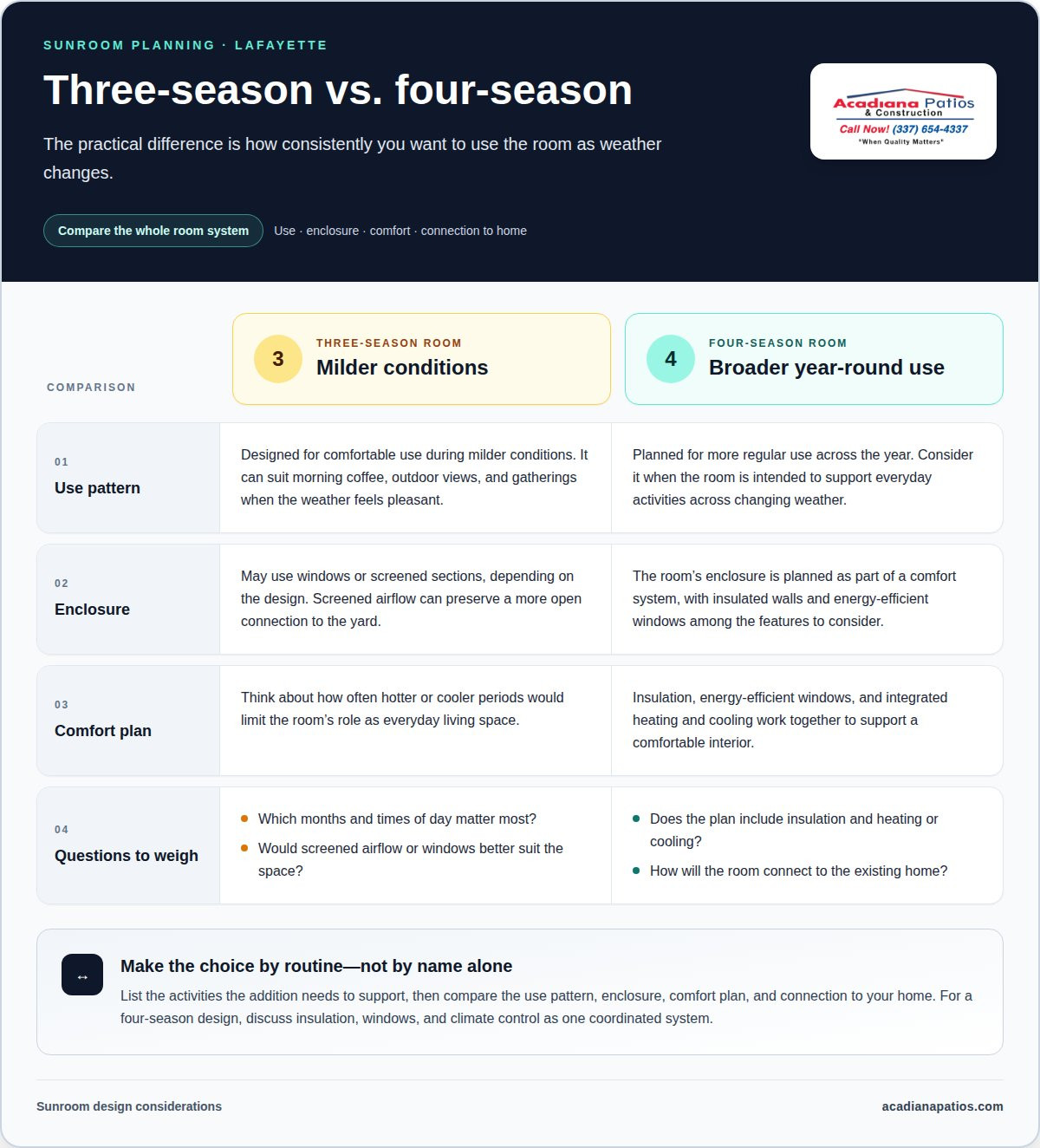
The key difference is how consistently you want to use the room through changing weather. A three-season design focuses on comfortable use during milder conditions, while a four-season design adds insulation and climate control for broader year-round use. In Lafayette, compare each option against your household routine, not just the room’s name.
A three-season room can suit morning coffee, outdoor views, and gatherings when the weather feels pleasant. Its enclosure may use windows or screened sections, depending on the design. That can preserve airflow and a more open connection to the yard. Consider how often you’ll use the room during hotter or cooler periods, and whether those conditions would limit its role as everyday living space.
A four-season room is planned for more regular use across the year. Insulated walls, energy-efficient windows, and integrated heating and cooling help shape that goal. These features work together: insulation supports the room enclosure, windows affect heat and light, and climate control helps maintain a comfortable interior. Discuss the complete system rather than selecting each component separately.
Before choosing, write down the activities the addition needs to support. A space used mainly for seasonal meals, for example, may have different priorities from a room intended for daily relaxation. Then compare:
- Use pattern: Which months and times of day matter most?
- Enclosure: Do you prefer screened airflow or windows and solid walls?
- Comfort: Does the design include insulation and heating or cooling?
- Connection: How will the new room meet the existing home?
An enclosed porch with solid walls and windows, a proper roof, heating and cooling, and direct access from inside the home may be considered living space. These features can help clarify whether a proposed layout serves as a seasonal retreat or a more integrated room. Review the plans together so the design, construction, and intended use create a seamless addition suited to your household.
Workmanship warranty and financing
A workmanship warranty and a financing plan address different parts of a sunroom project. The warranty concerns specified installation work, while financing affects how you manage project payments. Review both before approving the construction plan, especially if your design includes an enclosed room, heating and cooling, or an upgrade from a simpler layout.
Read the warranty language closely. Look for the work it covers, the coverage period, exclusions, and the process for reporting a workmanship concern. Distinguish installation-related coverage from product warranties that apply to windows or other materials. Keep the written terms with your plans and final project documents so you can refer to them if a question comes up later.
Acadiana Patios & Construction does not offer financing plans. If you’re considering a separate financing arrangement, compare its repayment schedule, interest, fees, and total repayment amount before committing. Match those obligations against your household budget and the project’s agreed payment schedule. Avoid making a decision based only on a monthly payment figure.
Use a consultation to bring the design, written scope, warranty terms, and payment plan into one conversation. Ask for the proposed work to identify key elements, such as the enclosure, window installation, and any heating and cooling components. Then compare that scope with the warranty language and your financing documents. If an upgrade changes the design, review how it affects the written scope and payment plan before approving the change.
For a sunroom project, discuss your design and construction needs with the team before you finalize the scope. Bring your room-use priorities and questions about documentation, so the conversation can focus on the details that shape your decision.
Acadiana Patios & Construction: Motorized Shades & Screens
Acadiana Patios & Construction can help bring your sunroom plans into focus, especially when you’re deciding how the finished space should function. Motorized Shades & Screens are an option to consider alongside the room’s windows and overall layout. They’re most relevant when you want shade or screening incorporated into your outdoor living plans.
The company also offers Cypress Patio Covers, Insulated Patio Covers, Screened Enclosures, Carports & Garages, Concrete Slabs & Concrete Coloring, and Cypress Pavilions, Pergolas & Arbors. These options can support related outdoor projects, such as planning a covered patio or screened area.
When you’re ready to discuss a sunroom or a related outdoor living project, contact Acadiana Patios & Construction to talk through your plans.
Shape a Sunroom Plan Around Your Home
The next step is turning your preferences into a practical plan for your home. Consider how the room should fit your daily routines, where you want shade, and whether the surrounding outdoor area needs attention too. These priorities can keep design decisions focused and make the project conversation more useful.
Homeowners comparing expert sunroom installers in Lafayette can also consider how related exterior features fit their plans. Acadiana Patios & Construction offers Motorized Shades & Screens, Carports & Garages, and Cypress Patio Covers. These options may help extend comfort and usability beyond the enclosed room.
Bring your ideas, preferred room use, and questions about the project scope into the next conversation. Contact Acadiana Patios & Construction to discuss your plans and take a thoughtful next step toward a sunroom that suits your home.
Frequently Asked Questions
Can an existing patio or porch be converted into a screened room or enclosure?
Yes, an existing patio or porch can often be screened or enclosed without rebuilding the entire structure. Start by assessing its floor, support posts, roof, and connection to the house. A screened enclosure preserves airflow while helping keep insects and debris out. A fully enclosed design changes the structure more substantially and may require different foundation and construction planning.
Does a sunroom count toward a home’s square footage or living space?
A sunroom may count as living space when it’s fully enclosed, properly insulated, has electrical access and heating and cooling, and meets the home’s construction standards. The room’s name alone doesn’t determine how it is classified. For example, a screened porch without solid enclosure and climate systems differs from an enclosed room built for regular indoor use. Local requirements can vary.
Who are the top-rated sunroom installers in Lafayette, Louisiana?
There isn’t one universal “top-rated” installer, because ratings depend on the review source and the criteria used. Acadiana Patios & Construction offers sunrooms in Lafayette, but that doesn’t establish a particular rating. To assess customer feedback, look for reviews describing projects similar to yours, such as an enclosed addition or a screened space, and note whether they discuss the completed work.
Which Lafayette sunroom contractors are licensed, insured, and experienced?
Licensing, insurance, and construction experience are separate considerations. Experience alone doesn’t establish a contractor’s licensing or insurance status. Acadiana Patios & Construction offers sunrooms and home additions in Lafayette, but those offerings shouldn’t be taken as a claim about licensing or insurance. For project records, distinguish the written scope of work from documentation that identifies the responsible contracting business and its coverage.
What types of sunrooms do Lafayette installers build, such as three-season and four-season rooms?
Sunroom designs can include three-season and four-season rooms, along with screened enclosures and custom additions. The right configuration depends on how you plan to use the space. For example, a room mainly for outdoor meals may have different priorities from one intended for everyday relaxation. Discuss the room’s intended use, enclosure, and connection to the home while comparing design options.
Do Lafayette sunroom installers offer free estimates, financing, or warranties?
Acadiana Patios & Construction offers a free estimate and free in-home design consultation, but does not offer financing plans. Review warranty terms in the written project documents, distinguishing workmanship coverage from product coverage. Keep the estimate, payment arrangements, and warranty details clear as you plan. Any financing must be arranged separately from the company’s construction services.