Patio Cover Installer South Louisiana: Comparing Materials & Designs for 2026
In South Louisiana, your patio isn’t just a home addition; it’s a battleground where relentless humidity and hurricane-force winds test every single joint and fastener. You’ve likely felt the sting of disappointment watching traditional wood structures succumb to rapid rot or realized that the intense summer sun has made your backyard a “no-go” zone for half the year. It’s a common struggle for homeowners who want to enjoy the outdoors without fighting a losing battle against termites and moisture.
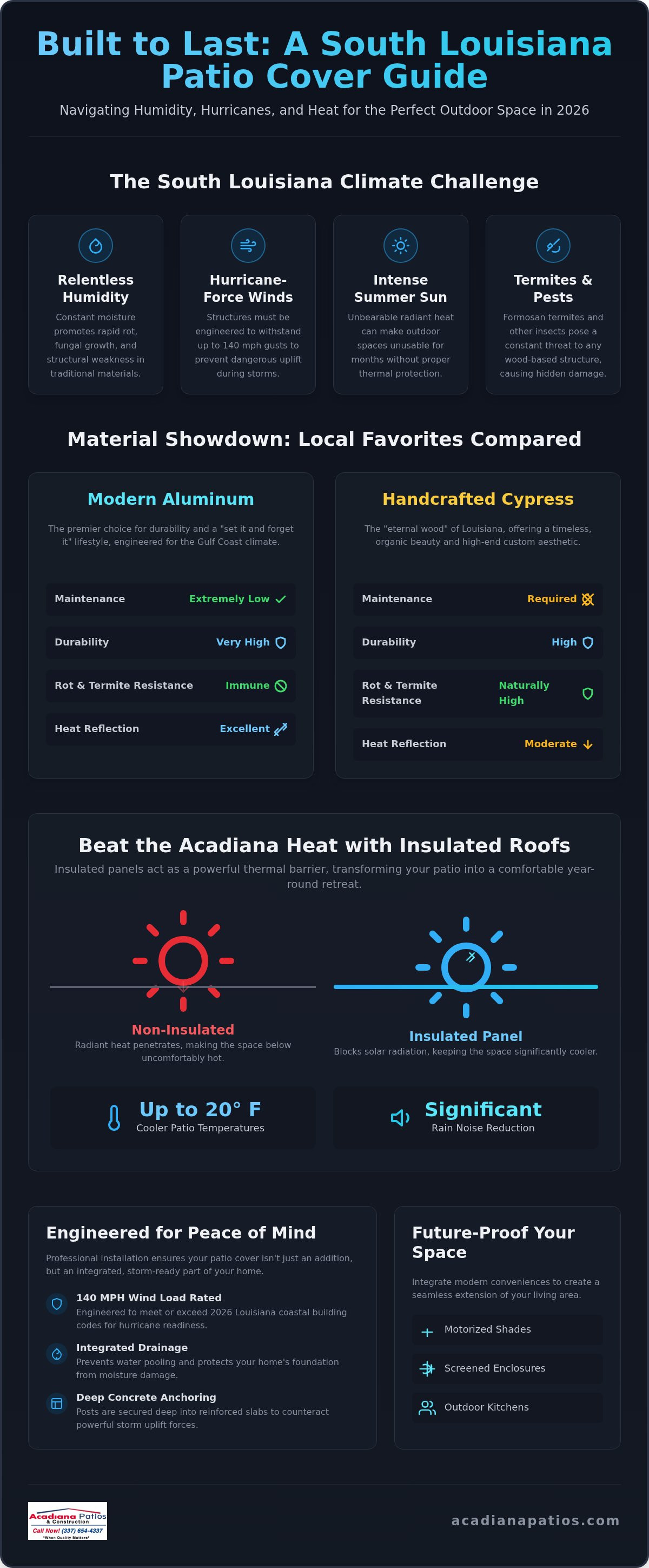
By choosing a specialized patio cover installer south Louisiana families have relied on for decades, you can finally reclaim your outdoor living space. In this 2026 guide, we will compare the long-term performance of handcrafted cypress, low-maintenance aluminum, and noise-reducing insulated systems. You will learn how modern engineering handles 140 mph wind loads and why integrated drainage is the secret to protecting your home’s foundation. From cooling your patio by twenty degrees to ensuring your structure survives the next storm season, we’re covering everything you need to build with absolute confidence.
Key Takeaways
- Learn why South Louisiana’s humidity and 140 mph wind load requirements make specific material choices and engineering standards non-negotiable for long-term durability.
- Compare the timeless aesthetic of handcrafted cypress with the low-maintenance benefits of modern aluminum to find the best fit for your home’s architecture.
- Discover how insulated patio covers act as a thermal barrier, significantly reducing radiant heat and noise during heavy Acadiana rainstorms.
- Identify the advantages of partnering with an expert patio cover installer south Louisiana relies on to ensure your project meets strict 2026 building codes and flood zone regulations.
- Explore how to future-proof your outdoor design by integrating motorized shades, screened enclosures, or outdoor kitchens to create a seamless extension of your living space.
Navigating the South Louisiana Climate: Why Your Material Choice Matters
Constructing a functional Patio in the Acadiana region requires a deep understanding of environmental stressors. Our local climate isn’t just warm; it’s a high-moisture environment where UV exposure and biological threats like Formosan termites are constant. Generic “big box” patio kits often fail in these swamp-like conditions because they lack the structural integrity to handle the specific wind loads and humidity levels we face daily. A seasoned patio cover installer south Louisiana homeowners trust knows that the “Durability Standard” here is significantly higher than in other parts of the country.
To ensure a long-lasting result, we focus on three primary materials: high-grade aluminum, insulated roof panels, and handcrafted cypress. Each material offers distinct advantages for the Louisiana landscape. Aluminum provides a rust-proof, low-maintenance solution. Insulated panels offer a thermal break against the punishing sun. Cypress, while traditional, provides a natural resistance to decay when sourced and treated correctly by a master builder.
Humidity and Rot: The Silent Killers of Louisiana Patios
In Lafayette and surrounding areas, humidity isn’t just a comfort issue; it’s a structural threat. Traditional wood structures often create moisture traps where water sits against the grain, leading to rapid fungal growth and wood rot. Even pressure-treated lumber often isn’t enough to withstand the year-round dampness of South Louisiana without meticulous maintenance. This is why many families now opt for non-porous materials like high-grade aluminum. It doesn’t absorb moisture, it won’t warp in the sun, and it’s completely impervious to the termite damage that plagues traditional structures in our region.
Hurricane Readiness and Wind Load Requirements
Living on the Gulf Coast means your outdoor structures must be prepared for the worst. Current 2026 building codes in Louisiana require covers to be engineered for specific wind speeds, with some areas needing to withstand up to 140 mph gusts. A professional patio cover installer south Louisiana residents rely on ensures every post is anchored deep into a reinforced concrete slab. This professional anchoring prevents the “uplift” effect that can tear generic covers away during tropical storms. Master-built covers aren’t just decorative additions; they are engineered systems designed to provide peace of mind during our most volatile weather seasons.
Aluminum vs. Handcrafted Cypress: Comparing the Two Local Favorites
Every Lafayette homeowner eventually faces the “Modern vs. Traditional” debate when planning an outdoor upgrade. Choosing between aluminum and cypress often comes down to your lifestyle priorities. While one offers unmatched efficiency and a “set it and forget it” lifestyle, the other provides a timeless, organic beauty that defines Louisiana luxury. Both materials have deep roots in our local architecture, yet they serve very different functional needs.
The Durability and Low Maintenance of Aluminum
Aluminum is the workhorse of South Louisiana outdoor living. It is the premier choice for carports and covers where durability is the main priority. High-grade aluminum resists rust, peeling, and termite infestations without the need for annual staining or sealing. When you work with a professional Patio cover installation Lafayette LA expert, you’ll see how these systems offer the benefits of cool roofs by reflecting solar radiation. This keeps the space underneath noticeably more comfortable than traditional dark-shingled roofs during July heat waves.
The Timeless Appeal of Handcrafted Cypress
Handcrafted cypress remains a staple for those seeking a high-end, custom aesthetic. Known as the “eternal wood” in Louisiana, cypress contains natural oils that repel local insects and resist rot. It is the ideal material for cypress pavilions, pergolas, and arbors that require a sense of weight and history. A patio cover installer south Louisiana families have trusted for decades can customize these structures with rustic beams or elegant, tapered columns that match your home’s unique character perfectly.
Weight is a significant factor in your decision. Aluminum is remarkably lightweight, making it compatible with most existing concrete slabs without requiring additional reinforcement. Cypress is much heavier. It requires deep, structural footings to support the massive timber frames and ensure the structure remains stable during high winds. While the initial investment for cypress is typically higher due to material costs and specialized labor, the visual impact is unparalleled. Aluminum offers a lower entry cost and virtually zero long-term maintenance expenses. Discussing your specific vision with a master builder can help clarify which material suits your backyard and budget best.
Insulated vs. Non-Insulated Roofs: Beating the Acadiana Heat
On a typical 100-degree afternoon in Lafayette, a standard single-layer metal roof acts like a heat conductor. It absorbs the sun’s energy and radiates it directly onto your patio, making the space feel like an oven. This thermal transfer is the biggest obstacle to enjoying your backyard in the summer. Choosing an experienced patio cover installer south Louisiana families rely on means getting professional advice on how to break this heat cycle with the right technology. While a simple shade structure is better than nothing, the science of thermal breaks is what truly makes a space livable year-round.
The Cooling Factor: R-Values and Thermal Breaks
Insulated patio covers use a “sandwich” panel design. These consist of high-density foam cores bonded between two durable aluminum skins. This construction creates a thermal break that prevents heat from passing through the roof. On a triple-digit day, the temperature under an insulated cover can be significantly lower than under a non-insulated one. This high R-value doesn’t just block heat; it also provides incredible sound dampening. You won’t have to shout to be heard during a heavy Louisiana downpour, as the foam absorbs the drumming of the rain.
Because these panels are structural, they offer several design advantages:
- Integrated Wiring: Internal channels allow for hidden wiring for recessed LED lighting.
- Ceiling Fan Support: The panels are strong enough to support heavy, high-output fans without visible bracing.
- Future-Proofing: These roofs are the first step toward a full sunroom conversion if you decide to enclose the space later.
Non-Insulated Flat Pan and W-Pan Options
Non-insulated covers still have a practical place in South Louisiana, though they serve a different purpose. They are excellent for utility applications where climate control isn’t the primary goal. We often recommend these for an RV shelter vs carport Louisiana project. Flat pan and W-pan designs are cost-effective and durable, providing essential protection for vehicles and outdoor equipment.
However, basic aluminum structures do face challenges in our climate. In our high humidity, non-insulated metal can suffer from condensation, often referred to as “sweating.” While this is manageable in a carport or tool shelter, it’s less than ideal for a dining area or outdoor lounge. When you hire a patio cover installer south Louisiana residents trust, they’ll help you weigh the cost savings of a non-insulated roof against the long-term comfort of an insulated system. For most families looking to create a true outdoor room, the thermal protection of an insulated panel is a necessary investment.
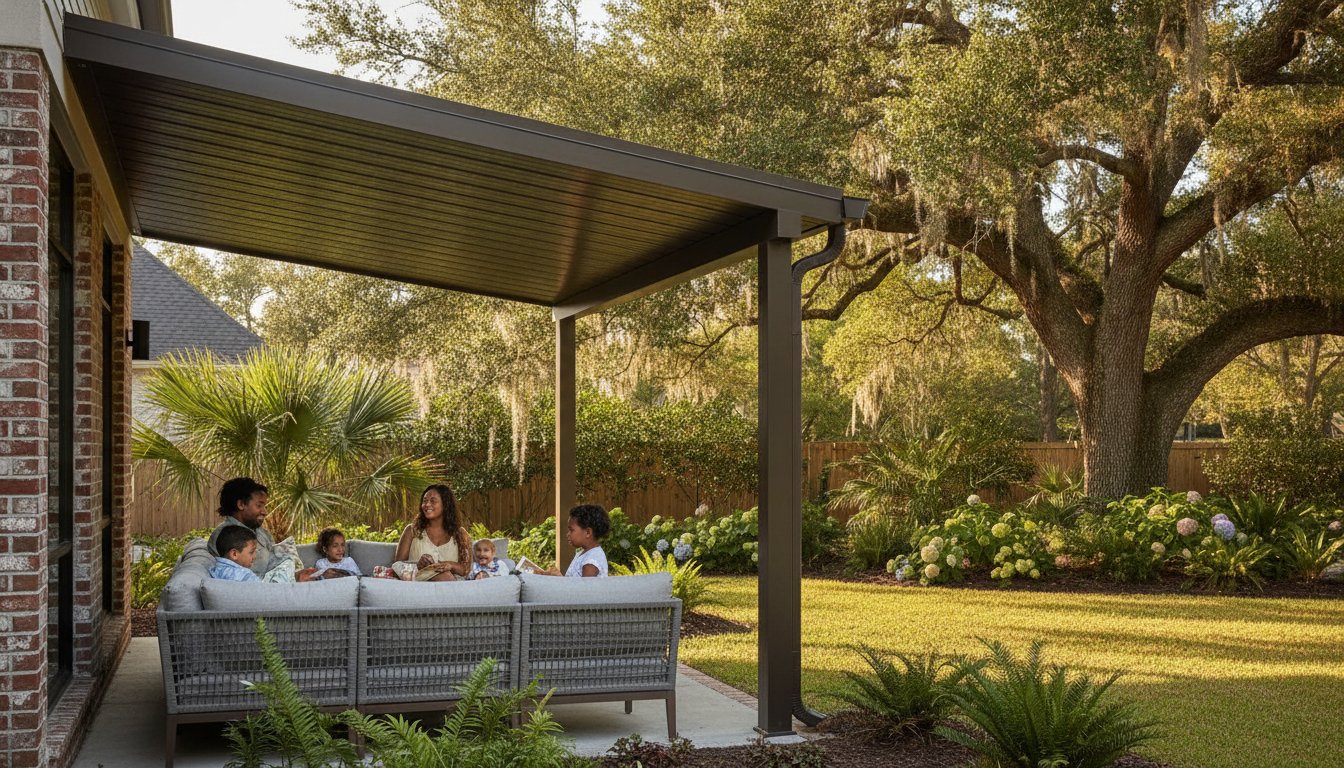
Expanding Functionality: From Simple Covers to Screened Enclosures
A durable roof is only the first step toward reclaiming your backyard. In Lafayette and the surrounding parishes, the “Bug Factor” is a reality that can turn a beautiful evening into a miserable experience. Mosquitoes and “no-see-ums” are more than just a nuisance; they are a lifestyle killer that forces many families back indoors. This is why many homeowners eventually decide to evolve their shade structure into a fully enclosed or hybrid space. When you consult with a patio cover installer south Louisiana residents trust, you’ll find that modern enclosure technology has advanced significantly for 2026.
The Benefits of a Screened-In Enclosure
Fixed screened enclosures offer the most consistent protection against the local environment. By creating a physical barrier, you eliminate the need for heavy chemical sprays or citronella candles that only provide partial relief. These structures are particularly effective for homes with outdoor kitchens or dining areas, ensuring that food preparation remains hygienic and pest-free. If you are considering this permanent upgrade, working with screened enclosure builders Lafayette families recommend ensures that your mesh is durable enough to withstand pet claws and high-velocity winds.
Motorized Shades: The Hybrid Solution
For those who want the best of both worlds, motorized retractable shades are the premier choice. These systems allow you to enjoy an open-air environment when the breeze is pleasant and the bugs are at bay. With the touch of a button, you can deploy high-tech mesh that provides instant privacy and wind protection. This flexibility is a hallmark of modern motorized patio screens Louisiana homeowners use to future-proof their investments.
These hybrid systems offer several sophisticated features:
- Smart Home Integration: Control your entire patio environment, including shades and lighting, directly from your smartphone or voice assistant.
- Furniture Protection: Retractable shades block the harsh afternoon sun, preventing your outdoor cushions and rugs from fading over time.
- Weather Shielding: While not a solid wall, high-density screens effectively block wind-blown rain, keeping your patio dry during sudden summer squalls.
A professional patio cover installer south Louisiana homeowners hire will ensure these systems are integrated seamlessly into the structural beams of your cover. This meticulous approach prevents the “afterthought” look of generic screen kits. Whether you choose the permanence of a fixed room or the versatility of motorized technology, the goal is a seamless extension of your home. To see how these functional upgrades can fit into your backyard vision, view our master-built enclosure options.
Designing Your Outdoor Living Space with a Local Expert
A successful backyard transformation goes beyond selecting the right shingles or beams. It requires a holistic design that considers the unique geography of the Gulf Coast. Choosing a patio cover installer south Louisiana residents have trusted for decades ensures that your project accounts for Acadiana’s expansive clay soil. Without proper foundation work and professional concrete slabs, even the most beautiful structure can shift or crack over time. A master builder provides a “one-stop” solution; they manage everything from the initial concrete pour and custom coloring to the final installation of an outdoor kitchen or fireplace.
Custom Design vs. Cookie-Cutter Kits
Custom design is the difference between a structure that looks like a tacked-on afterthought and one that feels like an original part of your home. Professional CAD design allows us to match your existing roofline and shingle style perfectly. This precision also ensures that gutters and drainage systems are integrated from the start, directing heavy rainfall away from your home’s foundation. Generic kits often lack these critical tie-ins, leading to water pooling and long-term structural issues. By prioritizing a seamless architectural match, you protect your home’s resale value and aesthetic integrity.
Before you commit to a project, use this final checklist to vet your contractor:
- Engineering: Are the plans engineered to meet 2026 Louisiana wind load requirements?
- Permitting: Does the company handle all local parish permits and inspections?
- Soil Conditions: How will the foundation design account for the local clay and moisture levels?
- Integration: Can they manage electrical for fans and plumbing for outdoor kitchens in-house?
The Acadiana Patios Difference: 40 Years of Craftsmanship
Our legacy in Lafayette began in 1985. Since then, we’ve evolved from building simple carports to designing luxury cypress pavilions and high-tech insulated systems. As a family-operated business, we don’t just finish a job; we stand by our work for the long haul. We understand that your outdoor space is an investment in your family’s quality of life. When you’re ready to move from a basic sketch to a master-built reality, Contact Acadiana Patios & Construction for a custom design consultation. Our team is dedicated to providing the precision, excellence, and local reliability your home deserves.
Build Your Acadiana Outdoor Legacy
Reclaiming your backyard from the South Louisiana heat and humidity requires more than just a simple roof; it demands a structure engineered for our specific environment. Whether you prioritize the “set it and forget it” durability of aluminum or the organic luxury of handcrafted cypress, your choice will define how you experience your home for years to come. By integrating insulated panels and motorized screens, you can create a truly functional living area that remains comfortable even during the peak of July.
As a premier patio cover installer south Louisiana homeowners have relied on since 1985, Acadiana Patios & Construction brings over 40 years of local expertise to every project. Our family-operated team maintains an A+ BBB rating by focusing on the finer details, from hurricane-ready wind load engineering to precision concrete work. We don’t just build covers; we create seamless extensions of your home designed to withstand everything the Gulf Coast throws our way.
While our focus remains on the Acadiana area, we believe that every homeowner deserves this level of precision. For those living in other regions and looking for similar high-quality outdoor living solutions, such as the work provided by Polis Remodeling, one of the premier deck builders Lexington KY, it is vital to partner with professionals who understand their specific environment.
Ready to start your transformation? Get a Free Estimate for Your Custom Patio Project and take the first step toward the outdoor lifestyle you deserve. We look forward to building something exceptional together.
Frequently Asked Questions
What is the best material for a patio cover in South Louisiana?
Aluminum and insulated panels are the best materials for durability and heat control in South Louisiana. Aluminum is completely immune to the rot and termite damage that plagues traditional wood in our high humidity. For those seeking maximum comfort, insulated panels are superior because they provide a thermal break that blocks radiant heat. While handcrafted cypress is excellent for luxury aesthetics, aluminum offers the most reliable, maintenance-free performance for our local climate.
Can a patio cover withstand hurricane-force winds?
Yes, a professionally installed patio cover can withstand hurricane-force winds when engineered to meet local building codes. In Lafayette Parish and surrounding coastal areas, we design structures to handle wind loads up to 140 mph. This requires deep structural anchoring into reinforced concrete slabs and high-grade fasteners. Working with a master builder ensures that uplift forces are properly calculated, providing essential peace of mind during tropical storm seasons.
Do I need a permit for a patio cover installation in Lafayette, LA?
Yes, you need a building permit for any permanent patio cover installation in Lafayette, LA. While uncovered concrete slabs might be exempt, adding a permanent roof structure triggers permit requirements under the Louisiana State Uniform Construction Code. A professional patio cover installer south Louisiana residents trust will typically handle the entire permitting process for you. This ensures your design meets all safety standards and local zoning regulations before construction begins.
How much does an insulated patio cover reduce the temperature?
An insulated patio cover can reduce the temperature underneath by as much as twenty degrees on a triple-digit afternoon. Unlike standard metal roofs that absorb and radiate solar energy downward, insulated panels utilize high-density foam cores to block thermal transfer. This creates a noticeably cooler environment for outdoor dining or relaxation. It effectively turns your patio into a usable outdoor room even during the most intense summer heat waves in Acadiana.
Is cypress wood better than aluminum for outdoor structures?
Neither material is objectively better, as they serve different homeowner needs and architectural styles. Cypress is the premier choice for traditional beauty and custom craftsmanship, as its natural oils provide resistance to rot and insects. Aluminum is the superior choice for those who want a maintenance-free lifestyle and long-term durability without the need for regular staining. Aluminum also offers better heat reflection, while cypress provides a heavy, structural presence for luxury designs.
How long does the installation of a custom patio cover typically take?
Most custom patio cover installations take between one and three weeks to complete once permits are secured. A simple aluminum cover might be finished in just a few days, while complex cypress pavilions or structures integrated with outdoor kitchens require more time. The timeline also depends on foundation work, such as pouring a new concrete slab. Your installer should provide a detailed project schedule to ensure a smooth and predictable construction process.
Can I add screens to my patio cover later on?
Yes, you can add screens to your patio cover later if the structure was originally designed to support them. It’s wise to inform your patio cover installer south Louisiana expert of this plan during the initial design phase. This allows them to install the necessary framing or header heights for either fixed screened enclosures or motorized retractable shades. Future-proofing your structure now saves significant labor costs when you decide to upgrade your space.
How do I maintain an aluminum patio cover in high humidity?
Maintaining an aluminum patio cover in high humidity requires very little effort compared to wood structures. Unlike timber, aluminum doesn’t require painting or sealing to prevent rot or moisture damage. You should occasionally wash the structure with a mild soap solution to remove pollen, dust, and surface mildew. Checking the gutters and downspouts twice a year to ensure they are clear of debris will prevent water overflow and protect your home’s foundation.