

Cypress Pavilion Builder in Louisiana: Plan a Custom Outdoor Retreat
A well-planned pavilion starts with your yard, not a catalog. Choosing a cypress pavilion builder in Louisiana means considering how the structure will fit your home and how you’ll use it, while accounting for local sun, humidity, and rain. Before settling on a design, think through the pavilion’s location, size, access, and how construction will fit into the rest of your outdoor space.
A successful pavilion is planned around the property and the people who will enjoy it. This guide covers the decisions to make before building, from choosing a location and defining how you’ll use the space to shaping a design that complements your home. It also explains why local experience matters when planning an outdoor structure for Acadiana conditions.
Acadiana Patios & Construction has served Lafayette and Acadiana since 1985, providing custom design and installation for cypress pavilions, pergolas, and arbors. The following planning steps can help bring the design, site preparation, and construction into one considered project, so you can create an outdoor retreat that feels at home in your yard.
Key Takeaways
- Start with how you want to use the pavilion, then shape the layout around your yard, home, and existing outdoor features.
- Review the site to clarify placement, access, shade, and how the new structure will connect with the rest of your outdoor space.
- When choosing a cypress pavilion builder Louisiana homeowners can look for local experience, custom design capability, and coordinated installation.
- Use the planning matrix to turn priorities like dining, relaxing, or gathering into practical design questions before construction begins.
- Acadiana Patios & Construction brings a custom pavilion project from early planning through design and installation.
Why a Cypress Pavilion Fits Louisiana Outdoor Living
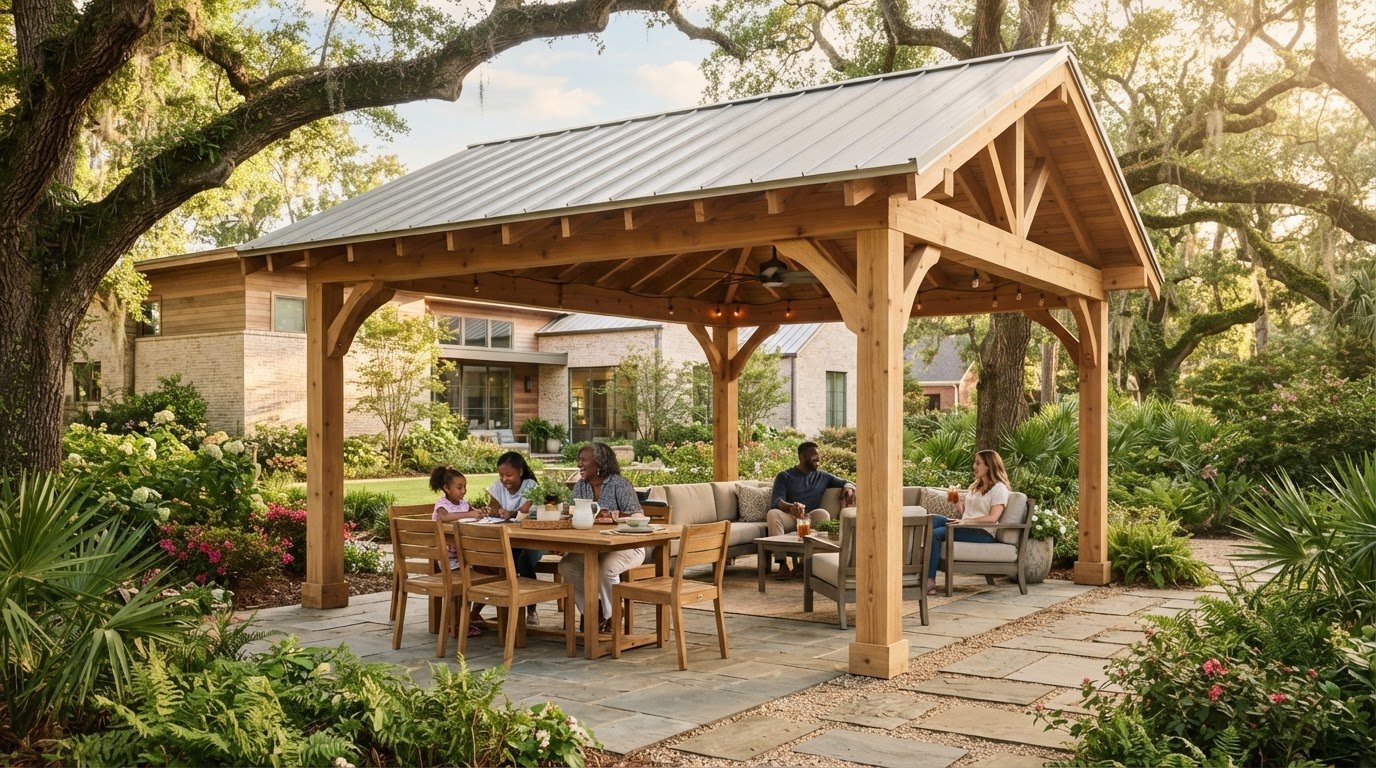
A cypress pavilion is a roofed, open-air structure that creates a defined outdoor gathering space without enclosing it like a room. It can give a patio table, lounge chairs, or an outdoor kitchen a dedicated place in the yard while keeping the space connected to its surroundings.
That balance works for outdoor routines that change throughout the day. A pavilion might provide shade for a weekday meal, a place to sit between gardening tasks, or a setting for friends and family to gather. Its roof gives the space a clear purpose, while open sides preserve views of the home and yard. The result is an outdoor area that is more defined than an exposed patio but remains open to the landscape.
Cypress also has a strong connection to the region. For background on the tree and its native habitat, see Bald Cypress (Taxodium distichum). The right material alone does not determine whether a pavilion suits a property. Its design should also reflect the site and how you plan to use the space.
What makes a pavilion different from an enclosed outdoor room?
A pavilion has a roof and an open-air layout. An enclosed outdoor room has walls or screens that create a more separated environment. A pavilion can suit dining, relaxing, or gathering while keeping the yard in view. A pergola, by comparison, is typically recognized by its open framework overhead. The best configuration depends on the activities you want to support and the conditions the space needs to accommodate.
How Louisiana conditions shape outdoor living plans
Sun exposure, humidity, and rainfall are practical design considerations in Louisiana. They can affect where a pavilion sits, how its shade relates to the house, and whether the layout works for dining or conversation. Conditions can vary across a single yard: a spot near the home may feel different from one exposed to afternoon sun.
Start with a typical use. For outdoor dining, consider whether the table and chairs will fit and how people will move between the pavilion and the house. For a place to unwind, think about the sun’s direction during the hours you expect to use the space and how the seating will face the yard. These choices help guide placement and proportions before the design is finalized.
Include rain in the planning conversation. Consider how the pavilion will relate to nearby doors, paths, and existing outdoor features so the layout works in wet weather as well as on a clear day. Cypress is a material choice, not a promise of maintenance-free ownership or a particular service life. Material care and construction details should be considered as part of a project-specific design. A locally experienced cypress pavilion builder Louisiana homeowners work with can connect site conditions and intended uses in a custom plan.
How to Plan a Cypress Pavilion for Your Louisiana Property
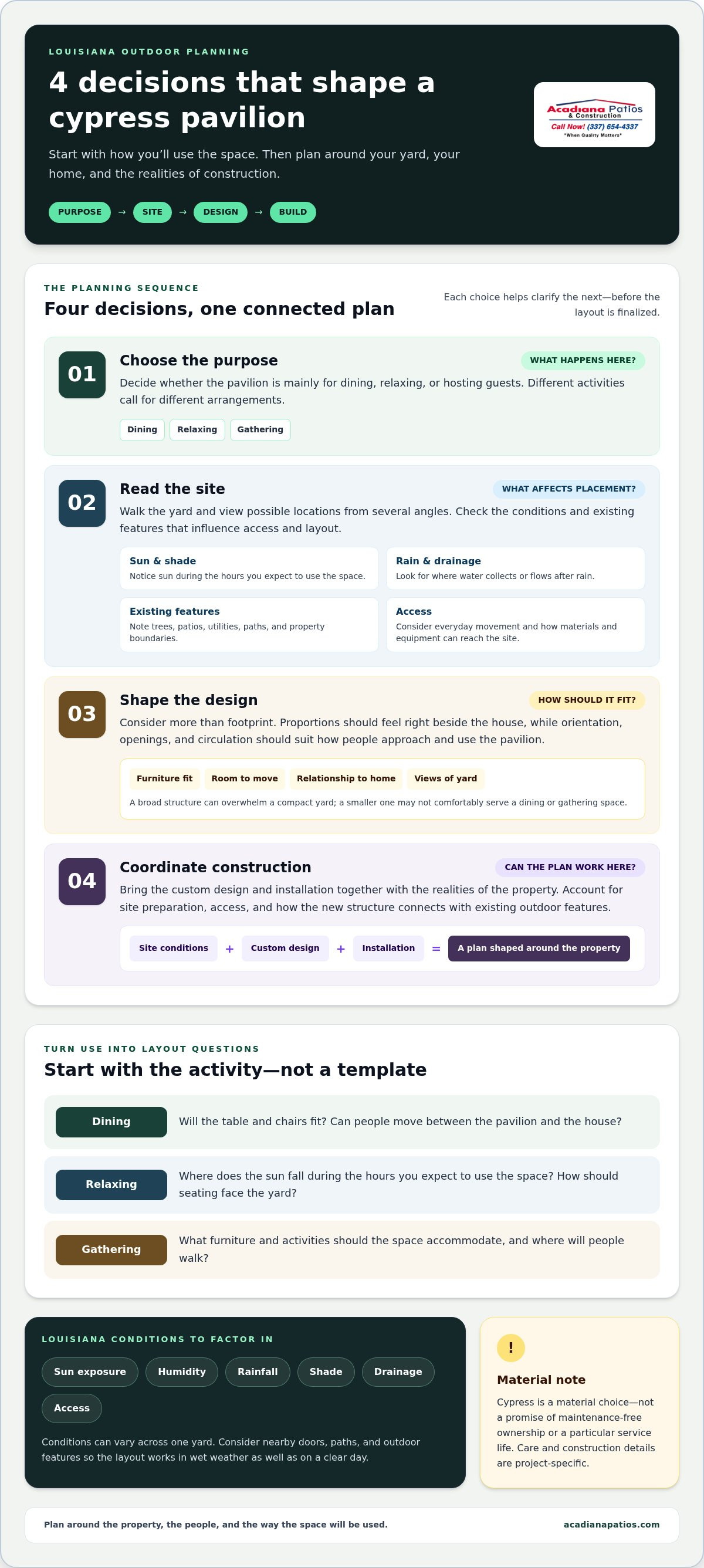
A successful pavilion plan starts with how you’ll use the space, then accounts for the yard, layout, and construction details. Define the pavilion’s purpose, assess the site, shape a layout, and coordinate design and construction around the property. This sequence keeps practical needs in view before size and placement decisions become fixed.
Choose the pavilion location and intended use
List the activities you want the pavilion to support. Dining, relaxing, and hosting guests may call for different arrangements, even under the same roof. Consider the space chairs need when pulled out, where people will walk, and whether the pavilion should connect easily to a kitchen door or an existing patio.
Then walk the yard and view potential locations from several angles. Note trees, patios, utilities, property boundaries, and other features that may affect placement or access. Think about how construction materials and equipment could reach the site. A location that looks ideal from the house may be difficult to access or may interrupt a path used every day.
Shape a design that suits the home and site
Footprint is only one part of the design. The pavilion’s proportions should feel appropriate beside the house, and its orientation and openings should suit how you’ll approach and use it. A broad structure can overwhelm a compact yard; a smaller one may not comfortably serve a dining area or gathering space. Custom design helps account for these relationships instead of forcing the property into a standard template.
Assess shade, drainage, and access as part of the site conversation. Observe where the sun falls during the hours you expect to use the pavilion, and note where water collects or flows after rain. These observations help inform placement and layout, while project-specific design accounts for the property as a whole. Existing patios, trees, and the home’s appearance all contribute to the plan.
For homeowners comparing options for covered outdoor space, the Louisiana patio cover installation guide offers another perspective on planning a structure that relates to the home. A patio cover and a freestanding pavilion suit different layouts. The right fit depends on the property and how you want to use the area.
- Purpose: Identify the main activities and furniture the space should accommodate.
- Site: Note access, existing features, sun exposure, drainage, and property constraints.
- Design: Consider the footprint, proportions, circulation, and relationship to the home.
- Construction: Coordinate the custom design and installation with the realities of the site.
Bringing these observations to a cypress pavilion builder Louisiana homeowners choose for custom projects can help turn broad ideas into a property-specific plan. Acadiana Patios & Construction provides custom design and installation for residential outdoor structures. Learn about custom cypress pavilions and how a pavilion can be tailored to your home and site.
What to Look for in a Cypress Pavilion Builder in Acadiana
A custom pavilion depends on more than its appearance. Local experience, design capability, project scope, and installation all affect how well the finished structure fits the home and its intended use. Acadiana Patios & Construction provides custom design and installation for residential outdoor structures, tailoring the project to the property.
Why relevant local experience matters for a custom pavilion
Experience serving the area provides useful context for planning outdoor projects around Acadiana homes and yards. Acadiana Patios & Construction has served Lafayette and Acadiana since 1985. Its outdoor-structure offerings include custom cypress pavilions, pergolas, and arbors, giving homeowners options to consider as they plan an outdoor space.
Local history is one consideration. For a pavilion project, relevant experience with the structure and the ability to adapt its design to a residential setting also matter. Acadiana Patios’ work with cypress pavilions, pergolas, and arbors connects directly to the open-air structures homeowners may be considering.
- Local experience: Acadiana Patios has served Lafayette and Acadiana since 1985, bringing an established local presence to custom outdoor projects.
- Design capability: Custom design plans the pavilion for the residence and project, rather than relying on a one-size-fits-all structure.
- Scope clarity: A clear project scope connects the planned design with the work needed to build it. Discussing the intended use and design helps define the project’s direction.
- Installation: Acadiana Patios provides installation as part of its custom outdoor-structure work, connecting the design with construction at the home.
How custom design and installation support one project
Design and installation are connected stages. Design establishes what the pavilion should accomplish and how it should relate to the residence. The project scope then guides the work needed to install the custom structure. Keeping these stages connected helps carry the homeowner’s priorities through to the finished outdoor space.
Materials and project details also shape the construction plan. A cypress pavilion should be considered in the context of its intended use, design, and setting, not treated as a standard template with a fixed layout. Acadiana Patios tailors residential outdoor-structure design and installation to each project, giving homeowners room to consider how the pavilion will function and look alongside the home.
As you compare your priorities with the project, focus on whether the builder’s experience and services match the work involved. Homeowners seeking a cypress pavilion builder Louisiana residents can turn to for a custom project can consider Acadiana Patios’ local history, relevant structure offerings, and combined design and installation capabilities.
Plan a Cypress Pavilion Around Your Lafayette Yard
A useful pavilion plan reflects how your household spends time outdoors and how the available space connects to the home. Before design begins, make a short project brief: identify the main activities, note practical site limits, and separate must-haves from optional details. This gives the design conversation a clear starting point without locking you into a standard layout.
Turn household priorities into a project brief
Rank intended uses such as dining, relaxing, or hosting guests. Note how many people you’d like to accommodate most often, how the pavilion should connect to the house, and which features matter most for everyday use. Separate functional needs, such as convenient access, from preferences such as a particular visual style. A concise brief helps guide custom design decisions and keeps household priorities at the center.
Use this planning matrix to identify questions worth resolving before design:
- Activities: What will happen under the pavilion most often, and what furniture or equipment needs space?
- Gathering size: Should the layout work mainly for everyday household use, or also for larger get-togethers?
- Site layout: Where are existing patios, trees, walkways, utilities, and other property constraints?
- Access: How will people move between the home, pavilion, yard, and nearby outdoor features?
- Shade and drainage: Where does sun fall during planned use, and how does rain affect the proposed location?
- Home connection: How should the pavilion’s proportions and appearance relate to the residence?
Coordinate the pavilion with existing outdoor features
Plan the pavilion as part of the yard’s overall arrangement, not as an isolated addition. An existing patio might provide a natural transition from the house, while a deck could shape how people approach a separate gathering area. If your plan includes connecting a pavilion with a deck, consider how the Lafayette deck planning guide can inform that decision. Outdoor kitchens, walkways, and landscaping also affect circulation and how the finished space works as a whole.
Sketching the yard can make these relationships easier to discuss. Mark the home, current outdoor features, possible pavilion locations, and the paths people use. Compare each location with your priorities. A dining-focused pavilion may work best with convenient movement to the house, while a quiet seating area may call for a different relationship to the yard.
Broader yard changes can affect the pavilion’s placement and scope, so consider the full property plan. The Acadiana backyard renovation planning checklist provides additional context for organizing outdoor projects. Applicable permits and building requirements depend on the project and jurisdiction, so include a review of relevant local requirements in your planning before construction.
With your priorities, site notes, and questions gathered, Acadiana Patios can shape a custom design around your Lafayette property. Explore custom cypress pavilion design and take the next step toward a plan that fits your yard.
Build Your Custom Cypress Pavilion with Acadiana Patios
A custom pavilion project takes shape through a series of clear decisions: what the structure should make possible, how it can fit the property, and how design and installation will come together. Acadiana Patios & Construction brings these stages into a tailored outdoor-structure project, helping homeowners move from early ideas toward a pavilion planned for their home and yard.
What to prepare before beginning a pavilion project
You don’t need a finished blueprint to begin. A few observations can make the initial design conversation more productive. Gather images that reflect what you like, write down how you expect to use the pavilion, and note the features and constraints at the proposed location. These starting points clarify priorities while leaving room for project-specific design.
- Inspiration: Save examples of pavilion appearances or details that appeal to you, without assuming your project must copy them exactly.
- Use needs: Note whether the space is intended for dining, relaxing, hosting, or a mix of activities, along with the furniture or equipment you expect to include.
- Site observations: Record nearby patios, trees, walkways, and other existing features that could influence placement and access.
- Connections: Think about how people should move between the pavilion, home, and other outdoor areas, and how the new structure should relate visually to the residence.
These notes help separate essential functional needs from preferences to explore during design. They give the project a practical foundation without presuming a particular size, construction detail, or schedule.
A local team for design and installation
Acadiana Patios & Construction has served Lafayette and Acadiana since 1985. Its residential outdoor-structure work includes custom cypress pavilions, pergolas, and arbors, with design and installation tailored to each project. This local experience is relevant as homeowners plan a structure around their property and outdoor living priorities.
The project begins with your intended use and the information you’ve gathered about the site. Those priorities inform a custom design, while the project scope and selected materials guide the construction plan. Design and installation stay connected, so the structure is planned as a complete addition to the outdoor space rather than a one-size-fits-all product.
Cypress pavilions are one part of Acadiana Patios’ broader outdoor living construction experience. The company also works on outdoor structures such as pergolas and arbors, helping homeowners consider how a pavilion fits within their wider plans for the yard. A cypress pavilion builder Louisiana homeowners choose for a custom project should understand how the design needs to respond to both the structure’s purpose and its setting.
Ready to take the next step? Explore custom cypress pavilions from Acadiana Patios and start shaping an outdoor retreat for your home.
Start Shaping Your Outdoor Retreat
Give your pavilion idea a simple starting point: picture an ordinary day in the yard and decide what you’d like the space to make possible. Maybe it’s a quiet place to unwind, a setting for shared meals, or room to welcome friends. You don’t need every design detail settled. A few notes about how you’ll use the space and what matters most can turn a broad idea into a clear project direction.
Working with a cypress pavilion builder Louisiana homeowners can rely on for custom planning can connect those priorities with a design suited to your home. Acadiana Patios brings outdoor structure design and installation together, with cypress pavilions, pergolas, and arbors shaped for residential projects. Explore custom cypress pavilions and start shaping an outdoor retreat that feels naturally part of your Lafayette home.
Frequently Asked Questions
Do I need a permit to build a cypress pavilion in Lafayette, Louisiana?
A permit is generally required for most new residential structures in Lafayette Parish, and a pavilion project may fall under that requirement. The Lafayette Consolidated Government handles permitting in the parish. Requirements depend on the project and its location, so include permit review in your early planning before construction starts. If your property is outside Lafayette Parish, the applicable permitting authority and requirements may differ.
Can a cypress pavilion be built over an existing concrete patio?
It may be possible, but the existing patio’s condition and suitability for the planned structure need to be considered first. Share details about the slab, including visible cracking or uneven areas, during project planning. The pavilion’s size, support locations, and relationship to the home can affect the design. A cypress pavilion builder Louisiana homeowners work with can tailor the plan to the specific site rather than assume every patio is ready to build over.
Can an outdoor kitchen be included beneath a cypress pavilion?
Yes, an outdoor kitchen can be part of the pavilion plan. Acadiana Patios offers outdoor kitchens and custom cypress pavilions, so homeowners can plan how the two features should work together. Think through the cooking area, dining or seating space, and the paths people will use between them. The project design should account for the selected kitchen components and site conditions so the arrangement suits your household’s routines.
How should I maintain a cypress pavilion in Louisiana?
Follow care guidance that matches the cypress, finish, and construction details used for your pavilion. Avoid assuming every wood structure needs the same products or maintenance schedule. Periodically look over the structure for visible changes, clear leaves or other debris from surrounding areas, and note any spots that may need attention. For specific care recommendations, refer to the guidance for your project’s materials and finishes.
How long does it take to build a custom cypress pavilion?
The project timeline varies with the design, site conditions, selected materials, and construction scope. Site preparation or permitting needs can also affect when work proceeds. A straightforward design and a project involving additional outdoor features may require different planning and construction sequences. Discuss the intended use and site details during project planning so the expected schedule reflects the actual work, rather than relying on a general estimate.
Can a cypress pavilion be designed to match my home?
Yes. A custom pavilion can be designed with the home’s appearance and the yard’s layout in mind. Consider the house’s proportions, nearby outdoor features, and how the pavilion will connect to doors, patios, or gathering areas. Sharing reference images and explaining which details matter most can help shape the design conversation. Acadiana Patios provides custom design and installation tailored to residential outdoor projects.
Is a cypress pavilion the same as a pergola?
No. A pavilion is generally planned as a roofed outdoor gathering structure, while a pergola is commonly recognized by its open framework overhead. That difference can shape how each structure feels and functions in a yard. For example, a homeowner seeking a defined covered area may consider a pavilion, while someone wanting an open framework may explore a pergola. The best fit depends on the intended use and property layout.