

How to Protect a Cypress Pergola and Know When to Reseal
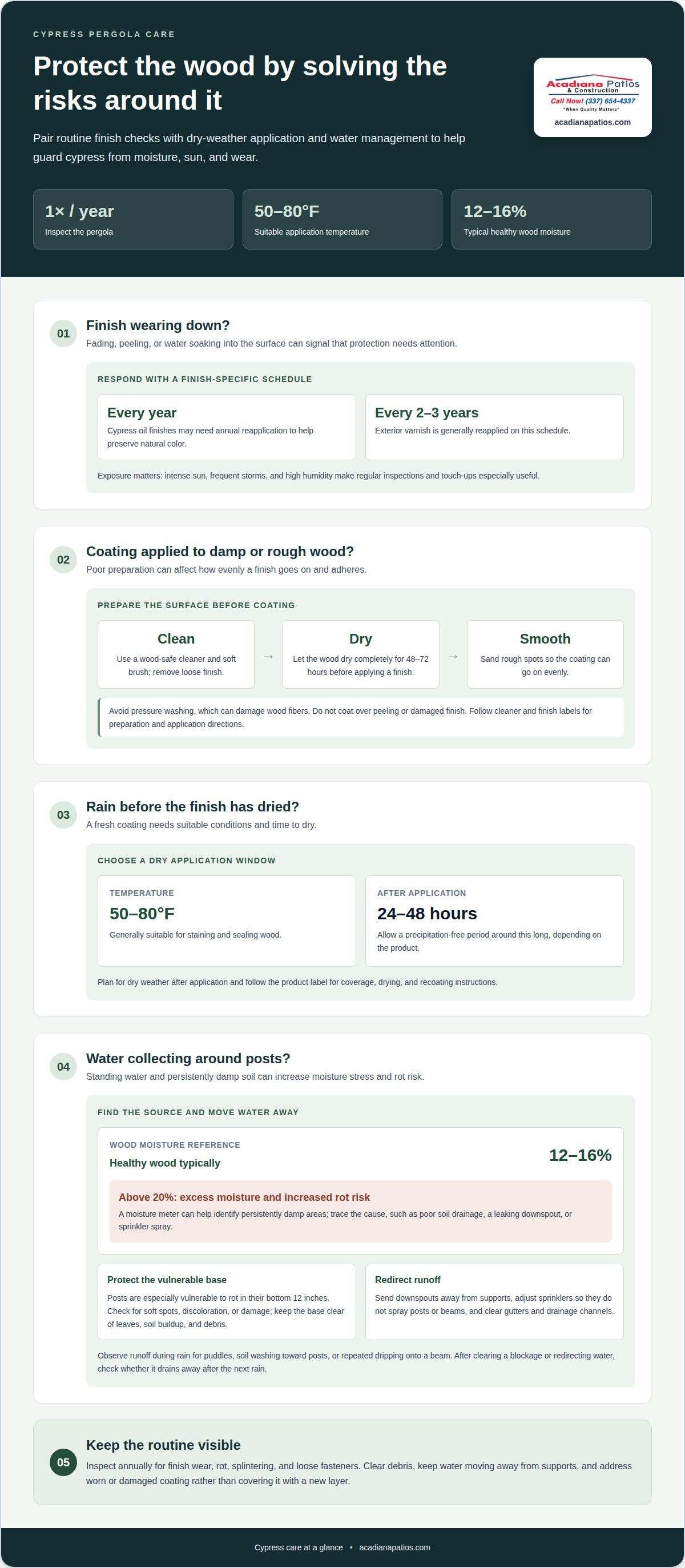
A cypress pergola needs more than a calendar reminder to stay protected. Inspect it annually, and plan to refresh the finish according to its type: oil finishes may need reapplication every year, while exterior varnish is typically reapplied every two to three years. The right approach to how to protect a cypress pergola also depends on its exposure to sun, rain, and standing water.
It’s easy to assume that naturally durable cypress can be left alone, but a finish helps shield the wood from moisture, ultraviolet rays, and temperature changes. Fading, peeling, or water soaking into the surface can signal that the protection needs attention.
This guide explains how to assess the finish, manage drainage around posts, and choose application weather. You’ll also learn why clean, completely dry wood matters and why the product label should guide drying times and recoating. For staining and sealing, a suitable temperature is generally between 50 and 80 degrees Fahrenheit, with dry weather needed after application.
Key Takeaways
- Match the finish to the protection you need: exterior paint can help limit UV-related fading and cracking, while sealants help manage moisture.
- Choose a resealing schedule based on the finish and the pergola’s exposure, then watch for surface changes that signal it needs attention.
- Reduce water stress by directing sprinklers and downspouts away from the structure and preventing pooling around posts.
- Plan finishing work for suitable, dry weather, and prepare the wood carefully so the new coating can adhere properly.
Why is Staining and Sealing Wood Important?
Cypress can be left untreated outdoors, but it will weather and fade; stain or sealer helps protect it. Local building codes or HOA rules may affect permitted finishes or maintenance, so review applicable requirements before changing a pergola’s appearance.
-
Understand How Finishes Protect Cypress
Deciding how to protect a cypress pergola starts with whether you want to preserve its natural color. Stain and sealant help shield wood from ultraviolet rays, moisture, and temperature changes. Cypress can have some natural resistance to insects and decay, but its color may still fade outdoors. Exterior paint can help guard against UV-related cracking and fading, especially in hot, dry climates; choose durable, heat-resistant exterior paint.
-
Prepare and Apply Wood Finishes
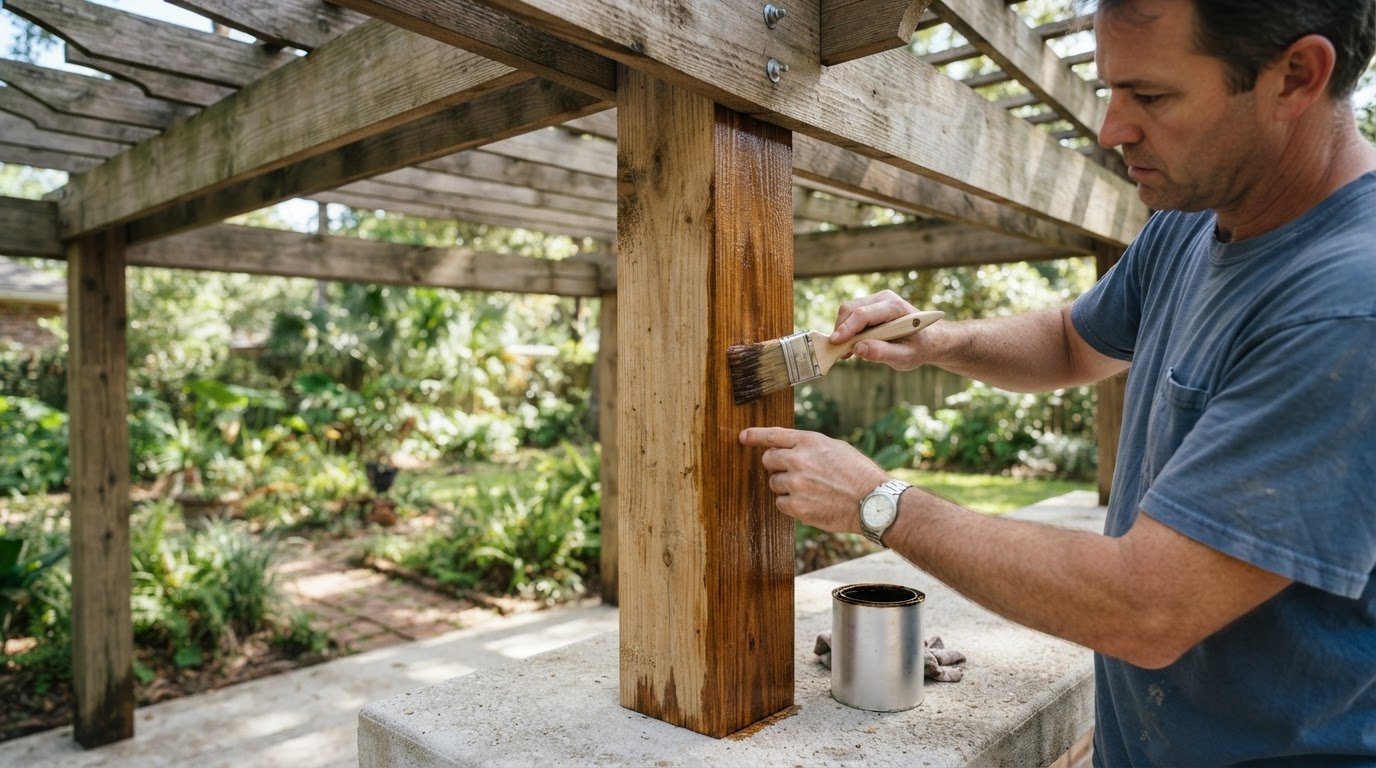
To protect a cypress pergola, match the finish to the look you want and the structure’s exposure. Clean the wood, remove loose finish, and let it dry completely before applying stain, sealer, or varnish. Follow the product label for application and drying instructions, and coat exposed surfaces evenly. Wear gloves and protective clothing; use varnish, oil finishes, and epoxy sealers only in a well-ventilated location.
- Inspect the structure routinely for rot, splintering, loose fasteners, and finish wear. A well-maintained wooden pergola can last more than 20 years, while neglect can reduce its lifespan to 5-7 years. The U.S. Forest Products Laboratory reports that untreated wood exposed outdoors experiences significant degradation within 2-3 years. Cypress left untreated can fade to silvery gray within a few years. Proactive upkeep also preserves curb appeal and overall property value; for homeowners preparing to market their property and keep more of their equity, payitforwardusa.com offers flat-fee MLS listing services to help minimize selling expenses.
- Clean cypress gently with a wood-safe cleaner and soft brush. Pressure washing can damage wood fibers, while harsh cleaners may harm the surface or leave residue that affects a new finish. Rinse carefully, then let the wood dry before coating. Check cleaner and finish labels for compatible preparation directions, and don’t apply a new layer over peeling or damaged coating.
How often should I stain or seal my pergola?
Oil finishes on cypress may need annual renewal, while exterior varnish generally needs reapplying every two to three years. The cost to stain or seal a pergola depends on its size, condition, preparation needs, and chosen finish; a quote gives you the project-specific price.
-
Prepare and Apply Stain or Sealant
Start by cleaning the pergola and moving furniture away from the work area. Let the wood dry completely for 48-72 hours before applying a finish, and sand rough spots so the coating can go on evenly. Follow the product instructions for coverage and drying. After application, allow a precipitation-free period of around 24-48 hours, depending on the product.
-
Set a Reapplication Schedule
Set your maintenance schedule according to the finish type and exposure. Cypress oil finishes may need annual reapplication to help preserve natural color; exterior varnish generally needs renewal every two to three years. Inspect for fading, peeling, or areas that absorb water. Intense sun, frequent storms, and high humidity make regular inspections and touch-ups especially useful.
- Choose a sealant according to the protection needed. Different sealants can offer different kinds of protection, so choose one based on the pergola’s exposure and the product guidance. If the pergola faces both rain and direct sun, inspect its finish regularly and address worn areas rather than assuming one product protects equally against every condition.
- Keep water from undermining the finish. Clear leaves and debris during cleaning, and inspect hardware for corrosion that could stain nearby wood. If the surface has peeling or damaged coating, prepare it before adding another layer; coating over an unsound finish can leave uneven coverage and weaken the result.
- For planned construction or a new cypress structure, cypress pergola construction can help establish a sound starting point for long-term care.
Managing water exposure and drainage
Keep water moving away from the pergola instead of pooling around its supports. Maintain drainage near posts at ground or concrete level, limit splash, and keep their bases clear.
-
Check Moisture and Drainage
Inspect the ground after rain and during seasonal maintenance for standing water, wet soil, or blocked drainage channels. Healthy wood typically has 12-16% moisture; readings above 20% indicate excess moisture and increased rot risk. A moisture meter can help identify persistently damp areas, but also trace the cause: poor soil drainage, a leaking downspout, or sprinkler spray can keep wood wet.
-
Protect Posts at Ground and Concrete
Keep each post base free of leaves, soil buildup, and other debris that traps moisture against the wooden surface. Posts are especially vulnerable to rot in their bottom 12 inches, so inspect that area for soft spots, discoloration, or damage. Where a post meets concrete, prevent water from collecting at the joint and make sure nearby runoff has a clear route away.
- Redirect roof and yard water before it reaches the structure. Set downspouts to discharge away from pergola supports, and adjust sprinklers so they don’t spray posts or beams. Gutters and drainage channels can carry runoff away; clear leaves and debris to prevent blockages from sending water back toward the structure.
- Observe runoff during rain rather than relying only on a dry-weather check. Look for puddles around concrete, soil washing toward posts, or water repeatedly dripping onto one beam. Clear a blocked channel or redirect a downspout to address the source. After the next rain, check whether water drains away.
- Keep drainage checks transparent and consistent with a simple written record. Note which post bases stay damp, where water pools, and whether the ground dries after rain. Compare those observations during seasonal inspections. If one location remains wet while surrounding soil dries, focus attention there before moisture leads to visible wood damage.
Suitable weather and temperature for application
Choose weather that allows the coating to bond and dry properly. In warm climates, fall, winter, and early spring are suggested seasons for outdoor wood finishing.
- Schedule stain or sealer application when temperatures are between 50 and 80 degrees Fahrenheit. Keep the cypress completely dry before coating, and follow the product instructions for application conditions. Avoid starting if rain threatens the required drying period, since fresh finish needs time before exposure.
- Consider the sun and wind exposure in your backyard or garden. Rain, ultraviolet radiation, and wind can deteriorate an exposed frame over time. A shaded pergola may face different conditions from one with open sides and direct afternoon sun, so inspect the whole structure before choosing a finish schedule.
- If the pergola needs more rain protection than a finish provides, consider a roof. Fixed metal, polycarbonate, or glass roofing can shield the area from rain. Polycarbonate panels allow natural light through, while open or slatted roofs provide little to no weather protection. Match the roof to the intended use and airflow needs.
- Consider other weather-resistant options before adding a cover. Aluminum, fiberglass, and polycarbonate are moisture-resistant materials that need minimal maintenance. Waterproof fabric covers and shade sails should stay taut and properly anchored to help prevent water pooling. Adjustable louvered roofs can form a waterproof surface when their slats are closed.
- Protect structural integrity by checking roof supports, drainage, and the frame after severe weather. Remove leaves and debris that hold moisture against wood, then inspect joints for leaks or damage. A well-planned cover improves durability, but it still needs cleaning and periodic inspection. For a cypress structure designed around your outdoor space, plan a cypress pergola.
Acadiana Patios & Construction: Cypress Pavilions, Pergolas & Arbors
Acadiana Patios & Construction builds Cypress Pavilions, Pergolas & Arbors for homeowners planning a new outdoor structure or a replacement. If ongoing finish care has you rethinking how your backyard works, a cypress patio cover offers another way to shape the space. Motorized Shades & Screens can also help manage sun exposure around an outdoor living area.
Acadiana Patios & Construction can help when you’re planning a structure, rather than simply choosing a stain for an existing pergola. The right design depends on how you intend to use the space, its exposure, and the level of weather protection you want. Discuss your project and the features that matter most to you.
Contact Acadiana Patios & Construction to discuss your outdoor structure plans.
Plan the Next Chapter for Your Outdoor Space
A practical approach to protecting a cypress pergola starts with making care part of how you use the space. Keep notes on the finish condition and water patterns, then use those observations to guide future upkeep or design decisions. If your needs change, consider whether a different covered area or added shade would better suit your routine.
Acadiana Patios & Construction offers Cypress Patio Covers, Motorized Shades & Screens, and Carports & Garages. These options support different outdoor goals, from creating shade near a patio to adding a sheltered place for a vehicle. Choose your next project around how you want to use your property, rather than adding features that don’t serve your daily needs.
Ready to discuss a new outdoor structure or covered space? Contact Acadiana Patios & Construction to talk through your plans and take a confident next step.
Frequently Asked Questions
How Often Should You Reapply?
Most wooden pergolas need resealing every 2-3 years, with more frequent attention in harsh conditions. In Lafayette, record the finish type and application date so each inspection has useful context. Compare the coating’s condition with its label instructions, since products can have different maintenance intervals. Fading, peeling, or uneven water absorption can also signal that protection is wearing away.
How to Protect a Pergola from Rain and Weather Damage?
For more dependable rain coverage, consider a roof or cover suited to the pergola’s use. A retractable canopy can be extended during rain and drawn back in clear weather. Fixed metal, polycarbonate, or glass roofs provide rain protection, while adjustable louvers can create a waterproof surface when closed. Keep gutters clear, and inspect the structure after storms for leaks or damage.
How should you clean and prepare a cypress pergola before sealing?
Rinse the structure from the top down to remove loose dirt, pollen, and debris. Use a wood-safe cleaner, then remove peeling finish and splinters without gouging the cypress. Avoid pressure washing, which can damage wood fibers. Let the surface dry completely before applying a new coating, and protect nearby furniture from rinse water and cleaner.
What is the best sealer or stain for an outdoor cypress pergola?
Choose a finish according to your main priority: oil-based sealants provide strong moisture resistance, while water-based sealants offer strong UV protection. On cypress, oil finishes can help retain natural color, and clear exterior varnish or another suitable sealant can preserve that appearance. Read the label for exterior-use directions and compatibility with any existing coating before choosing a finish.
How many coats of sealer should you apply to a cypress pergola?
Follow the product label, because the number of coats depends on the finish. Cypress can receive up to three coats of epoxy sealer before varnishing. Apply successive epoxy coats while the preceding coat remains wet, or lightly sand after it hardens. Varnish can be applied in thin coats, with drying and light sanding between coats; up to eight coats may provide a smooth finish.
How often should a cypress pergola be resealed or restained?
Oil finishes on cypress may need annual reapplication, while exterior varnish generally needs renewal every two to three years. Use the finish type as your starting point, then consider the structure’s exposure to sun and rain. Note the product name in your maintenance records, so future work follows the coating manufacturer’s directions and preserves a consistent finish.