Hurricane Rated Motorized Screens for Florida Homes
A hurricane rating doesn’t make every motorized screen suitable for every opening across the Lafayette and Acadiana region. One listed screen may feature high wind-load and impact approval, but its approved design pressure, allowable size, and anchoring depend on the installation instructions and product evaluation report for the specific opening. Choosing hurricane rated motorized screens from Acadiana Patios & Construction means matching the approval and performance details to the structure they’ll protect.
When searching for hurricane rated motorized screens, it’s natural to focus on the rating first, especially when planning shade and protection for a patio or lanai. This guide explains what regional wind approvals and impact resistance indicate, how wind pressures affect screen selection, and why opening dimensions and anchoring matter. You’ll also learn how motorized screens can fit an outdoor living space and which project details shape the options. The goal is to help you understand the requirements before deciding what suits your home.
Key Takeaways
- Use the Florida approval and product evaluation details to understand what a screen is approved to do for a specific opening.
- Separate wind protection from wind-driven debris resistance; a hurricane rating alone doesn’t explain every aspect of performance.
- Opening dimensions, design pressure, and anchoring work together to determine whether a screen suits the installation.
- For a lanai or patio, consider how motorization fits the opening and the way you plan to use the space.
Florida Product Approval and impact resistance
Florida approval is a starting point, not a complete answer for every opening. Read the approval scope alongside the product evaluation report and installation instructions.
Florida Approvals and Building Codes
A product description may identify Miami-Dade approval, Florida Building Code approval, or both. One listed screen is described as 100% Miami-Dade (HVHZ) FBC Hurricane Approved. That wording identifies a product approval claim, but it doesn’t establish that every size or installation matches the approved configuration.
For an outdoor opening, focus on the approval documents’ scope: the product configuration, permitted dimensions, design pressure, anchoring, and limits of use. The product evaluation report and installation instructions connect those details to the specific opening. A broad approval label alone doesn’t show whether a particular installation meets those parameters.
Wind Zones and Storm Impacts
Florida wind exposure varies by location, so design wind information is not one statewide figure. Figure 1609.3(1) of Florida’s building code provides wind-risk information, while the ASCE 7 Hazard Tool is identified as a resource for confirming wind design information. The relevant design pressure depends on the building’s location and the opening being protected.
Wind zones and design pressures help describe expected wind demand, but they don’t, by themselves, establish impact resistance. Check what the product evaluation covers and whether the approved configuration applies to the opening. This distinction matters when a screen is expected to address both wind pressure and wind-driven debris.
Florida’s storm history puts that review in context. More than 80 hurricanes have affected the state since 2000, and roughly 5 hurricanes strike the coastline in an average 3-year period. The referenced wind-risk information shows a 700 years mean recurrence interval for most buildings. That interval describes a risk measure, not a prediction of when a storm will occur.
Use location-specific wind information to guide your review, then compare it with the screen’s approval documents. This helps distinguish a general hurricane claim from evidence tied to the actual product configuration and installation.
Hurricane and wind-driven debris protection
A hurricane-rated claim doesn’t automatically establish impact resistance. Wind pressure and debris impact are separate performance considerations, so review what the specific product’s evaluation documents cover.
Motorized hurricane screens, impact windows, and roll-down shutters serve openings differently. Windows provide permanent glazing, shutters close over openings, and screens roll down when needed. Performance depends on the approved product and installation, not simply on the category name.
A motorized screen qualifies as hurricane-rated through product-specific approval and evaluation, with limits tied to its configuration and installation. Look for documented wind-pressure performance and any debris-impact testing. A motor and a hurricane label alone don’t establish either.
No single manufacturer name establishes that a screen is certified. The manufacturer and approved configuration appear in the product’s evaluation documentation, which also defines tested performance and installation limits.
Wind, Debris, and Storm Categories
Wind-load performance describes resistance to pressure; debris-impact performance addresses strikes from wind-driven objects. A screen may have evidence for one without the other. Compare the opening’s needs with the evaluation’s stated scope, including installation conditions and limits of use.
A Category 5 label alone doesn’t show that a screen is approved to withstand every storm condition associated with that category. Storm category describes wind intensity, while product approval and testing describe a particular assembly’s performance. Avoid treating the category as a substitute for product-specific evidence.
Sun and Outdoor Comfort
Storm protection is only one consideration for a patio or lanai. The listed product information gives a 12% cooler-in-summer benefit and 98% light block out. Those figures describe listed benefits; they don’t establish debris-impact performance or a specific ultraviolet protection rating.
For an outdoor space, weigh documented storm performance alongside shade and light control. Keep those benefits distinct: a screen’s comfort features don’t replace the approval and impact evidence needed to understand its weather performance. Where daily heat reduction and light management are the main focus rather than severe storm protection, exploring exterior solutions from specialists like QLD Shade offers helpful context on how outdoor blinds, awnings, and shutters can optimize everyday patio comfort.
Design pressures, opening sizes, and anchoring
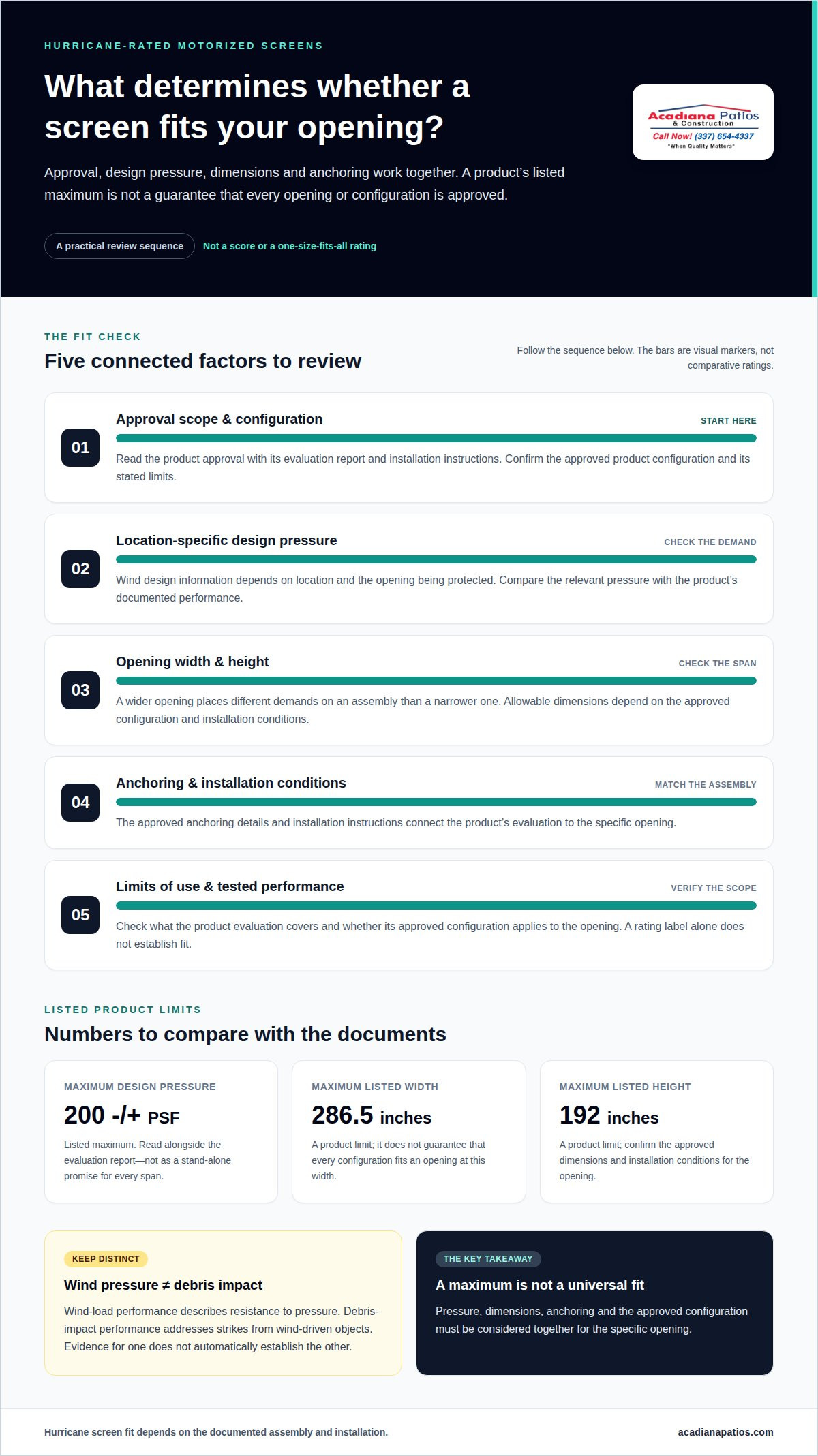
A screen’s maximum dimensions don’t automatically fit every opening. The listed design pressure is 200 -/+ PSF, while the approved installation details govern its use.
Design Pressure and Maximum Spans
Design pressure describes the wind load a screen assembly is evaluated to handle. Maximum span describes the largest listed opening dimensions. These measures work together: a wide opening places different demands on the assembly than a narrower one. The listed 200 -/+ PSF maximum design pressure should be read alongside the product evaluation report, not as a stand-alone promise for every span.
For a specific opening, the appropriate design pressure, allowable dimensions, anchoring, and limits of use can depend on the product configuration and installation conditions. A listed maximum doesn’t mean every combination of width and height meets the same pressure rating. The approved configuration and installation conditions matter.
Opening Sizes and Screen Dimensions
The listed Hurricane Rolling Screen has a maximum width of 286.5 inches and a maximum height of 192 inches. Those are product limits, not a guarantee that an opening of either maximum dimension can use every configuration. The product documents determine which sizes are allowable for the installation and its design pressure.
Measure the full opening and identify how the screen will attach to the surrounding structure. Then compare the dimensions with the approved size limits and instructions. If an opening exceeds a listed maximum, it falls outside those limits, and a different approved configuration may be needed.
Anchoring is part of the tested installation, not a minor finishing detail. The product evaluation report and installation instructions specify how the screen is secured and where its limits apply. Using a different attachment method can mean the installation no longer matches the evaluated configuration.
For example, a broad patio opening may fit within the listed width but still require attention to its height, pressure, and anchoring details. Evaluate these factors together. The product’s maximum dimensions, design pressure, and approved attachment method form one installation decision, not separate checks.
Motorized hurricane screens for lanais and patios
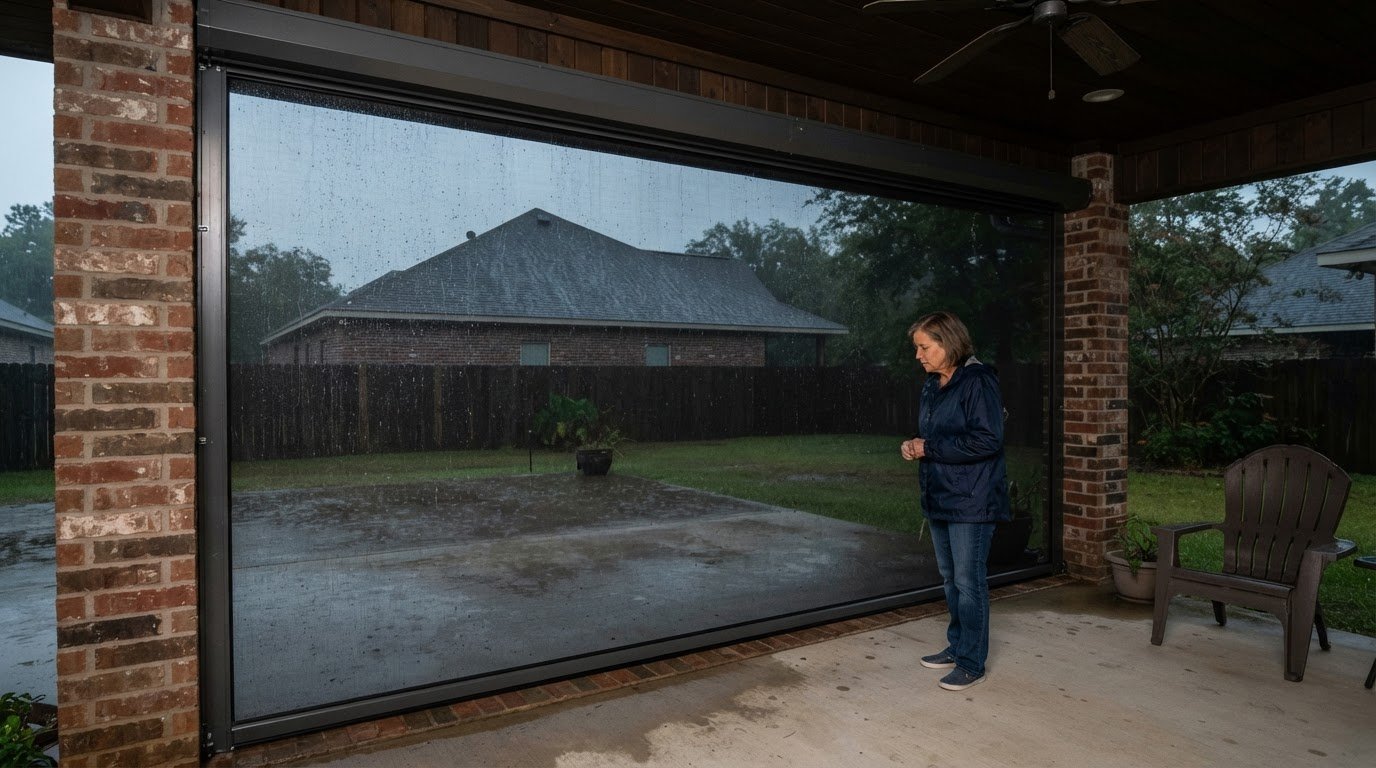
For a lanai or patio, motorization adds convenient control to a screen designed for an outdoor opening. The right choice balances everyday comfort with the installation’s documented storm-performance limits.
Lanais and Patio Applications
A motorized screen can close an exposed patio or lanai opening when you want shade or separation from outdoor conditions. Raise it to open the space; lower it for more coverage and comfort. The right layout depends on the opening, the screen’s approved dimensions, and how it attaches to the structure.
Peace of mind comes from understanding a screen’s limits, not assuming it protects every opening in every storm. Match the product evaluation and installation instructions to the specific location. A patio with several open sides, for example, may need separate screens, with careful attention to each opening’s configuration.
Factors Affecting Screen Price
The cost of motorized hurricane screens depends on opening dimensions, product configuration, motor and control choices, and installation requirements. Larger openings or more involved attachment conditions can affect the project scope. The final cost depends on the project and is provided after a quote request.
For a lanai with multiple openings, each screen’s size and configuration can shape the overall project. A remote motor option is listed for the Hurricane Rolling Screen, but suitability depends on the chosen product and application. Compare options by fit and documented performance, not price alone.
Maintenance, Repairs, and Safe Operation
Use the screen according to its installation and operating instructions. Keep its travel path clear, and don’t force movement if it stops or meets an obstruction. Smooth operation depends on the screen moving freely along its intended path.
If a screen is damaged, binds, or no longer operates normally, stop using it until the issue is addressed. Don’t treat motorization as an automatic storm response; follow the product’s stated operating limits and preparation instructions. These precautions help preserve the assembly and keep everyday use predictable.
Planning a patio or lanai project? Discuss your outdoor screen layout as part of the design.
Acadiana Patios & Construction: Motorized Shades & Screens
Acadiana Patios & Construction installs Motorized Shades & Screens for homeowners planning a more functional outdoor space. Turn to the team to discuss screen placement, opening dimensions, and how motorized shading could work with your patio or lanai in Lafayette and the Acadiana region.
A useful project conversation starts with the space itself: its openings, how you use them, and whether a patio structure is part of the plan. Cypress Patio Covers and Insulated Patio Covers can also shape an outdoor living project, while Motorized Shades & Screens provide adjustable coverage. Each element should suit the layout and intended use.
For hurricane-related decisions, keep product approval and installation requirements specific to the opening. Acadiana Patios & Construction can help you plan a motorized screen project around your outdoor living goals. Contact Acadiana Patios & Construction to discuss your project.
Plan the Right Next Step for Your Outdoor Space
Before choosing hurricane rated motorized screens, define the opening you want to cover and how you use the space day to day. A clear project brief connects practical needs, such as shade and adjustable coverage, with the product documentation and installation requirements that apply to your home.
Acadiana Patios & Construction installs Motorized Shades & Screens and offers related outdoor living options such as Cypress Patio Covers and Carports & Garages. If you’re planning a patio or lanai project in Lafayette or the Acadiana region, consider how screens and surrounding structures should work together. Start with a conversation about your space and goals, since one setup won’t suit every home.
Contact Acadiana Patios & Construction to discuss your project and take a considered step toward a more comfortable outdoor space.
Frequently Asked Questions
What wind speeds can hurricane-rated motorized screens withstand?
There isn’t one wind-speed figure that applies to every screen and installation. The listed Hurricane Rolling Screen has a maximum design pressure of 200 -/+ PSF, which measures pressure, not wind speed. The applicable performance depends on the product configuration and installation conditions. A product evaluation report provides the relevant limits; don’t convert a pressure rating into a wind-speed claim.
Are motorized hurricane screens tested or certified to Florida Building Code or Miami-Dade standards?
One listed screen is described as 100% Miami-Dade (HVHZ) FBC Hurricane Approved. That description connects the product to Miami-Dade and Florida Building Code approval, but the applicable evaluation is product-specific. For a particular screen, its approval documents identify the evaluated configuration and limits. This matters if the opening dimensions or installation differ from the assembly covered by those documents.
Can hurricane screens protect against wind-driven rain and flying debris?
Debris protection depends on whether impact performance is included in the screen’s evaluation; a hurricane label alone doesn’t establish that. Wind-driven rain protection is a separate consideration, and a screen shouldn’t be assumed to seal an opening against water. A covered patio, for example, may still be exposed to rain through open sides. Review the product’s documented performance for the conditions that matter.
What permits and building-code requirements apply to hurricane screens in Florida and other coastal states?
Permit requirements depend on the project location, installation scope, and applicable local building rules. Florida approval information doesn’t establish permit requirements for every Florida community or another coastal state. A screen added to an existing patio may be treated differently from work that changes the structure. The relevant building department’s requirements and the product’s evaluation documents help define the applicable process.
How are motorized hurricane screens installed and anchored to a home?
Installation starts by matching the opening and supporting structure to a configuration allowed by the product documents. The installation instructions and evaluation report define the permitted anchoring method and its limits. For example, an attachment for a patio opening must follow the evaluated arrangement rather than a generic mounting approach. Operate the motorized screen according to its instructions.