Best Pergola Materials in Louisiana: 2026 Durability Guide
The traditional cedar pergola you’ve been dreaming of might actually be your backyard’s biggest liability within just five years. In our unique climate, choosing the best material for a pergola in Louisiana isn’t just about aesthetics; it’s a battle against relentless humidity, hungry termites, and the intense Gulf Coast sun. You shouldn’t have to watch your investment warp or rot before you’ve even finished enjoying it.
We understand the frustration of seeing a beautiful outdoor structure fail long before its time. This guide reveals the specific materials that actually withstand Louisiana’s brutal environmental demands so you can build a structure that lasts for decades. We’ll explore why native cypress remains the local gold standard and how modern powder-coated aluminum provides the ultimate low-maintenance solution for 2026. You’ll also discover the latest structural requirements to ensure your new focal point stays standing through hurricane season. From local permit updates to moisture-resistant finishes, we’ll give you the peace of mind that your investment is built for the long haul.
Key Takeaways
- Learn why standard big-box lumber often fails in under five years and how to avoid costly replacements by planning for a twenty-year lifespan.
- Identify the best material for a pergola in Louisiana by comparing the natural rot-resistance of native cypress against the zero-maintenance benefits of powder-coated aluminum.
- Discover how modern vinyl and aluminum alternatives have evolved to offer high-end aesthetics without the warping or termite issues common in traditional wood.
- Understand our 2026 Material Tier List to see how different options rank for heat retention and structural integrity during hurricane season.
- Avoid common pitfalls like choosing steel, which often suffers from rapid oxidation and rust in our high-humidity environment.
The Louisiana Climate: Why Material Choice is a 20-Year Decision
Building a structure in Acadiana isn’t the same as building one in the Midwest or even North Louisiana. Finding the best material for a pergola in Louisiana requires understanding the “Louisiana Pergola Gauntlet,” which is a relentless combination of 90% relative humidity, aggressive Formosan termites, and punishing UV exposure. While a pergola might look sturdy on the day of installation, the environmental pressure here begins the aging process immediately. Choosing the wrong material often results in a structure that looks weathered within two years and fails structurally within five or six.
Many homeowners are tempted by the convenience of standard lumber from big-box stores. These materials are often mass-produced and lack the dimensional stability required for our specific climate. Dimensional stability refers to a material’s ability to resist swelling and shrinking as moisture levels change. In a region where a morning torrential downpour is followed by 100-degree afternoon heat, low-stability wood will warp, twist, and pull apart at the joints. Beyond the weather, local building codes in parishes like Lafayette often dictate specific wind load requirements. A pergola that can’t handle the structural demands of hurricane season is a liability, not an asset.
Humidity and the Rot Factor
Constant moisture is the primary enemy of any outdoor wood structure in the South. When softwoods remain damp for extended periods, they become a breeding ground for fungal decay. In South Louisiana, the rapid oscillation between saturated wood fibers and intense solar drying causes cellular breakdown that compromises structural integrity faster than in drier climates. This cycle is most dangerous in the “danger zone,” which includes any posts in direct ground contact or sitting in areas with poor drainage. Without the right material or professional installation techniques, the base of your pergola can begin to soften and rot before the top even shows signs of wear.
The Formosan Termite Threat
South Louisiana is a high-pressure zone for subterranean termites, particularly the aggressive Formosan variety. These pests can cause significant structural damage in a surprisingly short amount of time. It’s vital to distinguish between “termite-resistant” and “termite-proof” materials when planning your build. Some woods contain natural oils that deter pests, while inorganic materials like aluminum are completely immune. Selecting a material that termites won’t touch doesn’t just protect your pergola; it ensures you aren’t creating a “bridge” of decaying wood that draws pests closer to your home’s primary perimeter.
Wood Pergola Materials: Cypress vs. Cedar vs. Pine
Wood remains the soul of Acadiana architecture. For many homeowners, nothing matches the warmth and character of a handcrafted timber structure in the backyard. However, in our swampy environment, wood requires a specific level of natural defense to survive. While many national guides recommend cedar, local experience since 1985 shows that not all timbers are created equal when facing our humidity. Choosing the right species is the difference between a legacy structure and a pile of rot.
Louisiana Cypress: The Local Gold Standard
Cypress is arguably the best material for a pergola in Louisiana because it evolved to thrive in the very swamps that destroy other woods. It contains a natural preservative oil called “cypresene.” This oil acts as a built-in barrier against rot, decay, and local insects. Unlike other woods that require heavy chemical treatments to survive outdoors, cypress relies on its own biological makeup to endure decades of exposure. It’s a dense, stable timber that resists the warping common in softer species.
The aesthetic journey of cypress is part of its local charm. It begins with a rich, honey-gold hue that provides an immediate “Old World” focal point for your backyard. Over time, if left untreated, it transitions into a distinguished silver-grey patina that reflects the heritage of historic Acadiana homes. For those who want to maintain the original color, a high-quality sealer can preserve that golden glow for years. You can learn more about how this timber performs in our guide on the Best Wood for Outdoor Structures in Louisiana Humidity.
Western Red Cedar and Pressure-Treated Pine
Western Red Cedar is often the standard choice for outdoor projects in other parts of the country, but it struggles to match the longevity of local cypress in South Louisiana. While it’s naturally rot-resistant, it’s a softer wood that can become brittle under our intense UV exposure. It often requires more frequent sealing to prevent the fibers from breaking down in the heat.
Pressure-Treated (PT) Pine is the budget-friendly alternative found at most hardware stores. While the chemical injection protects against termites, pine lacks the dimensional stability needed for our climate. In our summer heat, PT pine is notorious for several issues:
- Checking: The wood develops long, deep cracks as it dries out too quickly after a rain.
- Warping: Boards often twist or bow, which can pull a pergola out of alignment and stress the joints.
- Chemical Leaching: The greenish tint of the treatment chemicals can be difficult to stain or paint effectively.
Choosing wood means committing to a maintenance schedule. To keep your structure sound, expect to clean and re-seal the timber every few years. If you appreciate the timeless look of a master-built structure, our handcrafted cypress pavilions offer the perfect blend of local durability and artisan design.
Modern Alternatives: Aluminum and Vinyl Pergolas
While natural timbers like cypress remain the heritage choice for Acadiana backyards, a growing number of homeowners are opting for engineered alternatives. These modern materials address the primary pain point of traditional structures: ongoing maintenance. If you prefer to spend your weekends relaxing rather than pressure washing and staining, powder-coated aluminum and high-grade vinyl are the top contenders. These options provide a sleek, contemporary aesthetic that complements modern home designs while offering unparalleled resistance to the elements. For those prioritizing longevity without the chore of staining, aluminum is often cited as the best material for a pergola in Louisiana.
Powder-Coated Aluminum: Strength and Longevity
Even for those outside their primary service area, looking at the work of premium specialists like Elite L.A. Patios can provide excellent design inspiration for the clean lines and custom configurations possible with high-end aluminum.
Aluminum is a premier choice for those seeking a lifetime structure. Unlike steel, which can oxidize and rust rapidly in our 90% relative humidity, aluminum is naturally non-corrosive. The powder-coating process adds a crucial layer of protection, creating a hard finish that is tougher than conventional paint. This finish resists chipping, scratching, and fading, even under the intense Gulf South sun. One significant advantage of aluminum is its structural strength, which allows for the integration of advanced features. This makes it the ideal framework for motorized or louvered roof systems that can open and close with the touch of a button. These systems pair perfectly with other automated upgrades like motorized patio screens in Louisiana to create a fully controlled outdoor environment.
One common concern with metal structures in our 100-degree summers is heat retention. While raw metal can become hot to the touch, high-quality powder coatings are engineered to reflect a significant portion of UV radiation. This helps the structure remain cooler than you might expect, though it still lacks the natural insulating properties found in thick cypress beams. It’s an engineered look that trades the “Old World” feel for precision and high-tech functionality.
Vinyl and Composite Options
Vinyl pergolas have evolved significantly to meet the demands of modern backyards. Modern, high-impact PVC is a viable choice for a clean, white aesthetic that never needs a fresh coat of paint. It’s essentially immune to termites and rot, making it a true “set it and forget it” option for busy professionals. However, quality varies wildly in the vinyl market. To survive in Lafayette, a vinyl structure must be UV-stabilized to prevent the yellowing and brittleness caused by constant sun exposure. We often see cheaper, non-rated plastics fail and crack within just a few years. Another factor to consider is thermal expansion. Vinyl expands and contracts more than wood or aluminum as temperatures fluctuate throughout the day. A master builder ensures that the design accounts for this movement so the structure remains stable and the joints stay tight through every season.
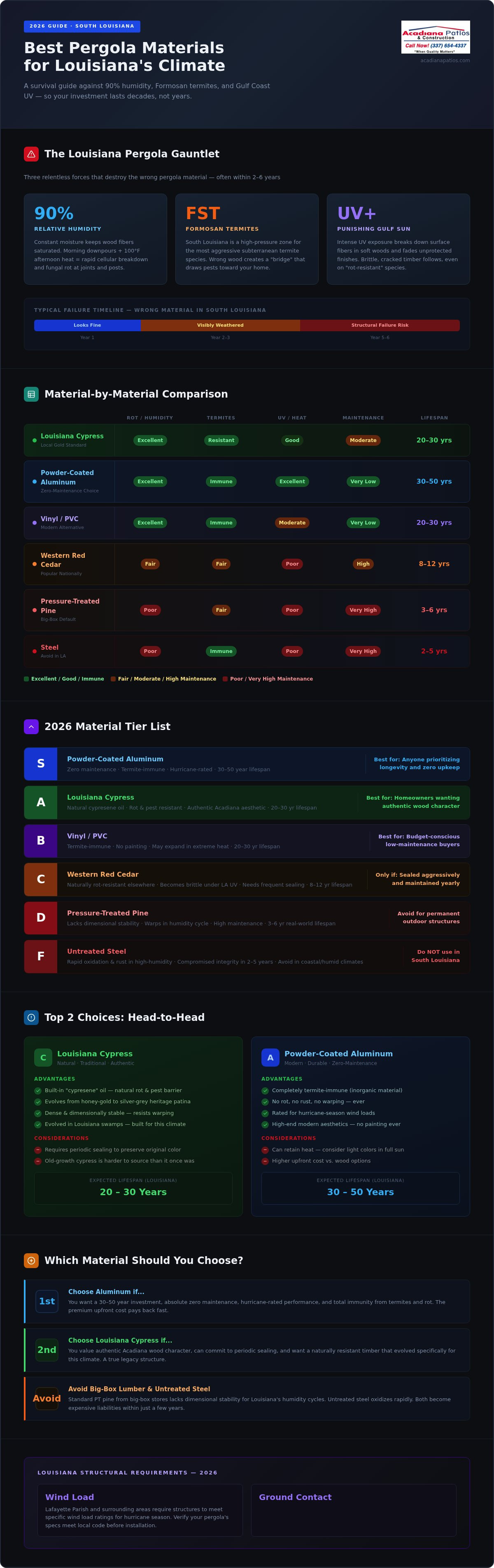
Comparing Performance: The 2026 Material Tier List
Choosing the right material requires a balance of upfront cost and future labor. In our 2026 durability assessment, we rank materials based on how they survive the specific environmental pressures of South Louisiana. The best material for a pergola in Louisiana is one that scores high in rot resistance, termite defense, and structural stability during storm season. While some materials excel in aesthetics, others are designed for pure longevity with minimal intervention.
- S-Tier (Native Cypress): Exceptional rot resistance and local heritage. This is the gold standard for handcrafted Acadiana design.
- A-Tier (Powder-Coated Aluminum): The leader for zero-maintenance and structural integration. It’s the perfect choice for motorized systems.
- B-Tier (High-UV Vinyl): A solid choice for budget-conscious homeowners who want a clean look without the rot risks of cheap wood.
- F-Tier (Steel): While popular in drier states, steel is a poor choice for Acadiana. The constant 90% humidity leads to rapid oxidation and rust, even on treated surfaces. Once rust takes hold in the joints, the structural integrity is compromised beyond simple repair.
Homeowners should view a pergola as a long-term investment rather than a temporary fix. While pressure-treated pine has a lower entry price, the cost of replacement in six or seven years often exceeds the initial savings. Investing in higher-tier materials like cypress or aluminum ensures your outdoor living space remains a focal point for decades, adding genuine value to your property.
Maintenance Requirements by Material
Maintenance is the hidden cost of any backyard structure. Cypress requires a fresh coat of stain or sealer every few years to maintain its golden hue, while aluminum only needs an occasional rinse with a garden hose to remove pollen and dust. When you calculate the labor and materials for recurring staining, the ten-year cost of a wood pergola often matches or exceeds the higher upfront price of a maintenance-free aluminum system. Watch for “checking” in wood or chalking on paint as early signs that the Louisiana sun is beginning to fatigue your materials.
Hurricane Readiness and Wind Loads
Living in Lafayette means building with wind in mind. One advantage of a pergola’s “open” design is that it allows high winds to pass through rather than creating a “sail” effect like a solid roof. However, the material’s weight and anchoring system remain critical. Louisiana building codes often require specific anchoring depths and heavy-duty hardware to ensure the structure stays put during a tropical event. Professional installation is non-negotiable for ensuring your structure meets local safety standards and can withstand the lateral forces of hurricane-force gusts. If you’re ready to build a structure that stands up to the elements, explore our custom Cypress pavilions and pergolas to see how we combine durability with master craftsmanship.
The Expert Verdict: Which Material Should You Choose?
Deciding on the best material for a pergola in Louisiana ultimately depends on how you intend to use your outdoor space and how much time you want to spend on upkeep. After thirty years of building in the Lafayette area, we’ve seen every type of structure face the local elements. While modern engineering has provided impressive new options, the right choice for your home is the one that aligns with your lifestyle and aesthetic preferences. We’ve categorized the top selections based on three common homeowner profiles to help you finalize your decision.
- The Traditionalist: If you value local heritage and the timeless warmth of natural wood, native cypress is your undisputed winner. It’s the “Soul of Acadiana” and offers a level of character that manufactured materials simply can’t replicate.
- The Busy Professional: For those who want a high-end, contemporary look with zero maintenance, powder-coated aluminum is the premier choice. It’s especially effective if you plan to integrate motorized screens or louvered roofs.
- The Budget-Conscious: If you need a durable structure that won’t rot like pressure-treated pine but has a lower entry point than aluminum, high-UV-rated vinyl provides a clean, “set it and forget it” solution.
Our final recommendation for most local homeowners remains handcrafted cypress. It isn’t just a building material; it’s a part of our regional identity that has proven its resilience since 1985. When you choose a material that evolved in our local swamps, you’re investing in a structure that understands the environment it’s standing in.
Matching Material to Your Backyard Goals
A pergola shouldn’t look like an afterthought; it should feel like a natural extension of your home’s architecture. This often involves coordinating the structure with existing elements, such as matching the tones of a stamped concrete patio or the trim of your house. When you’re developing a comprehensive backyard renovation plan, the material you choose sets the tone for the entire project.
The “Master Builder” difference is what separates a long-lasting architectural focal point from a standard DIY kit. Kits are often designed for generic climates and may lack the heavy-duty hardware or anchoring systems required for our storm season. A professional design ensures that the scale, orientation, and structural integrity are perfectly suited to your specific lot and local building codes.
Next Steps for Your Acadiana Patio Project
Starting your project is a straightforward process that begins with a custom design consultation. We take the time to evaluate your site, discuss your shade needs, and help you select the best material for a pergola in Louisiana based on your specific backyard goals. During the professional installation, our team handles everything from structural permits to the final craftsman details, ensuring a seamless experience from start to finish. If you’re ready to transform your outdoor living area, contact Acadiana Patios & Construction today for your custom pergola quote.
Build Your Backyard Legacy in Acadiana
Choosing the best material for a pergola in Louisiana is about more than just picking a style; it’s a commitment to your home’s future value and your own peace of mind. We’ve explored how native cypress and powder-coated aluminum stand as the top-tier choices for resisting our state’s unique humidity and pest pressures. By avoiding materials like steel or standard pine, you ensure your structure remains a beautiful focal point rather than a maintenance burden.
Since 1985, we’ve focused on delivering A+ rated local craftsmanship to our neighbors across Lafayette. As specialists in handcrafted cypress, we understand exactly what it takes to build a structure that survives the Louisiana gauntlet. Whether you desire the traditional soul of timber or the modern convenience of aluminum, our team is here to guide your vision with over 30 years of local expertise.
Ready to transform your outdoor living space? Request Your Custom Pergola Consultation and let’s start designing a structure built to last a lifetime. We look forward to helping you create the perfect shaded retreat for your home.
Frequently Asked Questions
What is the most rot-resistant wood for a pergola in Louisiana?
Native Louisiana Cypress is the most rot-resistant wood available for local construction. Because it grows in swampy environments, it has evolved a natural oil called cypresene that repels moisture and fungal decay. This biological advantage makes it the best material for a pergola in Louisiana when compared to imported softwoods. While other timbers require heavy chemical pressure-treatment to survive, cypress relies on its own natural preservatives to remain structurally sound for decades in high humidity.
Do aluminum pergolas get too hot in the Louisiana sun?
High-quality powder-coated aluminum pergolas are designed to reflect UV rays rather than absorb them. While raw metal can become hot, the specialized finishes used on modern structures help regulate the temperature of the material. You’ll find that these structures remain comfortable even during 100-degree Lafayette afternoons. For maximum cooling, many homeowners choose to integrate motorized shades or fans into the aluminum frame to increase airflow and provide additional relief from the humid Gulf South heat.
How long does a cedar pergola last in South Louisiana?
A Western Red Cedar pergola typically lasts between 10 and 15 years in South Louisiana if it receives consistent maintenance. Without regular cleaning and sealing, the intense UV exposure and constant moisture can reduce this lifespan significantly. Cedar is naturally rot-resistant, but it is a softer wood that can become brittle and crack over time. If you want a wood structure that exceeds this timeframe, native cypress is generally considered the more durable and reliable local alternative.
Are pergolas covered by homeowners insurance for hurricane damage?
Homeowners insurance policies often cover pergolas under “Other Structures” coverage, but protection against hurricane wind damage varies by provider. It’s essential to verify that your structure is built to local wind-load codes to ensure a claim is valid. Many insurance companies require proof of professional installation and anchoring before they provide full coverage. Always check your specific policy limits and deductibles for wind and hail damage before starting your backyard project to ensure your investment is protected; for comprehensive exterior protection including your home’s roof, professional services like Rescue Roofing Tulsa at roofintulsa.com can help maintain structural integrity against the elements.
Can I install a pergola on an existing concrete slab?
You can absolutely install a pergola on an existing concrete slab, provided the concrete is in good condition and has the necessary thickness for anchoring. Most professional installations require a minimum concrete depth to ensure the structure remains stable during high winds. If your current slab is too thin or cracked, we can install localized footings to provide the required structural support. This ensures your pergola meets local safety standards without requiring a complete patio replacement or new concrete work.
How often do I need to stain a cypress pergola in Lafayette?
To maintain the original honey-gold color of a cypress pergola in Lafayette, you should plan to apply a high-quality sealer or stain every two to three years. If you prefer the natural silver-grey patina that develops over time, you can extend this timeframe significantly. Even without frequent staining, the wood’s natural oils provide long-term protection against rot. Regular cleaning to remove organic debris and mildew is the most important task for preserving the wood’s integrity in our damp climate.
Is vinyl or aluminum better for a low-maintenance pergola?
Aluminum is widely considered the best material for a pergola in Louisiana for those seeking a truly maintenance-free experience. While high-quality vinyl is also low-maintenance, it can become brittle or yellow over time due to intense UV exposure. Aluminum offers greater structural strength, allowing for larger spans and the integration of motorized systems. If your priority is a structure that maintains its structural integrity for a lifetime without warping, powder-coated aluminum is the superior engineered choice for our climate.
Do I need a permit to build a pergola in Lafayette Parish?
A permit is typically required in Lafayette Parish for any outdoor structure that is permanent or exceeds a specific square footage. Under the Louisiana State Uniform Construction Code, freestanding structures between 120 and 200 square feet often reach the threshold for mandatory documentation. Since local parishes handle enforcement, specific rules can vary depending on your exact location and the structure’s design. Consulting with a professional ensures your project meets all wind-load and safety requirements before construction begins.