

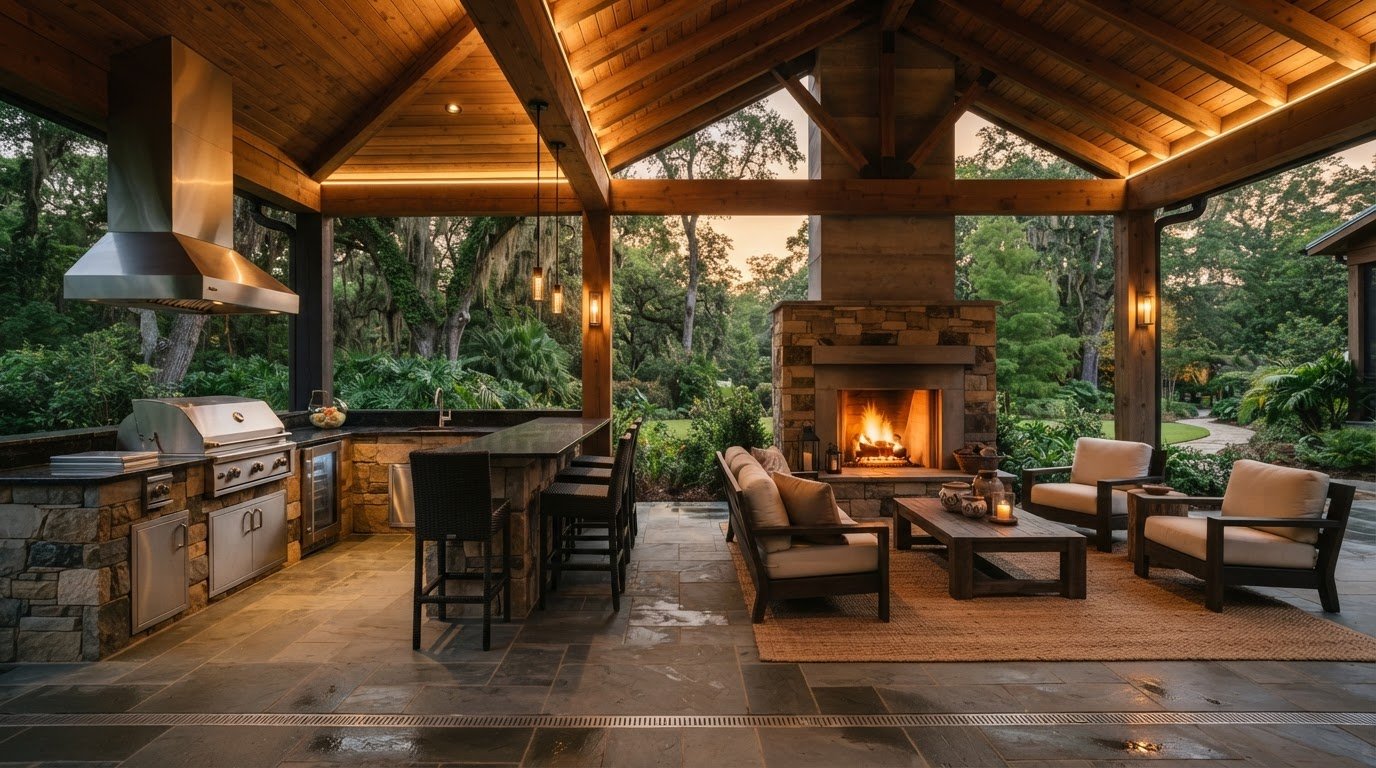
Outdoor Kitchen Fireplace Combos in Louisiana: A Planning Guide
Can an outdoor kitchen and fireplace share one space without making cooking, seating, or safety an afterthought? Yes, if the layout accounts for heat, smoke, movement, and shelter from the start. An outdoor kitchen fireplace combo Louisiana homeowners can enjoy depends on how the features work together on the property, not just how the finished space looks.
Louisiana’s humidity, heavy rain, summer heat, and occasional storms can affect material choices and when the space feels comfortable to use. Before construction, consider where water drains, how the area gets shade, how smoke may travel, and what clearances and ventilation the selected fireplace requires. Fuel options and local requirements also need to be confirmed for the specific project.
This guide walks through the decisions that shape a practical outdoor kitchen and fireplace, from cooking and seating zones to weather protection and fireplace placement. It also outlines questions to discuss with a local design-and-build contractor. A coordinated plan helps the kitchen and fireplace function as one outdoor living space rather than competing for room.
Key Takeaways
- Compare adjacent, L-shaped, and separated layouts based on the available footprint, access from the home, and how people will move between cooking, serving, and seating areas.
- Plan the fireplace with the outdoor kitchen. Compare integrated and visually separate designs based on how you’ll use the space and how much room the features need.
- For an outdoor kitchen fireplace combo Louisiana homeowners can use comfortably, discuss rain exposure, drainage, shade, materials, and safety requirements early in the planning process.
- Consider wood-burning and gas-fired fireplaces as options to evaluate for the property, not as interchangeable choices.
- Ask a local contractor how site review, project scope, permits, utilities, and construction coordination will be handled.
Why Combine an Outdoor Kitchen and Fireplace in Louisiana?
An outdoor kitchen and fireplace combination brings food preparation, gathering, and a fire feature into the same outdoor living space. Guests can stay nearby while someone cooks, and the fireplace may make cooler evenings more inviting. It can give you more ways to use the patio, but it cannot guarantee comfortable conditions in every season or type of weather.
In Acadiana, heat, humidity, strong sun, heavy rain, and seasonal temperature changes all influence the design. Shade and rain protection matter alongside fireplace placement. The property’s exposure, existing structures, and connection to the home also affect where the features can go. An outdoor kitchen fireplace combo Louisiana homeowners plan should suit the actual site and household routines, rather than simply copy a sample design.
What Counts as an Outdoor Kitchen Fireplace Combo?
The defining feature is coordination. The kitchen and fireplace may form one integrated composition, or occupy separate areas that still function as a connected gathering space. In either case, map out where food will be prepared and served, where people will sit, and how they will move between those areas. Placing the features without considering these relationships can crowd the usable space or interrupt the route between the home, kitchen, and seating.
What Louisiana Weather Means for Outdoor Comfort
Start by considering when you expect to use the space and the conditions at your property. If the area gets strong sun, discuss where shade is needed. If rainwater collects nearby, raise drainage and site preparation early. Humidity and temperature changes are also relevant when choosing materials and planning for comfort. A fireplace does not replace weather protection, so ask a local professional to assess the site and discuss suitable options.
Yard dimensions are only one part of the decision. Consider how many people usually gather, whether cooking or conversation is the main focus, and how the space connects to the home. If meals are central to your gatherings, prioritize serving access and clear paths between the kitchen and seating. If you mainly want a place to relax by the fire, the seating area may guide the layout instead. Let these routines shape the design before choosing specific features.
How to Coordinate the Kitchen, Fireplace, and Louisiana-Suited Layout
Begin with the way people will use the space, then place the features around those activities. A grill may be convenient for cooking but sit directly in a busy walkway. A fireplace positioned for a clear view may take up room needed for serving or seating. Planning the kitchen, fireplace, seats, and paths together helps reveal these conflicts while the design can still be adjusted.
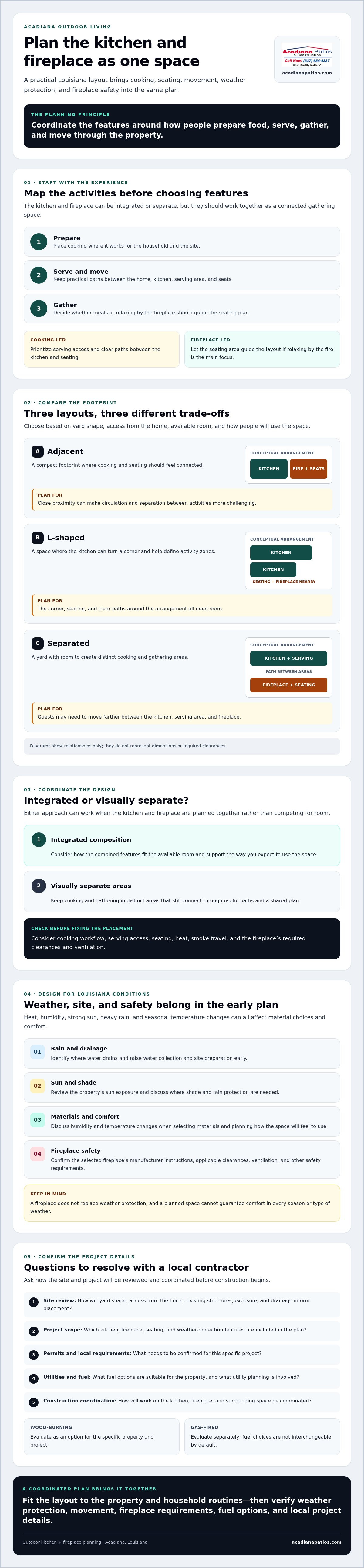
Three common arrangements have different trade-offs. Compare them against your yard’s shape, access from the home, and whether cooking or gathering is the main priority.
| Layout | Best-fit situation | Planning trade-off |
|---|---|---|
| Adjacent | A compact footprint where cooking and seating should feel connected. | Close proximity can make circulation and separation between activities more challenging. |
| L-shaped | A space where the kitchen can turn a corner and help define separate activity zones. | The arrangement needs enough room for the corner, seating, and clear paths around it. |
| Separated | A yard with room to create distinct cooking and gathering areas. | Guests may need to move farther between the kitchen, serving area, and fireplace. |
Which Layout Fits Your Yard and Entertaining Style?
A compact yard may still work when the plan focuses on essential features and usable paths. There is no single property size that determines the right arrangement. Think about whether you cook for groups, want guests near the cook, or picture the fireplace as the center of a seating area. Before settling on a layout, check doorways, access routes, existing structures, and the paths people will use when carrying food or moving through the space.
Where Should the Fireplace Sit Relative to the Cooking Zone?
Choose a fireplace location that considers both the cooking workflow and fire safety. Heat and smoke may affect where people want to sit, while the kitchen needs practical access for food preparation and serving. Ask the designer to check the selected fireplace’s manufacturer instructions and confirm applicable clearances, ventilation, and other safety requirements. Guidance for one unit may not apply to another.
Fuel supply and utility coordination depend on the project. Have a qualified professional review what the selected setup requires before finalizing the layout. For an outdoor kitchen fireplace combo Louisiana project, discussing the kitchen and fireplace as one coordinated scope can clarify how their placement and construction need to work together. Homeowners considering a combined project can review outdoor kitchens and fireplaces as a starting point for discussing layout and project scope.
Which Fireplace and Kitchen Setup Makes Sense for Your Home?
The right setup depends on the available space, what you want the fireplace to do, and how people will use the kitchen. An integrated design brings the features together visually and can make them a shared focal point. A separate arrangement creates more distinct cooking and seating zones, which may suit a household that prefers to keep meal preparation apart from the main gathering area.
Integrated Design or Separate Features?
Compare the options against your property and project scope rather than assuming one approach suits every home.
- Integrated: The kitchen and fireplace are planned as a unified composition. This can create a strong visual center, but the layout must account for the space both features occupy and how people move around them.
- Visually separate: The kitchen and fireplace have distinct locations within the outdoor space. This can give cooking and relaxation their own zones, but paths between them should be convenient and the overall design should feel connected.
Both approaches require coordination. Fireplace placement can affect the kitchen’s working area, while the kitchen can influence where seating fits. Discuss both features together with your designer so the layout, construction scope, and connections between elements are clear before work begins. Homeowners planning a custom project can discuss outdoor kitchen and fireplace planning with a local contractor.
Questions to Ask About Fireplace Fuel and Operation
Wood-burning and gas-fired concepts are options to evaluate, not assumptions about what will suit a particular project. The right choice depends on the property, intended use, and installation and operating requirements. Before choosing, ask:
- Is the proposed fuel source practical and available at the property?
- What ventilation, clearance, and installation instructions apply to the specific fireplace?
- What maintenance and operating guidance should the household expect to follow?
- Do fuel connections, utility work, or local approvals need to be reviewed for this setup?
Have qualified professionals confirm the fireplace manufacturer’s instructions, applicable safety requirements, and any fuel-system or utility needs. Requirements can vary by equipment and site, so do not rely on a general description when making a final decision. Resolving these questions early helps align the fireplace choice with the kitchen plan and the property’s practical constraints.
For an outdoor kitchen fireplace combo Louisiana homeowners are considering, the best fit is the option that suits the space, intended use, and verified project requirements. A contractor can help clarify the scope and coordinate design and installation details without treating fuel options as interchangeable.
Plan for Louisiana Weather, Safety, and Construction Requirements
A preconstruction review connects the layout to the property and identifies questions to resolve before work begins. For an outdoor kitchen fireplace combo Louisiana project, include site conditions, weather exposure, fire safety, and construction coordination in the same planning process.
A Practical Preconstruction Checklist
Use this sequence to organize early decisions with your contractor. Each step helps define what the design must accommodate before construction details are finalized.
- 1. Review the site. Note the available footprint, access routes, nearby structures, and known utility locations. Identify where rainwater collects and which parts of the area are most exposed to sun and weather.
- 2. Define how you’ll use it. List cooking habits, seating needs, storage priorities, and the kinds of gatherings you expect to host. These details help shape the working area and paths through the space.
- 3. Discuss preparation and sequence. Ask how the site will be prepared, how kitchen and fireplace work will be coordinated, and who will handle required reviews or approvals.
- 4. Confirm the design. Review the proposed layout, cover or shade plan, materials, equipment instructions, and project-specific safety or utility requirements before proceeding.
If the project includes a patio surface, consider its choices as part of the overall layout. A guide to a stamped concrete patio in Lafayette may help you think about how the patio fits into the larger outdoor space.
Weather Protection, Drainage, and Fire-Safety Reviews
Louisiana rain and sun make weather exposure worth discussing early. Ask how water will move across the site and whether the planned shade or cover could affect smoke movement around the fireplace. Material selection should reflect conditions at your property. Ask the contractor to explain which options suit the intended exposure rather than relying on general performance claims.
Before finalizing the plan, verify applicable permits, fire-safety rules, utility requirements, and the selected products’ manufacturer instructions with relevant local authorities and qualified professionals. Requirements can depend on the project and site, so do not assume that a detail from another installation applies to yours. Confirm clearances and ventilation for the specific fireplace, and include any fuel or utility work in the project scope.
Acadiana Patios & Construction has served Lafayette and Acadiana since 1985. Its local context can inform discussions about outdoor construction and site conditions. Discuss your outdoor kitchen and fireplace project with a contractor to review the layout, scope, and preconstruction questions.
Choosing an Outdoor Kitchen and Fireplace Contractor in Acadiana
A combined project involves more than selecting a kitchen layout and fireplace. The contractor’s process should explain how design, construction sequence, and the connection points between the features will be coordinated. For an outdoor kitchen fireplace combo Louisiana homeowners are planning, a clear scope helps everyone understand who is responsible for each part of the work.
What to Ask Before Hiring a Local Builder
Use an early project discussion to understand the process and define responsibilities. Ask questions such as:
- Who coordinates the kitchen and fireplace design, and how will the layout be checked against the site?
- How will construction be sequenced so the features and surrounding areas work together?
- What work, materials, and equipment are included, and what is excluded or expected from the homeowner?
- How will permits, fire-safety requirements, manufacturer instructions, and utility coordination be verified for this specific project?
- Who will communicate updates and decisions as the project moves forward?
Look for clear explanations rather than assumptions. A coordinated plan should identify where the kitchen and fireplace connect, what must be decided before construction, and who will confirm project-specific requirements. You can also consult a Louisiana outdoor kitchen cost guide as a separate budgeting resource, then ask contractors to explain the scope behind any estimate you receive.
Plan Your Next Step with an Acadiana Contractor
To make an initial discussion productive, gather photos of the area, rough dimensions, access points, known utility locations, and a short list of priorities. Note how you expect to cook and entertain, what seating you have in mind, and any questions about weather protection or the fireplace. You do not need a finished design before asking about the project.
Acadiana Patios & Construction serves Lafayette and the Acadiana area and has operated since 1985. Outdoor kitchens and fireplaces are among its offerings, with custom design and installation as part of its project-based services. A discussion can help review the site and project scope; fireplace type, fuel, and installation details should be confirmed for the individual project.
If you’re considering a combined outdoor space, discuss your design and installation needs with an Acadiana contractor. Bring your property details and priorities so the conversation can focus on the layout, project scope, and questions to resolve before construction.
Bring Your Outdoor Living Plan Together
A successful outdoor kitchen and fireplace project starts with coordinated decisions. Choose a layout that supports cooking, serving, and gathering, then confirm how the fireplace, weather protection, drainage, and site-specific safety requirements fit together. Planning these details as one project helps the finished space feel practical and connected.
An outdoor kitchen fireplace combo Louisiana homeowners will enjoy should reflect the property and household, not a one-size-fits-all design. A local contractor can help review your priorities, clarify project scope, and identify questions to verify before construction begins.
Acadiana Patios & Construction has served Lafayette and Acadiana since 1985. Outdoor kitchens and fireplaces are among its offerings, with custom design and installation available as part of its project-based services. To discuss your ideas, priorities, and next steps, talk with Acadiana Patios & Construction about your outdoor kitchen and fireplace project.
Thoughtful planning can help create an outdoor space that reflects how you live and entertain.
Frequently Asked Questions
Can you combine an outdoor kitchen and fireplace in Louisiana?
Yes, an outdoor kitchen and fireplace can be planned together as one outdoor living space. Coordinate cooking, seating, movement, weather protection, and fireplace safety instead of treating each feature as a separate addition. For an outdoor kitchen fireplace combo Louisiana homeowners are considering, ask a qualified local professional to review site conditions, equipment instructions, and applicable requirements before finalizing the design.
Where should an outdoor fireplace go next to an outdoor kitchen?
Place it where it supports the gathering area without interrupting kitchen workflow or walkways. The right position depends on the specific fireplace, nearby structures, seating, and how heat and smoke may move through the space. Ask the designer to verify manufacturer instructions, ventilation, and required clearances for the chosen unit. Do not choose a location based only on appearance or a layout used at another home.
Is a wood-burning or gas fireplace better for an outdoor kitchen?
Neither option is automatically better. Suitability depends on the property, fuel availability, installation needs, maintenance preferences, and intended use. Ask qualified professionals to compare the options for your site and confirm ventilation, clearances, manufacturer instructions, and any fuel-system or utility requirements. Before choosing, make sure you understand how the unit is operated and what ongoing care it requires. Confirm local approvals as part of project planning.
Do I need a permit for an outdoor fireplace in Louisiana?
Permit requirements depend on the fireplace type and project details, so check with the authority having jurisdiction where the home is located. A built-in fireplace may be treated differently from a portable fire feature, and related construction or utility work may have separate requirements. In Lafayette, contact the relevant local permitting office. Elsewhere in Acadiana, verify requirements with the appropriate parish or municipality before construction begins.
How do you protect an outdoor kitchen and fireplace from Louisiana weather?
Plan for sun, humidity, rain, and changing temperatures during design. Discuss suitable shade or cover options, how water will drain across the site, and which materials fit the property’s exposure. A cover can also affect how smoke moves, so review its placement as part of the fireplace design. Ask a contractor familiar with Lafayette and Acadiana conditions to assess the site, without assuming any design guarantees year-round comfort.
What should I plan before hiring an outdoor kitchen and fireplace contractor?
Gather photos, rough measurements, access details, and notes about utilities or nearby structures. List how you cook and entertain, the seating you need, and your questions about weather protection and fire features. Ask who coordinates design, construction sequencing, communication, and confirmation of permits or utility requirements. Clarify which work and materials are included, what is excluded, and whether you need to provide anything.
Can an outdoor kitchen fireplace combo work in a small backyard?
Yes, a smaller yard may accommodate a coordinated kitchen and fireplace if the design prioritizes essential features and clear movement. An adjacent or compact L-shaped arrangement may suit some properties, while a separated layout may need more room. The best fit depends on access, existing structures, and how you plan to cook and gather. Ask a local designer to review the usable footprint before settling on placement.