Wood vs. Composite Decking in Louisiana: 2026 Material Comparison Guide
South Louisiana is widely considered a “deck killer” climate, where the combination of relentless humidity and Formosan termites can turn a beautiful investment into a rotting liability in just a few short years. If you’ve spent your weekends scrubbing mold or applying expensive sealants only to see boards warp under the August sun, you aren’t alone. Most homeowners in Acadiana are looking for a solution that survives the swamp heat without becoming a second job. Choosing between wood vs composite decking Louisiana requires a deep understanding of how local moisture levels impact material longevity and your home’s resale value.
At Acadiana Patios and Construction, we’ve spent over 30 years building structures designed to withstand our unique environment. This 2026 comparison guide will show you exactly how to maximize your outdoor investment while minimizing your maintenance checklist. We’ll explore the durability of handcrafted cypress, the low-maintenance appeal of modern composites, and the latest building code requirements under Act 534. By the end, you’ll have the expert clarity needed to build a durable, high-ROI space that perfectly matches your home’s aesthetic and provides lasting peace of mind.
Key Takeaways
- Learn why South Louisiana’s 90% humidity and Formosan termites require specific material grades to prevent rot and structural failure.
- Compare the long-term performance of wood vs composite decking Louisiana to see how each material handles the intense moisture-dry cycles of the Acadiana region.
- Identify the hidden labor costs of staining and sealing traditional wood decks compared to the low-maintenance lifestyle of modern capped composites.
- Discover how to balance the handcrafted beauty of local cypress with the high-ROI durability of synthetic materials to match your home’s architecture.
- Understand the latest 2026 building code requirements, including Act 534, to ensure your new outdoor space is fully compliant and permitted.
The Louisiana “Deck Killer” Climate: Why Material Choice Matters
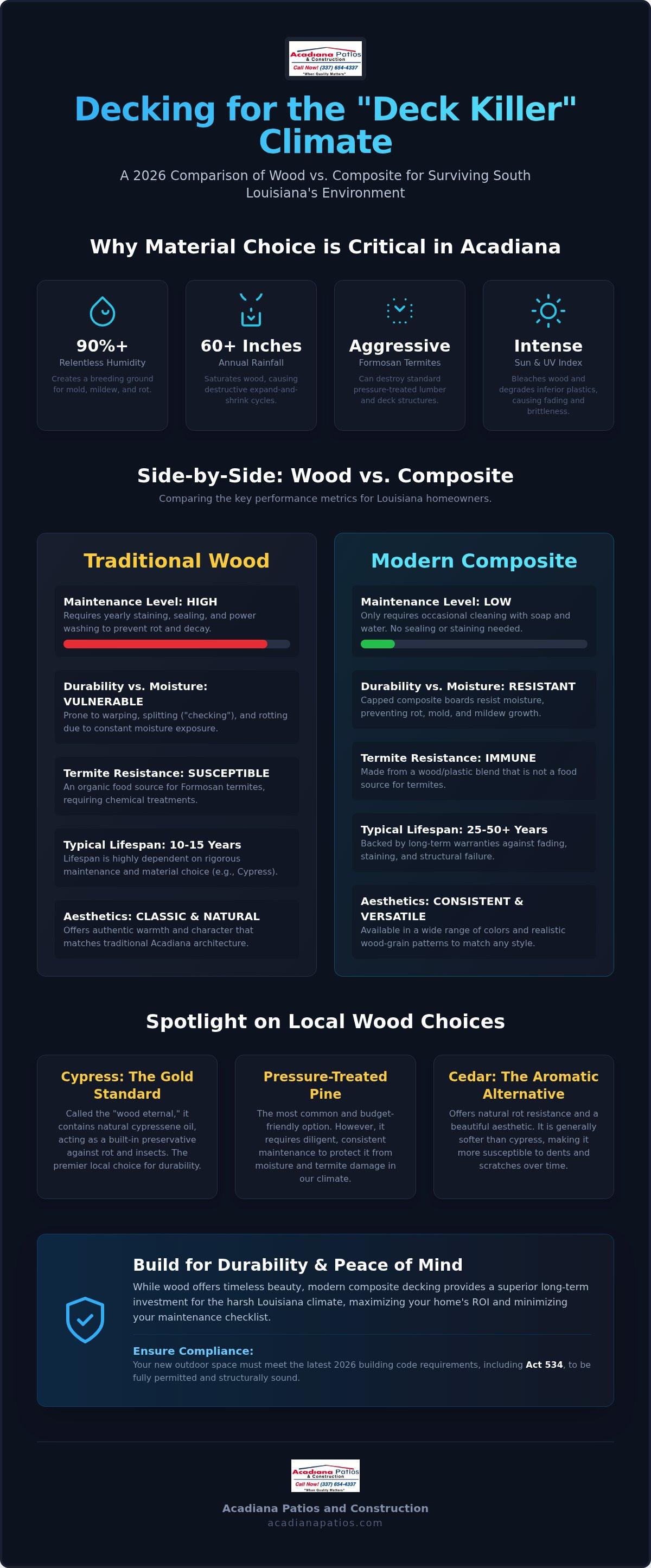
Louisiana’s environment is uniquely aggressive toward outdoor structures. With over 60 inches of annual rainfall and humidity levels that regularly exceed 90%, our backyards function more like a slow cooker than a simple patio space. This constant saturation followed by intense heat creates a destructive moisture-dry cycle. When wood fibers expand with rain and then shrink rapidly under the South Louisiana sun, they begin to “check” or split. These cracks aren’t just cosmetic; they invite deeper rot and compromise the structural integrity of your build.
Beyond the rain, the UV index in Acadiana poses a significant threat to material longevity. High-intensity sunlight bleaches natural wood and can cause inferior plastics to become brittle. When comparing wood vs composite decking Louisiana homeowners must look for materials that offer high-caliber UV resistance to prevent premature fading and structural breakdown. Choosing a material that can withstand these extremes is the first step in ensuring your outdoor space remains a valuable asset rather than a maintenance burden.
Moisture, Mildew, and Decay in Acadiana
Trapped moisture is the primary cause of deck failure in Lafayette. Because our air is so heavy with water, wood often stays damp for days after a storm, creating a perfect breeding ground for mold and mildew. Professional installation is vital here. We focus on creating proper airflow beneath the deck to ensure moisture doesn’t settle in the joists. Without this ventilation, even the highest quality lumber can decay from the inside out within a few short years. High humidity prevents wood from ever fully drying, which accelerates the breakdown of the cellular structure in organic materials.
The Termite Factor: Protecting Your Investment
For any property owner in South Louisiana, the Formosan termite is a critical consideration. These pests are notoriously aggressive and can make a buffet out of standard pressure-treated lumber. This is a major reason many residents are turning toward Wood-plastic composites (WPCs). Because these boards are a blend of recycled wood fibers and plastic polymers, they provide a non-organic barrier that termites simply cannot digest. This protection is essential for long-term peace of mind in our region.
When deciding on wood vs composite decking Louisiana builders often recommend specific ground-contact lumber standards for the framing, even if the surface is composite. Protecting your investment means understanding that every component of your deck must be prepared for the swamp climate. We’ve seen many decks fail not because of the surface boards, but because the underlying structure wasn’t rated for our local soil conditions or protected from subterranean pests.
Wood Decking in Louisiana: Native Beauty and Local Tradition
Traditional Acadiana architecture often demands the warmth and character of natural wood. While modern materials are rising in popularity, many homeowners still prefer the classic aesthetic that only real timber provides. In our region, however, not all wood is created equal. Understanding the conditions for decay in wood is vital before making a final decision. High moisture content and warm temperatures accelerate the breakdown of organic fibers, meaning your choice between wood vs composite decking Louisiana depends heavily on the specific wood species you select and your willingness to maintain it.
In a high-humidity environment, a wood deck requires a serious commitment. Without proper care, the lifespan of a natural deck can drop significantly as the swamp climate takes its toll. We generally categorize wood options into three main groups for local projects:
- Cypress: The premier local choice for durability and style.
- Pressure-Treated Pine: The most common and budget-friendly option.
- Cedar: A beautiful alternative that offers natural rot resistance, though it is often softer than cypress.
Cypress: The Gold Standard for Louisiana Woodwork
Cypress is often called the “wood eternal” for a good reason. It contains cypressene, a natural oil that acts as a built-in preservative against rot and insects. This makes it a superior choice for the humid conditions found across Lafayette and the surrounding parishes. Beyond its durability, there is an undeniable aesthetic value in cypress pavilions and pergolas. These structures can age into a beautiful silver-gray if left untreated, or they can be finished with a high-quality, UV-rated stain to maintain their signature golden hue. If you are considering a traditional build, our team at Acadiana Patios and Construction can help you source the best local timber for your specific project.
Pressure-Treated Pine: The Economical Choice
Pine remains a frequent choice for many homeowners because of its lower upfront cost. It is chemically treated to resist fungal decay and termite attacks, specifically for ground-contact applications. Despite these treatments, pine is prone to warping and splitting as it moves through the wet and dry cycles common in South Louisiana. To get the most out of this material, you must commit to a rigorous maintenance schedule. This includes annual cleaning and applying a fresh coat of sealer or stain every 1-2 years. Professional installation is also key here, as experienced builders know how to space and fasten boards to minimize the natural movement of the wood.
Composite Decking: The Modern Solution for Low-Maintenance Living
Composite decking has undergone a massive transformation since its early days. It’s a high-performance material engineered from a blend of recycled wood fibers and plastic polymers. This combination provides the structural feel of wood with the extreme durability of synthetic materials. Modern “capped” composites take this a step further by wrapping the core in a protective polymer shell. This shield is vital in the Acadiana region, as it prevents moisture from ever reaching the organic fibers inside, effectively neutralizing the risk of rot or swelling.
The visual appeal of these materials has also advanced. In 2026, premium boards feature multi-tonal streaking and deep-embossed textures that mimic natural wood grains with startling accuracy. This aesthetic quality, combined with long-term reliability, is why custom deck builders in Lafayette now recommend composite for over 40% of new installations. When weighing wood vs composite decking Louisiana, homeowners are increasingly choosing the material that offers a “set it and forget it” lifestyle without sacrificing the high-caliber look of their property.
Heat Retention and the Louisiana Sun
A common concern for South Louisiana homeowners is whether composite boards become too hot for bare feet during our triple-digit summer days. Historically, synthetic materials did retain more heat than wood. However, 2026 has seen the widespread adoption of “cool-deck” technologies. These boards are engineered with heat-mitigating pigments that reflect solar radiation rather than absorbing it. To maximize comfort, we suggest choosing lighter shades like sand, light gray, or tan. These colors significantly reduce surface temperatures, ensuring your deck remains usable even during the peak of an August afternoon.
Zero-Rot Performance in High Humidity
The most significant advantage of composite is its total immunity to the “deck killer” climate. Unlike natural timber, these boards never require the exhausting cycle of sanding, staining, or sealing. This is particularly beneficial for shaded backyards where humidity tends to linger. In these damp areas, mold and mildew can’t penetrate the capped surface, making cleanup as simple as a quick rinse with a garden hose. Most modern manufacturers now offer 25-to-50-year warranties against fading and staining. This level of protection provides the peace of mind that your investment will remain beautiful and structurally sound for decades, regardless of how much rain or humidity the season brings.
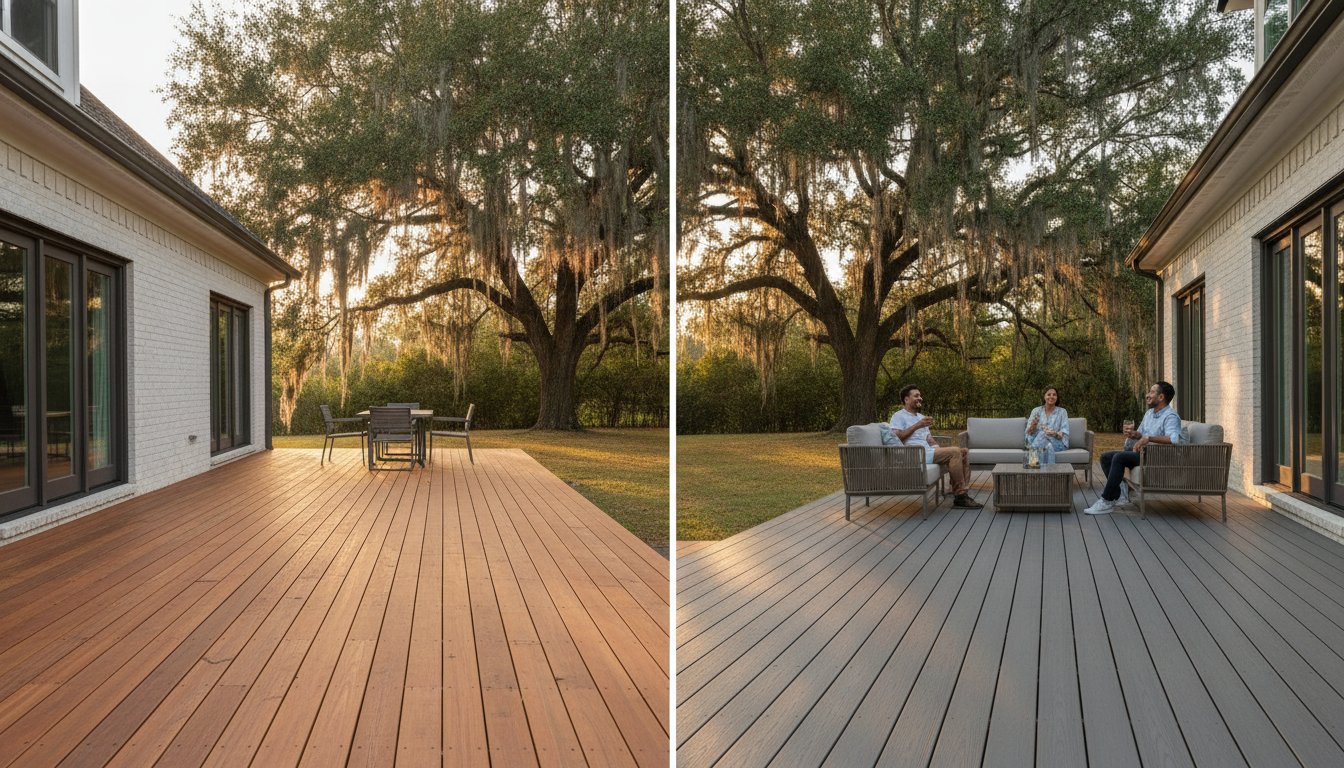
Side-by-Side Comparison: Performance, Cost, and ROI
When evaluating wood vs composite decking Louisiana homeowners must look beyond the initial purchase price. Pressure-treated pine is the most budget-friendly entry point, while mid-range composites and premium PVC require a larger upfront investment. In the Acadiana region, the “sticker price” is only part of the story. A high-quality deck addition is a top-tier exterior project for return on investment. Data suggests homeowners often recover 65-80% of the cost at resale, making it a sound financial move for property value.
Environmental impact is another factor for 2026 homeowners. Most composite boards are manufactured using up to 95% recycled wood and plastic, diverting thousands of tons of waste from landfills. Conversely, using local cypress supports regional timber industries and provides a biodegradable option if the structure is ever removed. Both choices offer a legacy of quality, but they serve very different lifestyle priorities.
The 10-Year Cost of Ownership
The real financial shift happens during the first decade. In our swamp climate, a wood deck needs deep cleaning, staining, and sealing every two years to prevent the rot discussed in previous sections. These materials and the labor required represent a significant “hidden cost.” To better understand these maintenance expenses, you can explore Project-Based Painting and Refinishing Fees as a guide for how professional upkeep for outdoor structures is typically priced. By year seven, the money spent on professional maintenance often equals the price difference of a composite deck. Choosing a low-maintenance material essentially buys your weekends back. Instead of spending two days every other spring on your hands and knees with a brush, you can enjoy your outdoor space without a looming to-do list.
Aesthetics and Style Versatility
Your decking choice should complement your existing architecture and other outdoor features like a patio cover installation. Natural wood offers a traditional patina that many love, but it is chemically unstable; it will inevitably turn grey and weather over time. Modern composite colors are remarkably stable. This allows you to choose a specific “grey weathered” look that stays consistent for 25 years. Customization is also simpler with manufactured boards. Features like hidden fasteners create a smooth, nail-free surface that is safer for pets and children. Regardless of your priority, we recommend a consultation with Acadiana Patios and Construction to determine which material provides the best long-term value for your specific property.
Final Verdict: Which Material is Best for Your Acadiana Home?
The choice between wood vs composite decking Louisiana homeowners face ultimately comes down to your lifestyle priorities and how you plan to use the space. There isn’t a single “correct” answer; instead, there’s a best fit for your specific property and long-term goals. We see many clients succeed with both materials when the project is planned with the local climate in mind. To help you decide, consider these primary factors:
- Choose Wood if: You prioritize the authentic, handcrafted beauty of natural timber, prefer a traditional Acadiana architectural style, or need to minimize your initial upfront investment.
- Choose Composite if: You want a “set it and forget it” lifestyle, require maximum longevity against rot and termites, and want a material that maintains its color for decades without staining.
Many residents also find success with a hybrid approach. This involves using high-grade, pressure-treated lumber for the structural framing while utilizing composite or PVC boards for the walking surface and railings. This strategy provides a balance of structural strength and low-maintenance longevity where it matters most. It’s also important to ensure your deck material aligns with other backyard features, such as screened enclosures or custom patio covers, to create a cohesive outdoor living environment.
Making the Decision Based on Usage
How you use your deck is just as important as how it looks. For pool-side installations, slip resistance and chemical exposure are the top priorities. Modern composites often provide superior traction when wet and won’t splinter, making them safer for bare feet. If you’re planning a second-story elevated deck, the weight of the material and the structural integrity of the foundations become critical. Heavier materials require more robust support systems to handle the load. Additionally, if your plans include an outdoor kitchen or a built-in fire pit, you’ll need a material that can withstand high traffic and occasional food spills without permanent staining.
Next Steps: Consulting a Local Expert
Every backyard in the Lafayette area has its own challenges. A professional site visit is essential to evaluate drainage patterns and sun exposure before you break ground. In our region, poor drainage can lead to standing water that accelerates decay in even the best wood species. You need a builder who understands Louisiana soil conditions and the specific foundation requirements needed to prevent settling over time. At Acadiana Patios and Construction, we’ve spent decades mastering these local nuances. When you’re ready to transform your backyard into a durable, high-caliber retreat, schedule a design consultation with Acadiana Patios to explore your options and ensure your investment is built to last.
Build Your Durable Louisiana Retreat Today
Choosing the right deck in Acadiana means balancing the timeless character of local cypress with the nearly indestructible nature of modern composite materials. You’ve seen how South Louisiana’s humidity and termites require a strategic approach to material selection. Whether you lean toward the organic warmth of natural timber or the “set it and forget it” ease of a synthetic surface, the debate of wood vs composite decking Louisiana should always lead you toward a solution that maximizes your property value and your personal time.
At Acadiana Patios and Construction, we’ve been serving the Lafayette area since 1985. We specialize in high-humidity construction and custom handcrafted cypress designs that stand the test of time. Our team understands the specific drainage and foundation requirements of our local soil, ensuring your new structure remains stable and beautiful for decades. If you’re ready to transform your backyard into a high-caliber outdoor living zone, we’re prepared to provide the precision and excellence your home deserves. Get a Custom Deck Quote from Acadiana Patios & Construction today. Your perfect outdoor retreat is just one consultation away, and we look forward to bringing your vision to life.
Frequently Asked Questions
Is composite decking worth the extra cost in Louisiana?
Composite decking is worth the investment because it offsets its higher upfront price through long-term savings on labor and materials. In our swamp climate, the cost of professional staining and sealing adds up quickly. Most homeowners find that the break-even point occurs around year seven. Beyond the finances, the peace of mind knowing your deck won’t rot or warp provides a high caliber of value for your outdoor investment.
What is the best wood for a deck in high humidity?
Cypress is the premier choice for high-humidity environments in the Acadiana region. Its natural oils, known as cypressene, provide a built-in defense against decay and local insects. While pressure-treated pine is more common, cypress offers a legacy of durability and a traditional aesthetic that matches local architecture. It remains the top recommendation for those who insist on the beauty of real wood in a wet climate.
How long does a wood deck last in South Louisiana compared to composite?
A well-maintained wood deck in South Louisiana typically lasts between 10 and 15 years before structural issues arise. In contrast, modern composite boards are designed to last 25 to 50 years. When comparing wood vs composite decking Louisiana weather is the deciding factor. The relentless rain and humidity shorten the lifespan of organic timber, whereas synthetic materials remain stable regardless of the moisture levels or termite pressure.
Do termites eat composite decking?
Termites do not eat composite decking because it is made from a non-organic blend of plastic polymers and recycled wood fibers. These pests, including the aggressive Formosan variety, cannot digest the material. This makes composite an excellent choice for homes in Lafayette where termite activity is high. It serves as a durable barrier that protects your investment from the structural damage often seen in traditional wood builds.
Does composite decking fade in the intense Louisiana sun?
Modern capped composite decking is engineered with advanced UV inhibitors to prevent significant fading under the intense Louisiana sun. While older generations of synthetic boards might have bleached over time, 2026 technology ensures that colors remain stable for decades. Most premium brands now include specific fade and stain warranties. This guarantees that your deck will maintain its original high-caliber look without the need for constant refinishing or painting.
Can I use cypress for the structural frame of my deck?
Cypress is an exceptional choice for visible structural elements like posts and beams, but we typically recommend pressure-treated pine for ground-contact framing. While cypress is naturally rot-resistant, modern building codes often require specific chemical treatments for any lumber touching the soil. Using cypress for the upper structure and pavilions allows you to showcase its handcrafted beauty while ensuring the foundation meets all local safety and durability standards.
How often do I need to seal a wood deck in Lafayette?
You should plan to clean and seal a wood deck every one to two years in Lafayette. Our extreme humidity and frequent rainfall cause sealants to break down faster than in drier regions. If you notice water is no longer beading on the surface, it’s time for a fresh coat. Regular maintenance is the only way to prevent the wood from checking or splitting under the relentless South Louisiana sun.
Does composite decking get too hot for bare feet in the summer?
Composite decking can become hot in direct sunlight, but new “cool-deck” technologies have significantly reduced heat retention. To keep surface temperatures manageable, we recommend choosing lighter colors such as sand or light gray. When evaluating wood vs composite decking Louisiana summers are a major factor. These heat-mitigating pigments reflect solar radiation, ensuring your outdoor space remains comfortable for bare feet even during the peak of an August afternoon.