

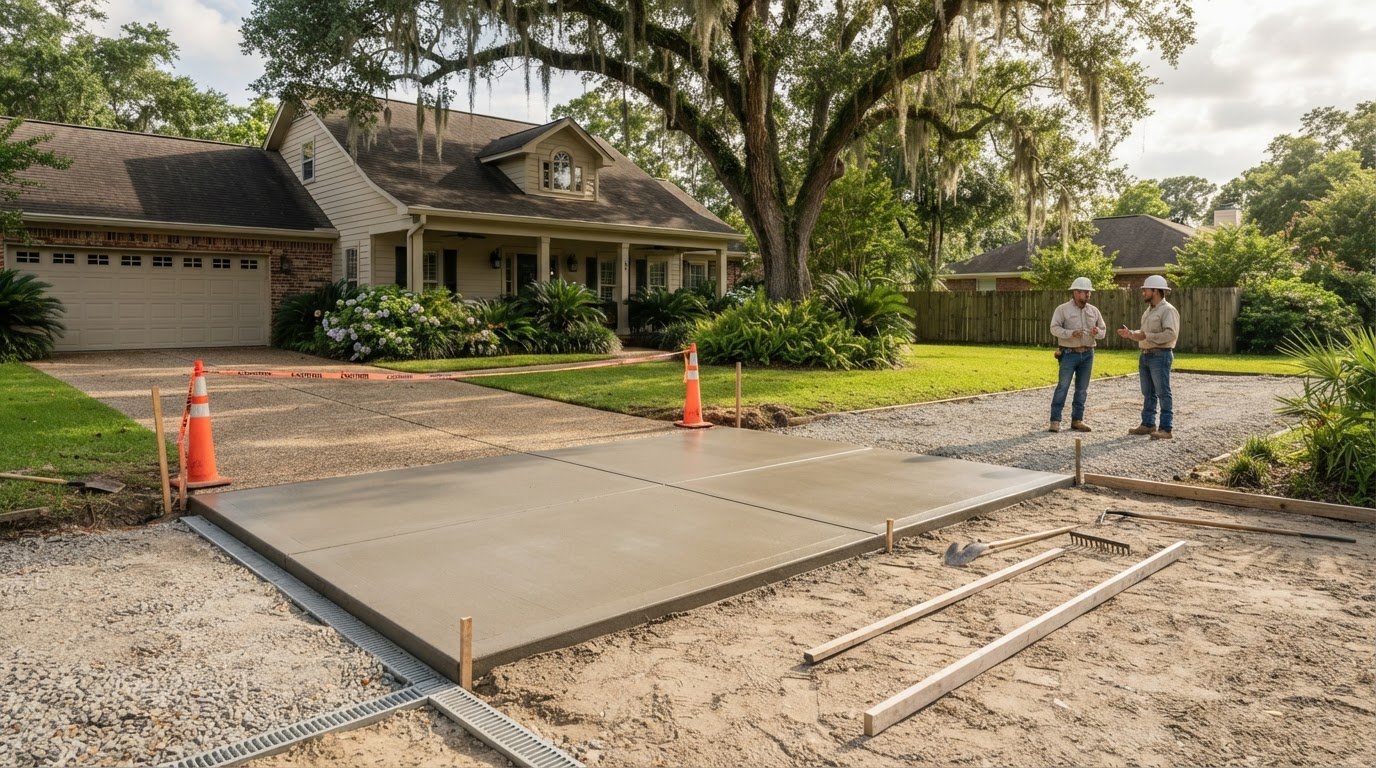
Driveway Extension Contractors in Lafayette and Installation Time
Concrete driveway work is measured in active workdays, followed by curing time. In Lafayette, a typical project takes one to three days of active work, then a seven-day cure before vehicles can use the slab. If you’re comparing driveway extension contractors in Lafayette, understanding this timeline helps you plan parking and set expectations.
It’s just as important to understand what happens before the pour: site assessment, drainage planning, excavation, and a properly prepared base all shape the finished driveway. The schedule can also shift with project size, access, demolition, preparation, and weather.
This guide explains site preparation, how installation and curing affect your schedule, and what to consider when reviewing a contractor’s credentials, insurance, and written scope. It also covers local service-area considerations for projects in Lafayette.
Key Takeaways
- A careful site assessment considers drainage, slope, access, and the condition of the ground before work begins.
- Compare a contractor’s licensing, insurance, project scope, and experience to understand how the work will be managed.
- Service-area boundaries can affect whether a contractor takes on your project, so clarify coverage for your part of Lafayette.
- Project cost depends on factors such as extension size, site preparation, access, reinforcement, and finish.
Driveway site assessment and base preparation
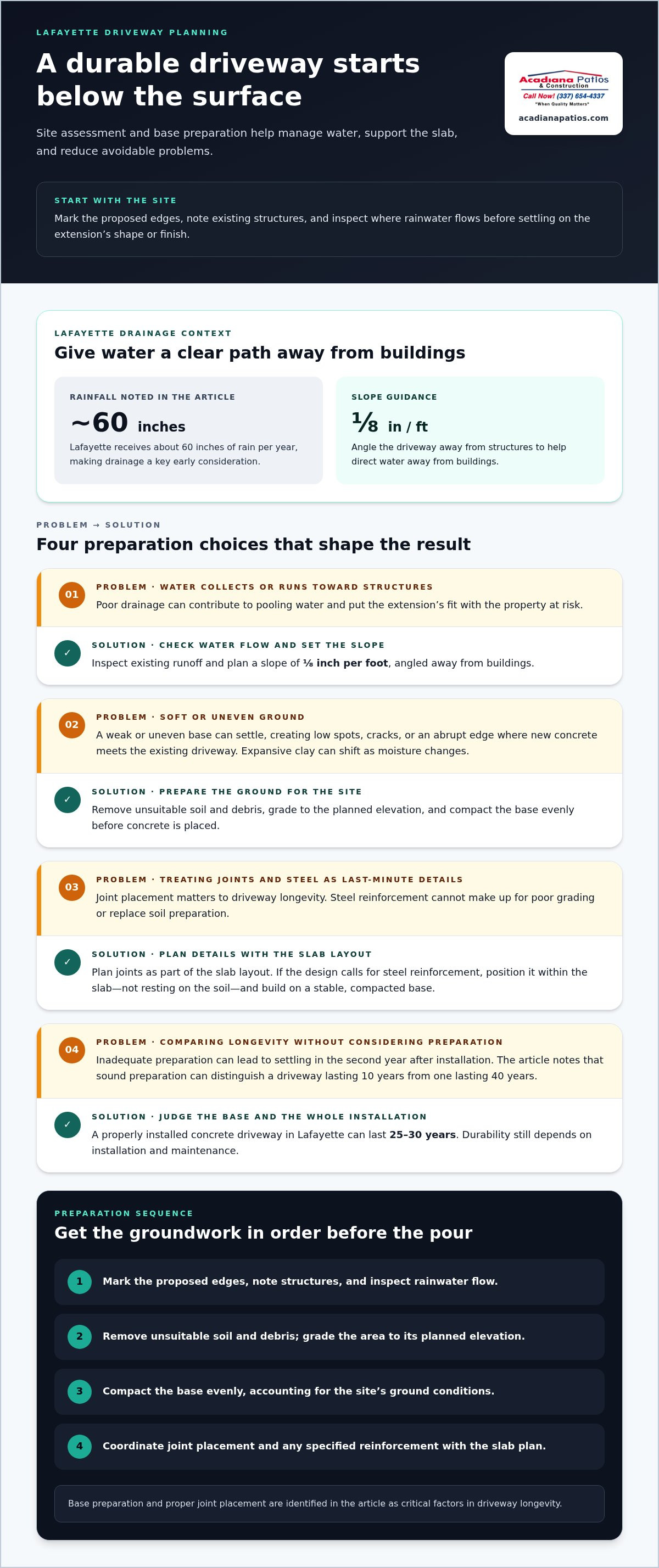
Begin with a site assessment before choosing the driveway extension’s shape or finish. Mark the proposed edges, note existing structures, and inspect where rainwater currently flows. Lafayette receives about 60 inches of rain per year, so drainage deserves attention from the first site visit. A driveway slope of 1/8 inch per foot, angled away from structures, helps direct water away from buildings.
Remove unsuitable soil and debris, then grade the area to the planned elevation. Expansive clay can shift as moisture changes, so prepare the base for the ground conditions at the site. Compact it evenly before placing concrete. A soft or uneven base can settle, causing low spots, cracks, or an abrupt edge where the new surface meets the existing driveway.
Base quality affects longevity. Inadequate preparation can lead to settling in the second year after installation, while sound preparation can distinguish a driveway lasting 10 years from one lasting 40 years. According to the Portland Cement Association, base preparation and proper joint placement are critical factors in driveway longevity. Plan joints with the slab layout, rather than treating them as a finishing detail.
Steel reinforcement may be included when the project design calls for it. It must be positioned within the slab as planned, not left resting on the soil. Reinforcement works with a stable base, but cannot correct poor grading or replace soil preparation. On expansive clay, assess the ground and build a consistent, compacted base before the pour.
Concrete, asphalt, and pavers differ in installation and upkeep, so compare costs using project area, preparation, drainage, access, and finish. A properly installed concrete driveway in Lafayette can last 25-30 years; durability for any surface still depends on its installation and maintenance.
Common problems include pooling water, settling, and cracking. Reduce these risks by checking the slope, compacting the base, and planning joints before the concrete is placed. Drainage matters for concrete patios, too: runoff should flow away from structures and finished surfaces.
Hiring licensed and insured Lafayette driveway contractors
Review a contractor’s credentials, insurance documents, written scope, and relevant project experience. For a Lafayette project, make sure the proposal and supporting documents reflect the work planned for your property.
Contractor Licensing and Insurance
Ask which credentials apply to the driveway work in Louisiana and review the contractor’s documentation. The business name on the proposal should match the name on the insurance documents, and the coverage should relate to the work being performed. Compare proposals for clear descriptions of grading, preparation, placement, and cleanup. Reviews can offer context about communication and workmanship, but they don’t replace reviewing project documents.
Permits and Zoning Requirements
Permit and zoning considerations depend on the property and the proposed work. Before construction, document the extension’s intended dimensions, placement, and connection to the existing driveway. Make the agreement clear about responsibility for any applicable applications or approvals, and whether the schedule depends on them. This helps establish a shared understanding before site work begins.
Setbacks, Drainage, and Sidewalk Regulations
Show the proposed edges in relation to property boundaries, nearby structures, sidewalks, and the street. These details can reveal potential conflicts and show how the extension fits the lot. Discuss drainage direction and any sidewalk or street connection as part of the project. A drawing or marked site plan can make the footprint easier to review before construction.
Driveway Extension Cost
The price depends on the project and is provided after a quote request. Factors include the extension’s size, preparation, reinforcement, access, finish, and demolition. Compare written proposals by scope, not just total: one may include removal or grading while another excludes it. Ask for inclusions and exclusions to be clearly stated so you can compare estimates for the same work.
For related outdoor construction planning, explore project options for your property.
Driveway contractor service areas
Service-area information matters because driveway work requires an on-site assessment, material planning, and property access. Acadiana Patios & Construction serves Lafayette and surrounding Acadiana communities. Before comparing estimates, identify the project address and whether you need an extension, replacement, or new surface. For driveway extension contractors in Lafayette, the location and site layout help shape the project plan.
Use these steps to make the service-area discussion specific:
- Share the property address and note access limits, such as a narrow entrance or gated drive.
- Describe the work area, including its connection to the existing driveway and nearby structures.
- Explain any finish preference, such as plain concrete or a stamped appearance.
- Ask what site details are needed to prepare an accurate estimate.
The property can shape the practical plan. Limited equipment access, a long approach, or a complex connection may require different preparation than an open, level site. A site visit helps determine where materials can be staged, how equipment can reach the work area, and which existing surfaces may need protection. These details help make the estimate specific to the property.
For a home in Lafayette or elsewhere in Acadiana, clarify which tasks are included at the property: assessment, surface preparation, placement, and cleanup. The written estimate should describe the material and finish, work area, and exclusions. This gives you a consistent basis for understanding the proposed work and its limits.
Access conditions can vary between nearby communities. A narrow residential street, shared driveway, or constrained work zone can affect delivery and staging. Describe these conditions early, and provide clear photos or a simple site sketch if helpful. Accurate property details support a useful discussion of scope, materials, and scheduling with driveway extension contractors in Lafayette.
Match the contractor’s service area to your project address, then make sure the estimate addresses the site itself. Lafayette and Acadiana coverage is the geographic starting point; the property layout, access, and selected finish shape the planning.
What does a driveway extension cost in Lafayette?
An estimate depends on the work the property needs, not just the visible slab area. For a useful comparison, have each proposal account for the extension’s size and thickness, site preparation, reinforcement, access, finish, and any demolition. These factors affect material quantities and labor.
Start by defining the project boundaries. A small extension beside an existing driveway may require less material than a wider parking area, but its connection to the old surface still affects preparation. A sloped or hard-to-reach work area can add grading or equipment considerations. If existing concrete must be removed, list that work as a separate estimate item.
Ask the written estimate to identify the work included at each stage. Useful line items can describe excavation, base preparation, reinforcement, concrete placement, finishing, and cleanup. Check that the proposed thickness and finish are clearly stated. If one estimate includes demolition and another does not, their totals cover different scopes.
Finish choices also affect the proposal. Plain concrete and decorative finishes can require different materials or labor. Ask for the selected finish and the area it covers to be stated in writing. If only the extension receives a special finish, the estimate should distinguish it from the rest of the slab.
To compare proposals fairly, provide the same project details for each: measured work area, access notes, existing-surface condition, preferred finish, and known drainage concerns. Compare inclusions, exclusions, and assumptions rather than choosing by total alone. This helps reveal omitted preparation or unclear removal work before construction begins.
For a project-specific estimate, request a driveway extension estimate with your property details and preferred scope.
Acadiana Patios & Construction: Motorized Shades & Screens
Acadiana Patios & Construction also helps homeowners plan outdoor improvements beyond the driveway. If you’re coordinating an extension with a more usable outdoor area, consider how a concrete slab or concrete coloring could complement the space. Carports and garages provide covered vehicle storage options, while Cypress Patio Covers and Motorized Shades & Screens can add shade and adjustable screening to outdoor living areas.
These projects serve different purposes, so define how you want each area to function before planning them together. Vehicle coverage, shaded seating, and a finished concrete surface each call for a distinct layout. A coordinated plan can connect those needs with the home and existing outdoor spaces.
Contact Acadiana Patios & Construction to discuss your outdoor project.
Plan the next step for your driveway
A driveway extension can change how you use the space around your home, so think beyond the slab. Consider how vehicle access, storage, and outdoor comfort should work together. When comparing driveway extension contractors in Lafayette, keep your priorities clear and use them to define the project scope.
Acadiana Patios & Construction offers Motorized Shades & Screens, Carports & Garages, and Cypress Patio Covers. These options can support broader plans for vehicle coverage or outdoor living alongside your driveway project.
Explore your project options with Acadiana Patios & Construction, and take the next step toward a space that works for your home.
Frequently Asked Questions
How long does a typical driveway installation take?
A concrete driveway project in Lafayette typically involves one to three days of active work, followed by a seven-day curing period before vehicles can use the slab. Plan delivery and household parking before work starts. Keep heavy vehicles off a newly poured driveway for a full month. Rain and site access can affect the schedule, so account for those conditions.
How do I compare driveway extension contractors and verify licenses and insurance?
Compare written proposals that describe the same work, then review each contractor’s credentials and insurance documents. Check that the business named on the proposal matches the name on those documents, and that the proposed scope covers your address and project type. Compare how clearly each proposal explains preparation, materials, cleanup, and exclusions. This makes differences easier to assess than comparing totals alone.
What are the driveway extension installation steps and timeline?
Work generally progresses from site layout and preparation to grading, base work, reinforcement when specified, concrete placement, and finishing. Active construction for a Lafayette concrete driveway typically takes one to three days, followed by a seven-day cure before vehicles can use the slab. Arrange alternate parking before demolition or delivery begins, and keep the finished area clear during curing.
Concrete vs asphalt vs paver driveway extension cost and durability
Costs depend on project area, preparation, drainage, access, and finish, and concrete, asphalt, and pavers differ in installation and upkeep. A properly installed concrete driveway in Lafayette can last 25-30 years; no durability figures are provided for asphalt or pavers.
Driveway extension reviews and ratings in Lafayette
Reviews can offer context about a contractor’s communication and workmanship, but they should not replace reviewing credentials, insurance documents, written scope, and relevant project experience.